 Indietro
Meiosis, Genetic Diversity, and Chromosomal Abnormalities
Guida di studio - Note intelligenti
 Appunti personalizzati basati sui tuoi materiali, ampliati con definizioni chiave, esempi e contesto.
Meiosis and Sexual Reproduction
Overview of Meiosis
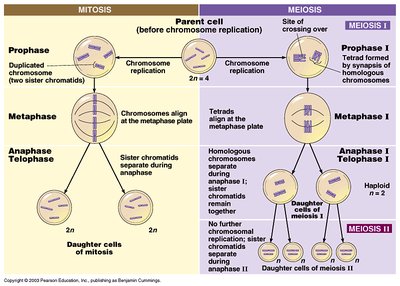
Meiosis is a specialized type of cell division that reduces the chromosome number by half, producing four haploid cells from one diploid cell. This process is essential for sexual reproduction and ensures genetic diversity in offspring.
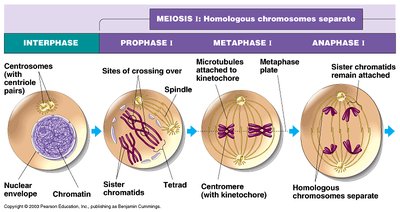
Meiosis I: Homologous chromosomes pair up, undergo crossing over, and are separated into two cells.
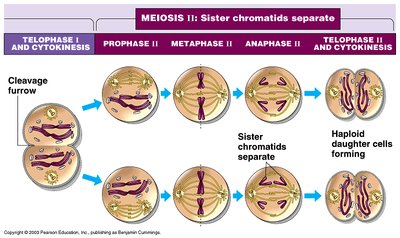
Meiosis II: Sister chromatids are separated, resulting in four genetically unique haploid cells.
Main Events of Meiosis I
Prophase I: Homologous chromosomes pair up and form tetrads. Sites of crossing over occur, where genetic material is exchanged.
Metaphase I: Tetrads align at the metaphase plate.
Anaphase I: Homologous chromosomes separate, but sister chromatids remain attached.
Main Events of Meiosis II
Prophase II: Chromosomes condense in each haploid cell.
Metaphase II: Chromosomes align at the metaphase plate.
Anaphase II: Sister chromatids separate.
Telophase II and Cytokinesis: Four haploid daughter cells are formed.
How Meiosis Increases Genetic Diversity
Meiosis introduces genetic variation through two main mechanisms: crossing over and independent assortment.
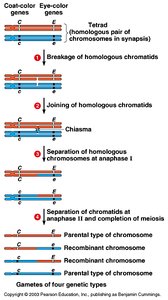
Crossing Over: Homologous chromosomes exchange genetic material during Prophase I, creating new combinations of genes. This process is illustrated by the formation of chiasmata and recombinant chromosomes.
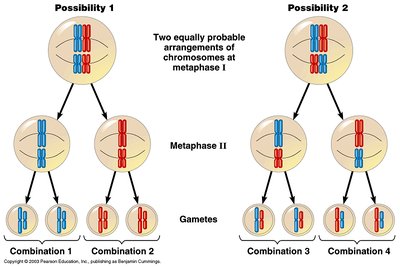
Independent Assortment: The random alignment of tetrads during Metaphase I leads to different combinations of maternal and paternal chromosomes in gametes.
Comparison Between Mitosis and Meiosis
Mitosis and meiosis are both forms of cell division, but they serve different purposes and produce different types of cells.
Mitosis: Produces two genetically identical diploid cells for growth and repair.
Meiosis: Produces four genetically unique haploid cells for sexual reproduction.
Key Differences: Meiosis involves two rounds of division and crossing over, while mitosis involves only one round and no crossing over.
Importance of Meiosis
Produces sex cells (gametes) in sexually reproducing organisms.
Maintains a constant chromosome number across generations.
Increases genetic diversity, which is vital for evolution and adaptation.
Abnormal Chromosome Numbers
Abnormal Number of Autosomes
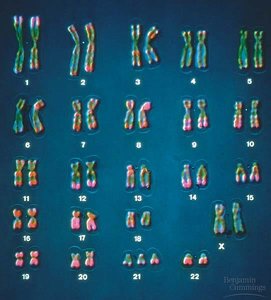
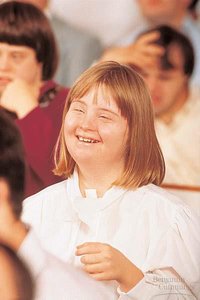
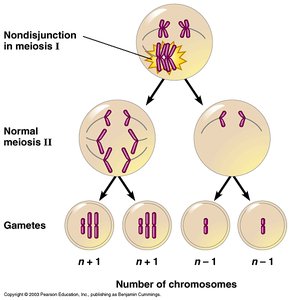
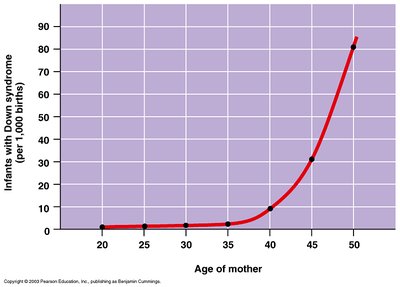
Abnormalities in chromosome number often result from errors during meiosis, such as nondisjunction. Most autosomal abnormalities lead to miscarriage, but some, like Down Syndrome (Trisomy 21), are viable.
Down Syndrome (Trisomy 21): Characterized by a round face, flattened nose bridge, short limbs, loose joints, heart defects, respiratory infections, and developmental delays.
Causes of Abnormal Chromosome Number
Nondisjunction: Failure of homologous chromosomes (Anaphase I) or sister chromatids (Anaphase II) to separate properly, resulting in gametes with abnormal chromosome numbers.
Maternal Age: The probability of birth defects increases with maternal age due to aging eggs.
Abnormal Number of Sex Chromosomes
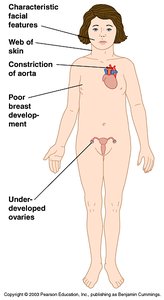
Turner Syndrome (XO): Females with only one X chromosome. Features include short stature, webbed neck, poor development of secondary sex characteristics, undeveloped ovaries, and sterility.
Metafemale (XXX): Females with three X chromosomes. Usually normal appearance, taller than average, limited fertility.
Normal Male (XYY): Males with an extra Y chromosome. Normal appearance, taller than average.
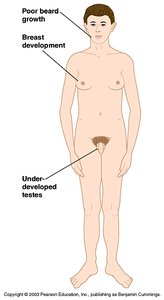
Klinefelter Syndrome (XXY/XXXY): Males with extra X chromosomes. Features include undeveloped testes, sterility, and possible development of secondary sex characteristics.
Abnormal Chromosome Structure
Types of Structural Abnormalities
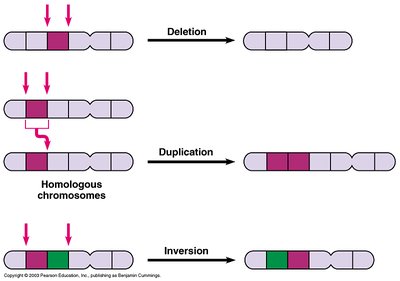
Structural abnormalities occur when the physical structure of chromosomes is altered, often leading to genetic disorders.
Deletion: Loss of a chromosome segment.
Duplication: Repetition of a chromosome segment.
Inversion: Reversal of a chromosome segment.
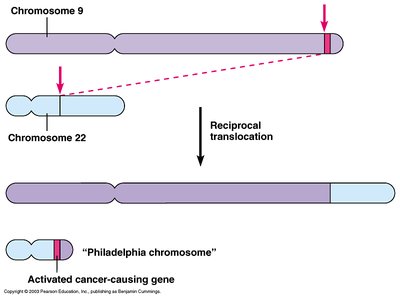
Translocation: Exchange of segments between non-homologous chromosomes.
Example: Philadelphia Chromosome
The Philadelphia chromosome is a result of a translocation between chromosomes 9 and 22, which activates a cancer-causing gene and leads to chronic myelogenous leukemia (CML).
Summary Table: Comparison of Mitosis and Meiosis
Feature | Mitosis | Meiosis |
|---|---|---|
Number of Divisions | 1 | 2 |
Number of Daughter Cells | 2 | 4 |
Chromosome Number | Diploid (2n) | Haploid (n) |
Genetic Variation | None | High (crossing over, independent assortment) |
Purpose | Growth, repair | Sexual reproduction |
Key Equations
Chromosome Number in Gametes:
Number of Possible Gamete Combinations: (where n = number of chromosome pairs)
Learning Objectives Recap
Identify main events during each stage of meiosis I and II.
Explain how crossing over and independent alignment of tetrads contribute to genetic diversity.
Compare and contrast mitosis and meiosis.
Identify types and effects of chromosome abnormalities due to number and structure.
