 Indietro
Meiosis, Genetic Variation, and Mendelian Inheritance
Guida di studio - Note intelligenti
 Appunti personalizzati basati sui tuoi materiali, ampliati con definizioni chiave, esempi e contesto.
Inheritance and Sources of Genetic Variation
Overview of Meiosis
Meiosis is a specialized type of cell division that reduces the chromosome number by half, producing haploid gametes (sperm and egg) from diploid cells. This process is essential for sexual reproduction and ensures genetic diversity in offspring.
Diploid (2n): Cells with two sets of chromosomes (one from each parent).
Haploid (n): Cells with one set of chromosomes, found in gametes.
Meiosis: Consists of two sequential divisions (Meiosis I and II) following a single round of DNA replication.
Fertilization: Fusion of two haploid gametes restores the diploid state in the zygote.
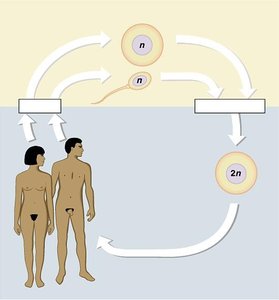
Phases of Meiosis and Changes in Ploidy
Meiosis involves two rounds of division: Meiosis I (reductional division) and Meiosis II (equational division). The process ensures that gametes have half the chromosome number of somatic cells, maintaining species stability across generations.
Meiosis I: Homologous chromosomes separate, reducing chromosome number by half.
Meiosis II: Sister chromatids separate, similar to mitosis.
Ploidy: The number of chromosome sets in a cell. Meiosis reduces ploidy from 2n to n.
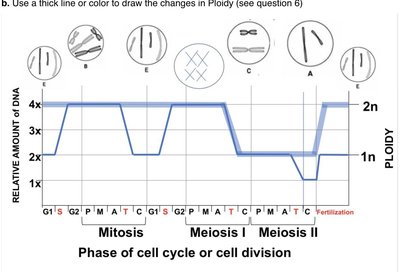
Genetic Variation in Sexual Reproduction
Mechanisms Generating Genetic Diversity
Sexual reproduction increases genetic diversity through several mechanisms, which are fundamental to evolution and adaptation.
Homologous Recombination (Crossing Over): Exchange of genetic material between homologous chromosomes during Prophase I of meiosis, creating new allele combinations.
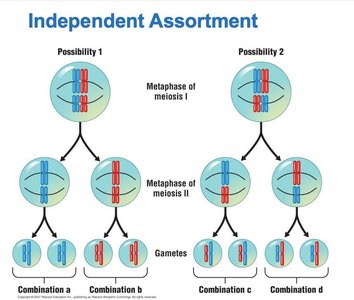
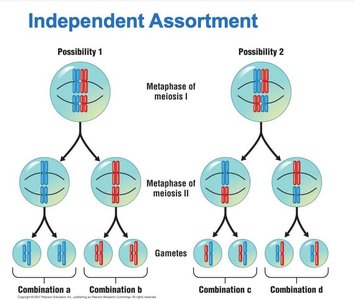
Independent Assortment: Random orientation of homologous chromosome pairs during Metaphase I leads to different combinations of maternal and paternal chromosomes in gametes.
Random Fertilization: Any sperm can fertilize any egg, further increasing genetic variation.
Mutation: The ultimate source of genetic variation, introducing new alleles into a population.
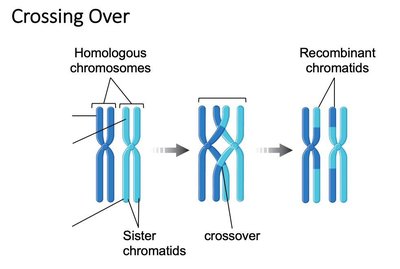
Crossing Over
During Prophase I of meiosis, homologous chromosomes pair up and exchange segments in a process called crossing over. This results in recombinant chromosomes with new combinations of alleles, increasing genetic diversity among offspring.
Occurs during: Prophase I of meiosis.
Result: Recombinant chromatids with mixed genetic material from both parents.
Independent Assortment
Independent assortment refers to the random orientation of homologous chromosome pairs during Metaphase I of meiosis. This process results in gametes with different combinations of chromosomes, further contributing to genetic variation.
Law of Independent Assortment: Each pair of alleles segregates independently of other pairs during gamete formation.
Result: Numerous possible combinations of chromosomes in gametes.
Random Fertilization
Random fertilization occurs when any sperm can fuse with any egg, producing a zygote with a unique genetic identity. The combination of independent assortment and crossing over means that the number of possible genetic combinations in offspring is extremely large.
Calculation: In humans, each parent can produce 223 (over 8 million) possible gametes due to independent assortment alone. The fusion of two gametes results in over 70 trillion possible combinations.
Mendelian Genetics and Meiosis
Mendel’s Laws
Gregor Mendel’s laws of inheritance describe how alleles are transmitted from parents to offspring and are explained by the behavior of chromosomes during meiosis.
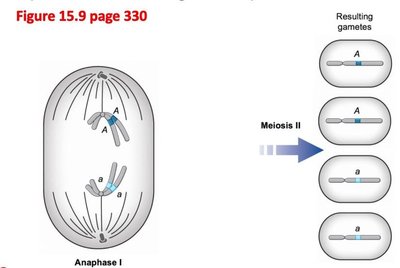
Law of Segregation: Homologous chromosomes (and thus alleles) separate during Anaphase I of meiosis, so each gamete receives only one allele of each gene.
Law of Independent Assortment: Genes on different chromosomes assort independently during gamete formation, as explained above.
Punnett Squares and Genetic Predictions
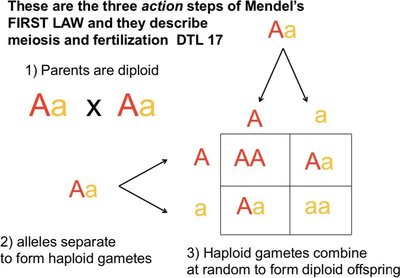
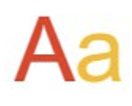
Punnett squares are tools used to predict the possible genetic outcomes of a cross between two individuals. The letters on the margins represent the possible gametes, and the combinations within the square represent possible zygotes.
Gametes: Represented by the alleles contributed by each parent.
Zygotes: Represented by the combinations of alleles in the squares.
Comparison of Mitosis and Meiosis
Key Differences
Mitosis and meiosis are both forms of cell division, but they serve different purposes and have distinct outcomes.
Feature | Mitosis | Meiosis |
|---|---|---|
Location | Somatic (body) cells | Gonads (ovaries/testes) |
Purpose | Growth, repair, asexual reproduction | Sexual reproduction |
Number of divisions | 1 | 2 |
Number of daughter cells | 2 (identical) | 4 (unique) |
Ploidy of daughter cells | Diploid (2n) | Haploid (n) |
Genetic variation | No (unless mutation) | Yes (crossing over, independent assortment) |
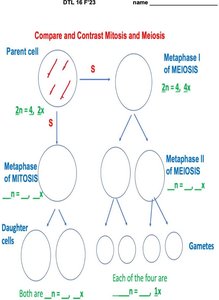
Summary Table: Mitosis vs. Meiosis
Process | Ploidy Change | Sisters Separate? | Homologs Separate? | Cross Over? | Independent Assortment? | Produces? |
|---|---|---|---|---|---|---|
Mitosis | 2n → 2n | Yes | No | No | No | 2 identical cells |
Meiosis I | 2n → 1n | No | Yes | Yes | Yes | 2 unique cells |
Meiosis II | 1n → 1n | Yes | No | No | No | 4 unique cells (total) |
Checklist for Studying Meiosis and Inheritance
Differentiate between sister chromatids and homologous chromosomes.
Define haploid (n) and diploid (2n).
Explain the advantage of meiosis for genetic diversity.
Describe the overview and phases of meiosis (1 replication, 2 divisions).
Compare and contrast mitosis and meiosis.
Identify where meiosis and mitosis occur and what each process generates.
