 Indietro
Meiosis: Mechanisms, Chromosome Behavior, and Genetic Variation
Guida di studio - Note intelligenti
 Appunti personalizzati basati sui tuoi materiali, ampliati con definizioni chiave, esempi e contesto.
Meiosis and Its Role in Sexual Reproduction
Overview of Meiosis
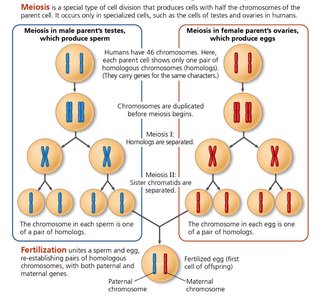
Meiosis is a specialized type of cell division that reduces the chromosome number by half, producing haploid gametes (sperm and egg) for sexual reproduction. This process increases genetic variation in populations and maintains ploidy across generations.
Meiosis reduces genetic information by half (from diploid to haploid).
Genetically unique haploid cells are generated for sexual reproduction.
Meiosis alternates with fertilization in sexual life cycles, restoring diploid chromosome number.
Phases of Meiosis
Meiosis consists of two consecutive divisions: Meiosis I and Meiosis II. Each division has distinct phases, similar to mitosis but with key differences.
Meiosis I: Homologous chromosomes pair and separate, reducing chromosome number.
Meiosis II: Sister chromatids separate, similar to mitosis, but cells are haploid.
Chromosome Structure and Terminology
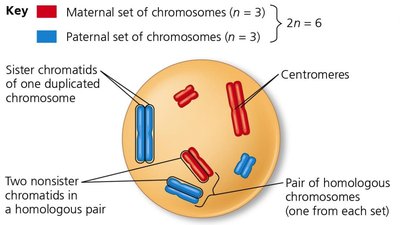
Homologous Chromosomes vs. Sister Chromatids
Understanding chromosome structure is essential for distinguishing the events of meiosis.
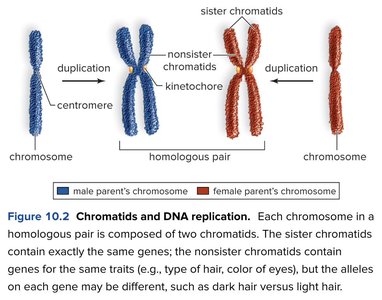
Homologous chromosomes: Chromosome pairs (one from each parent) with the same genes but possibly different alleles.
Sister chromatids: Identical copies of a chromosome, joined at the centromere, formed after DNA replication.
Ploidy: Haploid and Diploid States
Ploidy refers to the number of sets of chromosomes in a cell.
Haploid (n): One set of chromosomes (chromatid)
Diploid (2n): Two sets of chromosomes (one from each parent) (chromosome)
Meiosis reduces ploidy from diploid 2n=4 to haploid 1n=4.
Mechanisms of Meiosis
Meiosis I: Reductional Division
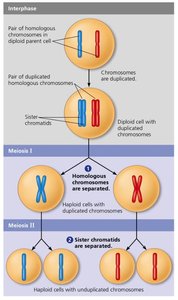
Meiosis I separates homologous chromosomes, halving the chromosome number.
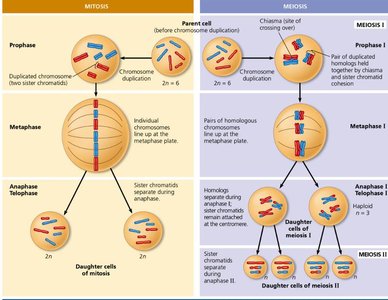
Prophase I: Chromosomes condense, homologs pair up, and crossing over (homologous recombination) occurs.
Metaphase I: Homologous pairs (tetrads) align at the cell center, oriented randomly.
Anaphase I: Homologous chromosomes separate; sister chromatids remain together.
Telophase I and Cytokinesis: Two haploid cells are formed.
Ploidy is now 1n=4
Meiosis II: Equational Division
Meiosis II is similar to mitosis, separating sister chromatids in haploid cells.
Prophase II: Chromosomes condense in each haploid cell.
Metaphase II: Chromosomes align at the center.
Anaphase II: Sister chromatids separate.
Telophase II and Cytokinesis: Four genetically unique haploid cells are produced.
Comparison: Mitosis vs. Meiosis
Key Differences and Similarities
Mitosis and meiosis are both forms of cell division, but they serve different purposes and have distinct outcomes.
Mitosis: Produces two identical diploid cells for growth and repair; maintains ploidy of an individual.
Meiosis: Produces four genetically unique haploid cells for sexual reproduction; maintains ploidy of a population.
Major difference: Homologous chromosomes pair and separate in meiosis I, but not in mitosis.
Genetic Variation and Errors in Meiosis
Sources of Genetic Variation
Meiosis increases genetic diversity through several mechanisms:
Crossing over: Exchange of genetic material between homologous chromosomes during prophase I.
Independent assortment: random alignment and separation of homologous pairs during metaphase I.
Random fertilization: Any sperm can fertilize any egg, further increasing variation.
Errors in Meiosis: Aneuploidy
Errors during meiosis can lead to abnormal chromosome numbers (aneuploidy), resulting in genetic disorders.
Aneuploidy: Presence of an abnormal number of chromosomes in a cell.
Nondisjunction: Failure of homologous chromosomes (meiosis I) or sister chromatids (meiosis II) to separate properly.
Consequences: Disorders such as Down syndrome (trisomy 21), miscarriages, and birth defects.
Summary Table: Mitosis vs. Meiosis
The following table summarizes the main differences between mitosis and meiosis:
Feature | Mitosis | Meiosis |
|---|---|---|
Number of divisions | 1 | 2 |
Number of daughter cells | 2 | 4 |
Chromosome number in daughter cells | Diploid (2n) | Haploid (n) |
Genetic identity | Identical | Unique |
Function | Growth, repair | Gamete production |
Homologous chromosome pairing | No | Yes (Meiosis I) |
Crossing over | No | Yes (Meiosis I) |
Checklist for Studying Meiosis
Differentiate sister chromatids and homologous chromosomes. GOOD
Understand haploid (n) and diploid (2n) states. GOOD
Know where meiosis and mitosis occur and what they generate. GOOD
Explain the importance and advantages of meiosis. GOOD
Describe the phases of meiosis I and II. - separate homologous pairs vs separate chromosomes to chromatid
Compare mitosis and meiosis. GOOD
Define aneuploidy and its consequences.
Discuss how meiosis maintains ploidy and increases genetic variation. - crossing over, independent assortment, fertilization
Additional info:
Meiosis is essential for maintaining chromosome number across generations and preventing chromosome doubling.
Genetic variation is crucial for evolution and adaptation in populations.
