 Indietro
Meiosis: Mechanisms, Genetic Variation, and Evolutionary Significance
Guida di studio - Note intelligenti
 Appunti personalizzati basati sui tuoi materiali, ampliati con definizioni chiave, esempi e contesto.
Meiosis: Mechanisms, Genetic Variation, and Evolutionary Significance
Introduction to Meiosis
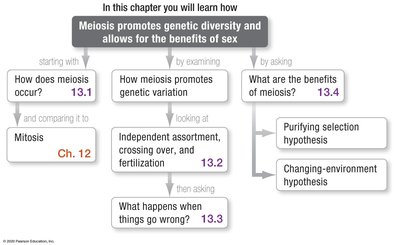
Meiosis is a specialized type of nuclear division that reduces the chromosome number by half, producing haploid gametes (sperm and egg) necessary for sexual reproduction. This process ensures genetic diversity and restores the diploid chromosome number upon fertilization.
Fertilization: The union of two gametes to form a new individual with a complete set of chromosomes.
Gametes: Reproductive cells (sperm and egg) that contain half the chromosome number of somatic cells.
Purpose of Meiosis: To generate genetic diversity and maintain chromosome number across generations.
Homologous Chromosomes and Genetic Variation
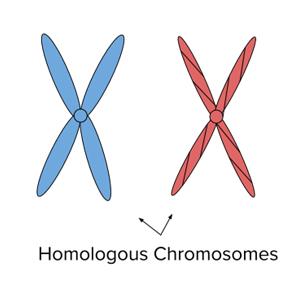
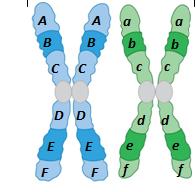
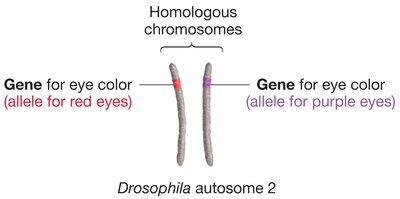
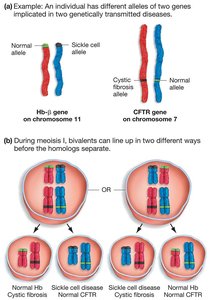
Each diploid cell contains two homologous chromosomes—one from each parent. These chromosomes have the same genes in the same order but may carry different alleles, contributing to genetic variation.
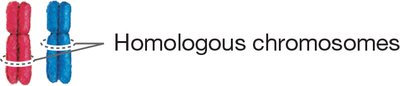
Homologous Chromosomes: Chromosomes of the same type, carrying the same genes but possibly different alleles.
Allele: A variant form of a gene.
Genetic Variation: Differences in alleles among individuals, which arise from the combination of parental chromosomes.
The Concept of Ploidy
Ploidy refers to the number of sets of chromosomes in a cell. Organisms can be haploid, diploid, or polyploid, depending on the number of chromosome sets.
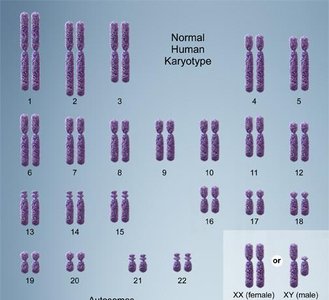
Karyotype: The number and visual appearance of chromosomes in the cell nuclei of an organism.
Diploid (2n): Two sets of chromosomes (e.g., humans have 46 chromosomes).
Haploid (n): One set of chromosomes (e.g., human gametes have 23 chromosomes).
Polyploid: More than two sets of chromosomes (e.g., some plants).
Chromosome Number and Complexity
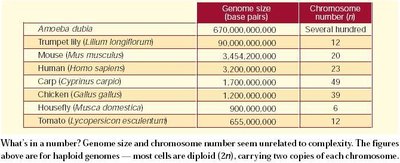
Chromosome number does not correlate with organismal complexity. Genome size and chromosome number vary widely among species.
Organism | Genome Size (base pairs) | Chromosome Number (n) |
|---|---|---|
Amoeba dubia | 670,000,000,000 | Several hundred |
Trumpet lily | 90,000,000,000 | 12 |
Mouse | 3,454,200,000 | 20 |
Human | 3,200,000,000 | 23 |
Carp | 1,200,000,000 | 25 |
Chicken | 950,000,000 | 6 |
Tomato | 655,000,000 | 12 |
Comparison of Mitosis and Meiosis
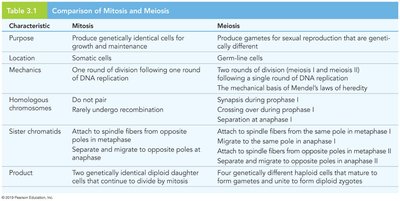
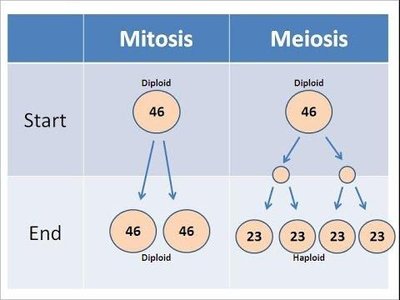
Mitosis and meiosis are two types of cell division with distinct purposes and outcomes. Mitosis produces genetically identical cells for growth and repair, while meiosis produces genetically diverse gametes for sexual reproduction.
Characteristic | Mitosis | Meiosis |
|---|---|---|
Purpose | Growth and maintenance | Sexual reproduction |
Location | Somatic cells | Germ-line cells |
Mechanics | One division | Two divisions |
Homologous chromosomes | Do not pair | Pair and undergo recombination |
Sister chromatids | Separate at anaphase | Separate at anaphase II |
Product | Two diploid cells | Four haploid cells |
Key Chromosome Terminology
Understanding chromosome structure and terminology is essential for studying meiosis.
Chromosome: DNA-protein structure carrying genetic information.
Sex Chromosome: Chromosome involved in determining sex (e.g., X and Y in humans).
Autosome: Any chromosome not involved in sex determination.
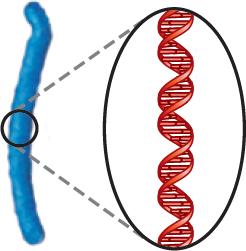
Unreplicated Chromosome: Single DNA molecule.
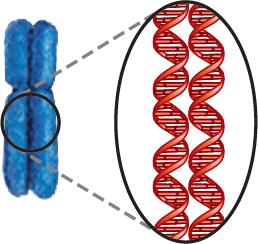
Replicated Chromosome: Two identical sister chromatids joined at the centromere.
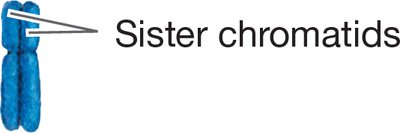
Sister Chromatids: Identical copies of a chromosome connected by a centromere.
Homologous Chromosomes: Chromosomes with the same genes but possibly different alleles.
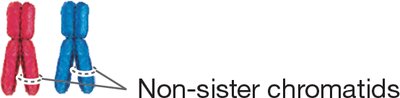
Non-sister Chromatids: Chromatids from homologous chromosomes.
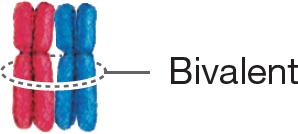
Bivalent: Paired homologous chromosomes during meiosis I.
Overview of Meiosis
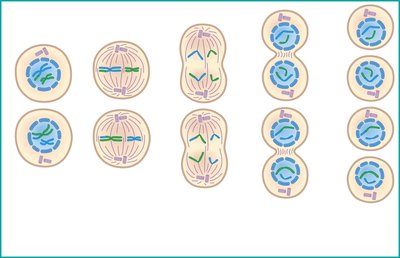
Meiosis consists of two sequential divisions: Meiosis I and Meiosis II. Meiosis I separates homologous chromosomes, while Meiosis II separates sister chromatids, resulting in four non-identical haploid cells.
Meiosis I: Homologous chromosomes pair, undergo crossing over, and are separated into two cells.
Meiosis II: Sister chromatids are separated, producing four haploid gametes.
Crossing Over and Genetic Recombination
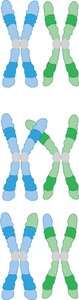
During prophase I of meiosis, homologous chromosomes undergo synapsis and crossing over, exchanging genetic material between non-sister chromatids. This process increases genetic diversity among gametes.
Synapsis: Pairing of homologous chromosomes.
Crossing Over: Exchange of genetic material between non-sister chromatids.
Genetic Recombination: New combinations of alleles are formed, enhancing variation.
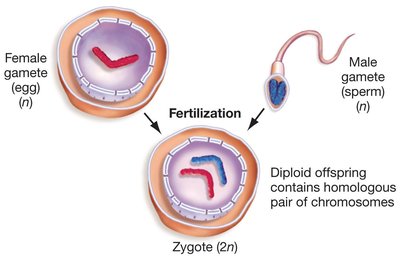
Fertilization and Restoration of Diploidy
Fertilization restores the diploid chromosome number by combining two haploid gametes. This process is essential for maintaining chromosome stability across generations.
Zygote: The first cell of a new organism, formed by the fusion of two gametes.
Restoration of Diploidy: Ensures each generation has the correct chromosome number.
Ploidy Changes in the Animal Life Cycle
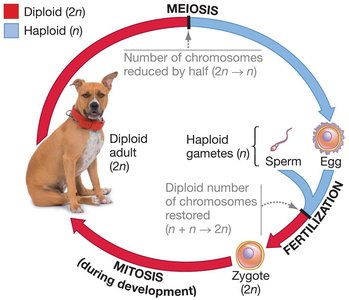
Animals alternate between haploid and diploid stages. Meiosis produces haploid gametes, and fertilization restores diploidy, followed by mitotic divisions for growth and development.
Haploid Stage: Gametes (n)
Diploid Stage: Zygote and adult organism (2n)
Oogenesis and Egg Formation
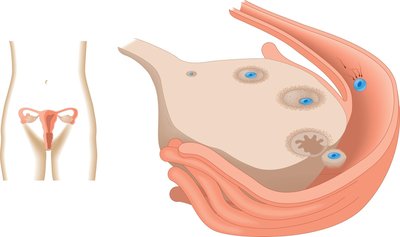
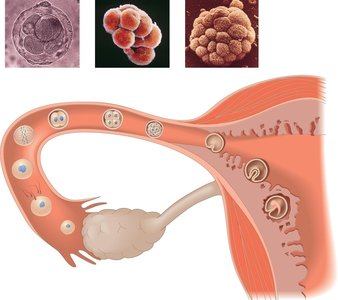
Oogenesis is the process of egg formation in females. Human eggs are arrested in prophase I until ovulation, and meiosis II is completed only upon fertilization.
Primary Oocyte: Arrested in prophase I until puberty.
Secondary Oocyte: Completes meiosis I and is ovulated; completes meiosis II only if fertilized.
Polar Bodies: Small cells produced during oogenesis that typically degenerate.
Development After Fertilization
After fertilization, the zygote undergoes mitotic divisions to form an embryo, which implants in the uterus and continues to develop.
Cleavage: Rapid mitotic divisions of the zygote.
Blastocyst: Early stage of embryonic development that implants in the uterine wall.
Genetic Variation: Independent Assortment and Crossing Over
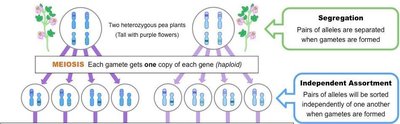
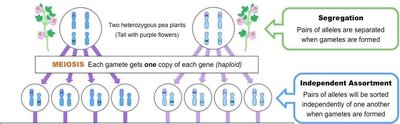
Meiosis generates genetic diversity through independent assortment of chromosomes and crossing over. The number of possible chromosome combinations in humans is , not including additional variation from crossing over.
Independent Assortment: Random distribution of maternal and paternal chromosomes to gametes.
Crossing Over: Exchange of genetic material between homologous chromosomes.
Errors in Meiosis: Nondisjunction and Aneuploidy
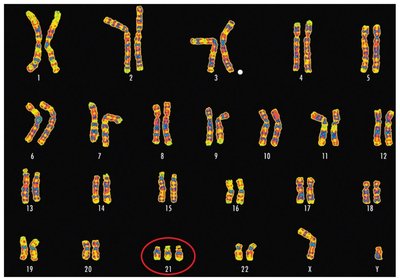
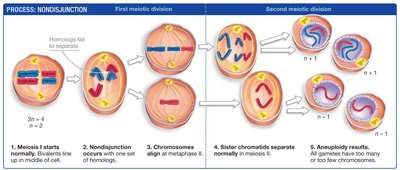
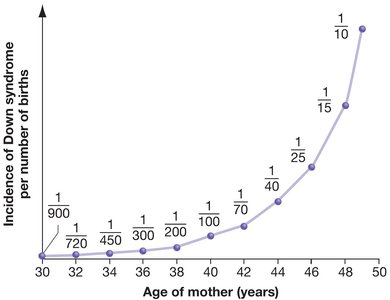
Errors during meiosis, such as nondisjunction, can lead to gametes with abnormal chromosome numbers (aneuploidy). This can result in genetic disorders such as Down syndrome (trisomy 21).
Nondisjunction: Failure of homologous chromosomes or sister chromatids to separate properly.
Aneuploidy: Presence of an abnormal number of chromosomes in a cell (e.g., trisomy, monosomy).
Down Syndrome: Caused by an extra copy of chromosome 21.
Benefits of Meiosis and Sexual Reproduction
Despite the risks, sexual reproduction and meiosis are favored in evolution due to the genetic diversity they generate, which enhances population survival in changing environments.
Purifying Selection Hypothesis: Sexual reproduction helps eliminate deleterious alleles from a population.
Changing-Environment Hypothesis: Genetic diversity increases the likelihood that some offspring will survive environmental changes or new pathogens.
Summary
Meiosis produces haploid gametes and increases genetic variation through independent assortment and crossing over.
Fertilization restores diploidy and initiates development.
Genetic diversity generated by meiosis is crucial for evolution and adaptation.
Errors in meiosis can lead to genetic disorders, but the benefits of sexual reproduction outweigh the risks.
