 Indietro
Meiosis: Mechanisms, Phases, and Biological Significance
Guida di studio - Note intelligenti
 Appunti personalizzati basati sui tuoi materiali, ampliati con definizioni chiave, esempi e contesto.
Meiosis
Overview of Meiosis
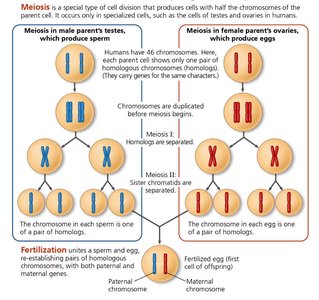
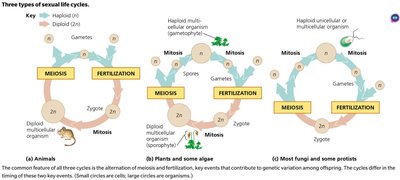
Meiosis is a specialized type of cell division that reduces the chromosome number by half, resulting in the formation of genetically unique haploid cells (gametes) necessary for sexual reproduction. This process increases genetic variation and maintains a constant chromosome number across generations.
Purpose: To produce gametes (sperm and egg cells) with half the genetic material of the parent cell.
Genetic Variation: Achieved through crossing over and independent assortment.
Phases: Meiosis consists of two sequential divisions: Meiosis I and Meiosis II.

Chromosome Structure and Terminology
Homologous Chromosomes vs. Sister Chromatids
Understanding the difference between homologous chromosomes and sister chromatids is essential for grasping the mechanics of meiosis.
Homologous Chromosomes: Chromosome pairs (one from each parent) that are similar in shape, size, and gene content but may have different alleles.
Sister Chromatids: Identical copies of a single chromosome, joined at the centromere, formed after DNA replication.

Ploidy: Haploid vs. Diploid
Ploidy refers to the number of sets of chromosomes in a cell.
Haploid (n): One set of chromosomes (e.g., gametes).
Diploid (2n): Two sets of chromosomes (e.g., somatic cells).
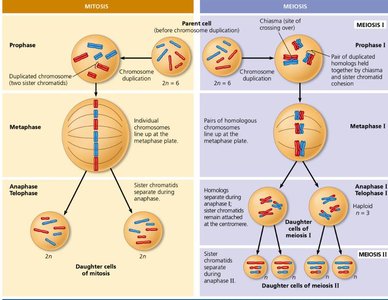
Phases of Meiosis
Meiosis I: Reductional Division
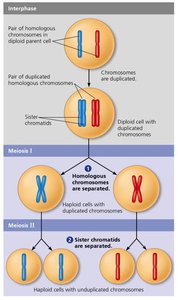
Meiosis I separates homologous chromosomes, reducing the chromosome number by half.
Prophase I: Chromosomes condense, homologs pair up (synapsis), and crossing over (homologous recombination) occurs, increasing genetic diversity.
Metaphase I: Homologous pairs (tetrads) align randomly at the metaphase plate.
Anaphase I: Homologous chromosomes are pulled to opposite poles; sister chromatids remain together.
Telophase I and Cytokinesis: Two haploid cells are formed, each with half the original chromosome number.
Meiosis II: Equational Division
Meiosis II resembles mitosis, separating sister chromatids in each haploid cell.
Prophase II: Chromosomes condense again in the two haploid cells.
Metaphase II: Chromosomes align at the metaphase plate.
Anaphase II: Sister chromatids are separated and pulled to opposite poles.
Telophase II and Cytokinesis: Four genetically unique haploid cells are produced.
Comparison: Mitosis vs. Meiosis
Key Differences and Similarities
While both mitosis and meiosis involve the division of a parent cell, their outcomes and processes differ significantly.
Feature | Mitosis | Meiosis |
|---|---|---|
Number of Divisions | 1 | 2 |
Number of Daughter Cells | 2 | 4 |
Genetic Identity | Identical | Unique |
Ploidy of Daughter Cells | Diploid (2n) | Haploid (n) |
Role | Growth, repair | Gamete production |
Genetic Variation in Meiosis
Mechanisms of Genetic Diversity
Meiosis introduces genetic variation through several mechanisms:
Crossing Over: Exchange of genetic material between homologous chromosomes during Prophase I.
Independent Assortment: Random orientation of homologous pairs during Metaphase I.
Random Fertilization: Any sperm can fertilize any egg, further increasing genetic diversity.
Errors in Meiosis: Aneuploidy
Consequences of Meiotic Errors
Errors during meiosis can lead to an abnormal number of chromosomes, known as aneuploidy. This can result in genetic disorders such as Down syndrome (trisomy 21).
Nondisjunction: Failure of homologous chromosomes (Meiosis I) or sister chromatids (Meiosis II) to separate properly.
Outcomes: Gametes may have extra or missing chromosomes, leading to zygotes with abnormal chromosome numbers after fertilization.
Checklist for Studying Meiosis
Differentiate between sister chromatids and homologous chromosomes.
Define haploid (n) and diploid (2n).
Identify where meiosis and mitosis occur and what each process generates.
Explain the advantages of meiosis for genetic variation.
Describe the phases of Meiosis I and II, including chromosome movements.
Compare and contrast mitosis and meiosis.
Define aneuploidy and explain its consequences.
