 Indietro
Meiosis: Mechanisms, Phases, and Biological Significance
Guida di studio - Note intelligenti
 Appunti personalizzati basati sui tuoi materiali, ampliati con definizioni chiave, esempi e contesto.
Meiosis
Overview and Biological Significance
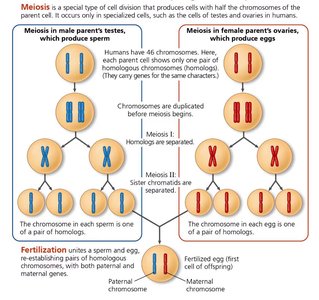
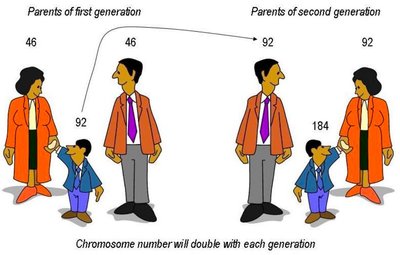
Meiosis is a specialized type of cell division that reduces the chromosome number by half, producing genetically unique haploid cells (gametes) necessary for sexual reproduction. This process increases genetic variation and maintains a constant chromosome number across generations.
Purpose: To generate gametes (sperm and egg) with half the genetic material of the parent cell.
Genetic Variation: Achieved through crossing over and independent assortment.
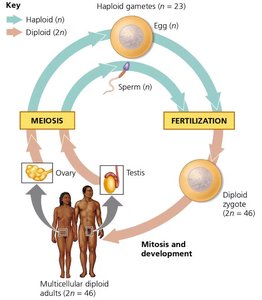
Alternation of Generations: Meiosis and fertilization alternate in sexual life cycles to maintain ploidy.
Chromosome Structure and Terminology
Homologous Chromosomes vs. Sister Chromatids
Understanding chromosome structure is essential for distinguishing the events of meiosis.
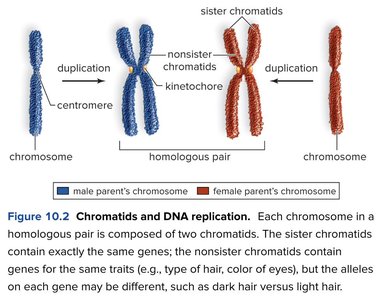
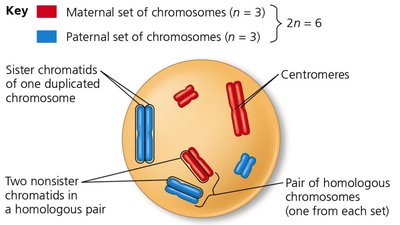
Homologous Chromosomes (Homologs): Chromosome pairs, one from each parent, with the same genes but possibly different alleles.
Sister Chromatids: Identical copies of a chromosome, joined at the centromere, formed after DNA replication.
Ploidy and Chromosome Counting
Haploid (n) vs. Diploid (2n)
Ploidy refers to the number of sets of chromosomes in a cell.
Haploid (n): One set of chromosomes (e.g., gametes).
Diploid (2n): Two sets of chromosomes (e.g., somatic cells).
To determine ploidy: Count the number of unique chromosome types (by size and shape) and the total number of chromosomes (centromeres).
Phases of Meiosis
Meiosis I: Reductional Division
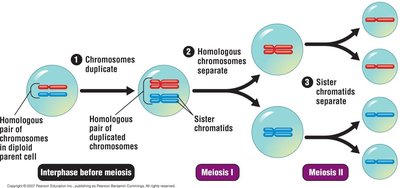
Meiosis I separates homologous chromosomes, reducing the chromosome number by half.
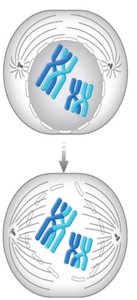
Prophase I: Chromosomes condense, homologs pair up (synapsis), and crossing over (homologous recombination) occurs.
Metaphase I: Homologous pairs align at the metaphase plate, oriented randomly (independent assortment).
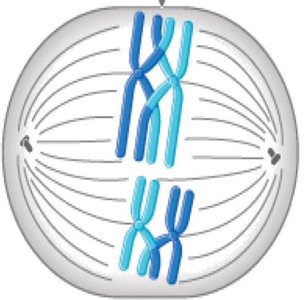
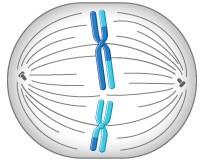
Anaphase I: Homologous chromosomes separate; sister chromatids remain together.
Telophase I and Cytokinesis: Two haploid cells are formed.
Meiosis II: Equational Division
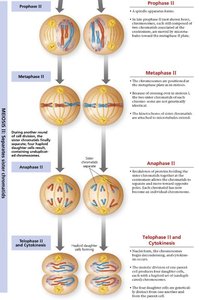
Meiosis II is similar to mitosis but starts with haploid cells. Sister chromatids are separated.
Prophase II: Chromosomes re-condense in each haploid cell.
Metaphase II: Chromosomes align at the metaphase plate.
Anaphase II: Sister chromatids separate and move to opposite poles.
Telophase II and Cytokinesis: Four genetically unique haploid cells are produced.
Comparison: Mitosis vs. Meiosis
Key Differences and Similarities
Mitosis and meiosis are both forms of cell division but serve different purposes and have distinct outcomes.
Feature | Mitosis | Meiosis |
|---|---|---|
Number of divisions | 1 | 2 |
Number of daughter cells | 2 | 4 |
Genetic composition | Identical | Unique |
Ploidy of daughter cells | Diploid (2n) | Haploid (n) |
Role | Growth, repair | Gamete production |
Mechanisms Generating Genetic Variation
Crossing Over and Independent Assortment
Genetic variation in gametes is produced by two main mechanisms during meiosis:
Crossing Over: Exchange of genetic material between non-sister chromatids during Prophase I.
Independent Assortment: Random orientation of homologous pairs during Metaphase I.
Consequences of Errors in Meiosis
Aneuploidy and Its Effects
Errors during meiosis can lead to aneuploidy, where gametes have an abnormal number of chromosomes. This can result in disorders such as Down syndrome (trisomy 21).
Nondisjunction: Failure of homologous chromosomes (in Meiosis I) or sister chromatids (in Meiosis II) to separate properly.
Fertilization of abnormal gametes: Leads to zygotes with extra or missing chromosomes.
Summary Checklist for Studying Meiosis
Differentiate between sister chromatids and homologous chromosomes.
Define haploid (n) and diploid (2n).
Identify where meiosis and mitosis occur and what they generate.
Understand the phases of meiosis I and II and their outcomes.
Compare and contrast mitosis and meiosis.
Explain the significance of meiosis in maintaining ploidy and generating genetic diversity.
Describe the consequences of errors in meiosis (aneuploidy).
