 Indietro
Meiosis, Mitosis, and the Sources of Genetic Variation
Guida di studio - Note intelligenti
 Appunti personalizzati basati sui tuoi materiali, ampliati con definizioni chiave, esempi e contesto.
Inheritance and Sources of Genetic Variation
Overview of Meiosis and Mitosis
Meiosis and mitosis are two fundamental processes of cell division in eukaryotes. Meiosis is essential for sexual reproduction and generates genetic diversity, while mitosis is responsible for growth, development, and tissue repair by producing genetically identical cells.
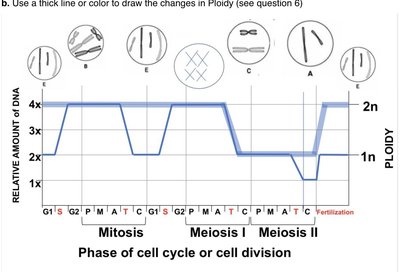
Mitosis produces two identical diploid (2n) daughter cells from a diploid parent cell.
Meiosis reduces the chromosome number by half, producing four genetically unique haploid (n) gametes from a diploid parent cell.
Ploidy refers to the number of sets of chromosomes in a cell (e.g., haploid n, diploid 2n).
Life Cycle and the Role of Meiosis
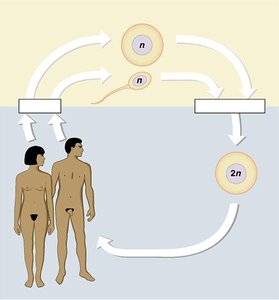
In sexually reproducing organisms, meiosis occurs in the gonads (ovaries or testes) to produce gametes (sperm and eggs). Fertilization restores the diploid state, forming a zygote that develops into a multicellular adult through mitosis.
Somatic cells are body cells that divide by mitosis.
Gametic cells are reproductive cells produced by meiosis.
Genetic Variation in Sexual Reproduction
Mechanisms Generating Genetic Diversity
Sexual reproduction increases genetic diversity through three main mechanisms:
Homologous recombination (crossing over)
Independent assortment of chromosomes
Random fertilization
Mutation (the ultimate source of all genetic variation)
Homologous Recombination (Crossing Over)
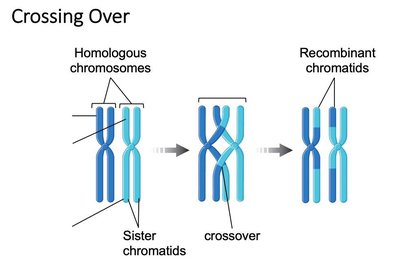
During prophase I of meiosis, homologous chromosomes pair up and exchange segments of chromatids. This process, called crossing over, creates new combinations of alleles that neither parent had, increasing genetic diversity among gametes.
Occurs during prophase I of meiosis.
Results in recombinant chromatids.
Independent Assortment
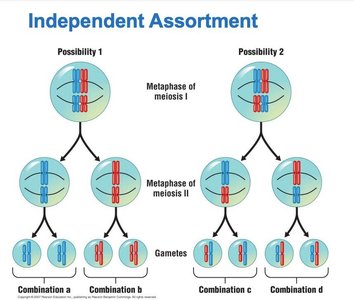
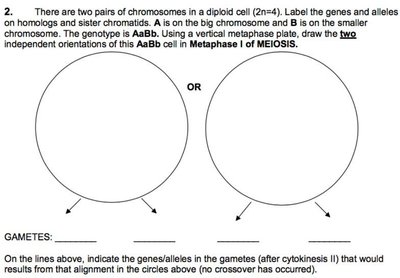
During metaphase I of meiosis, homologous chromosome pairs align randomly at the metaphase plate. The orientation of each pair is independent of the others, leading to a variety of possible combinations in the resulting gametes.
Each gamete receives a random mix of maternal and paternal chromosomes.
For humans, with 23 chromosome pairs, this results in (over 8 million) possible combinations.
Random Fertilization
Any sperm can fertilize any egg, further increasing genetic variation. The combination of independent assortment and random fertilization results in more than 70 trillion possible zygote genotypes in humans.
Genetic diversity is maximized by the random union of gametes.
Phases of Meiosis and Mitosis
Phases of Mitosis
Mitosis consists of one cell division, producing two genetically identical diploid cells. The phases are:
Prophase: Chromosomes condense, spindle forms.
Metaphase: Chromosomes align at the metaphase plate.
Anaphase: Sister chromatids separate.
Telophase and Cytokinesis: Nuclear envelope reforms, cell divides.
Phases of Meiosis
Meiosis involves two sequential divisions:
Meiosis I: Homologous chromosomes separate, reducing chromosome number by half (2n → n).
Meiosis II: Sister chromatids separate (similar to mitosis), resulting in four haploid cells.

Comparison Table: Mitosis vs. Meiosis
Feature | Mitosis | Meiosis I | Meiosis II |
|---|---|---|---|
Ploidy Change | 2n → 2n | 2n → 1n | 1n → 1n |
Sister Chromatids Separate? | Yes | No | Yes |
Homologs Separate? | No | Yes | No |
Crossing Over? | No | Yes | No |
Independent Assortment? | No | Yes | No |
Products | 2 identical diploid cells | 2 unique haploid cells | 4 unique haploid cells (total) |
Mendel’s Laws and Meiosis
Law of Segregation
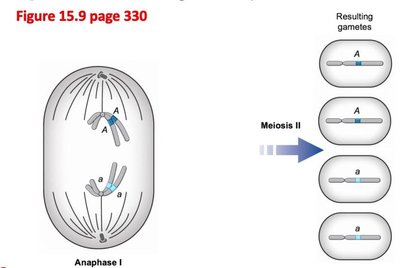
During gamete formation, the two alleles for a gene separate so that each gamete receives only one allele. This occurs during anaphase I of meiosis.
Explains why offspring inherit one allele from each parent.
Law of Independent Assortment
Genes located on different chromosomes assort independently during gamete formation, due to the random orientation of homologous pairs during metaphase I of meiosis.
Results in genetic variation among offspring.
Punnett Squares and Genetic Predictions
Punnett squares are tools used to predict the possible genetic outcomes of a cross. The letters on the margins represent the possible gametes, and the combinations inside the square represent possible zygote genotypes.
Summary Checklist for Studying Meiosis and Mitosis
Differentiate between sister chromatids and homologous chromosomes.
Define haploid (n) and diploid (2n).
Understand the advantages of meiosis (genetic diversity).
Know the sequence of events in meiosis: one DNA replication, two cell divisions.
Be able to draw and label the phases of meiosis I and II.
Compare and contrast mitosis and meiosis in terms of location, products, and purpose.
