 Indietro
Membrane Dynamics and Transport: Study Guide for General Biology
Guida di studio - Note intelligenti
 Appunti personalizzati basati sui tuoi materiali, ampliati con definizioni chiave, esempi e contesto.
Membrane Structure and Components
Phospholipid Bilayer
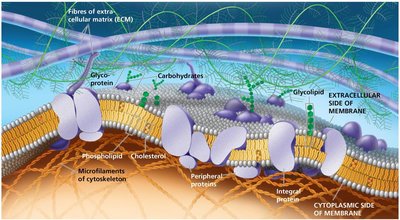
The cell membrane is primarily composed of a phospholipid bilayer, which forms the fundamental structure separating the cell's interior from its external environment. - Phospholipids are amphipathic, containing both hydrophilic (water-loving) heads and hydrophobic (water-fearing) tails. - The hydrophilic heads face the aqueous environments inside and outside the cell, while the hydrophobic tails are oriented inward, away from water. - Most membrane proteins are also amphipathic and are embedded within the bilayer. 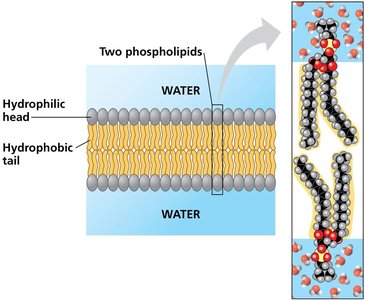
Fluid Mosaic Model
The fluid mosaic model describes the dynamic nature of the cell membrane, where proteins and lipids move within the bilayer. - Proteins are interspersed throughout the membrane, some forming specialized patches (lipid rafts) for specific functions. - Lipid rafts are regions with distinct lipid and protein composition, often involved in cell signaling or transport. 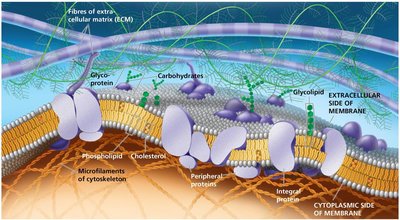
Membrane Fluidity
Membrane fluidity is crucial for proper function and is influenced by lipid composition and temperature. - Van der Waals interactions between fatty acid tails help maintain membrane integrity. - Lipids move laterally rapidly, while proteins move more slowly and may be anchored by the cytoskeleton or extracellular matrix. - Fluidity affects permeability and protein activity; too much or too little fluidity can disrupt membrane function.
Role of Cholesterol
Cholesterol acts as a fluidity buffer in animal cell membranes. - At moderate temperatures, cholesterol reduces fluidity by restraining phospholipid movement. - At low temperatures, cholesterol prevents solidification by disrupting the regular packing of phospholipids. 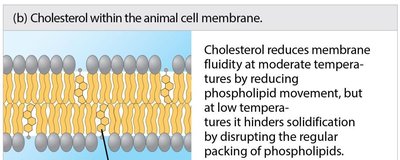
Evolutionary Adaptations in Membrane Composition
Organisms adapt their membrane lipid composition to environmental conditions. - Cold-adapted organisms (e.g., fish, plants) increase unsaturated fatty acids to maintain fluidity. - Thermophilic prokaryotes use unique lipids to prevent excessive fluidity.
Membrane Transport Mechanisms
Diffusion
Diffusion is the passive movement of substances from areas of high concentration to low concentration. - No energy input is required; diffusion is spontaneous. - Example: Oxygen diffuses into cells as its concentration is lowered by cellular respiration. 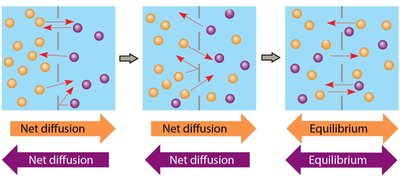
Osmosis
Osmosis is the diffusion of free water across a selectively permeable membrane. - Water moves from regions of higher free water concentration (lower solute) to lower free water concentration (higher solute). - Osmosis is essential for maintaining cell volume and function. 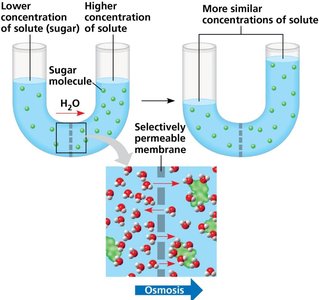
Tonicity and Its Effects on Cells
Tonicity describes how a solution affects cell water balance, depending on solute concentration.
Hypotonic Solution
- Lower solute concentration outside the cell; water enters the cell. - Animal cells swell and may lyse; plant cells become turgid (firm), which is their healthiest state. 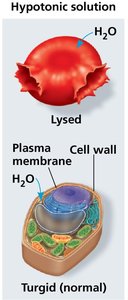
Isotonic Solution
- Equal solute concentration inside and outside; water moves in and out at equal rates. - Animal cells remain stable; plant cells become flaccid and may wilt. 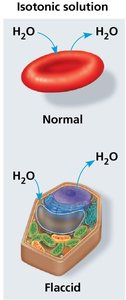
Hypertonic Solution
- Higher solute concentration outside; water exits the cell. - Animal cells shrivel; plant cells undergo plasmolysis, leading to wilting and cell death. 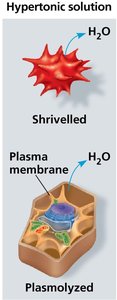
Osmoregulation
Cells regulate water and solute balance to survive in varying environments. - Marine invertebrates and human cells are typically in isotonic environments. - Paramecium uses a contractile vacuole to expel excess water. - Bacteria and archaea adjust internal solute concentrations to prevent water loss. 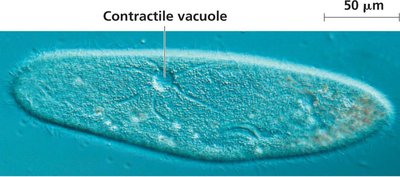
Membrane Proteins and Their Functions
Peripheral and Integral Proteins
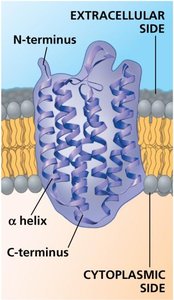
Membrane proteins are essential for cell function and are classified based on their association with the membrane. - Peripheral proteins are loosely attached to the membrane surface, often interacting with integral proteins. - Integral proteins penetrate the hydrophobic interior; transmembrane proteins span the entire membrane, with hydrophobic regions inside and hydrophilic regions exposed to aqueous environments. 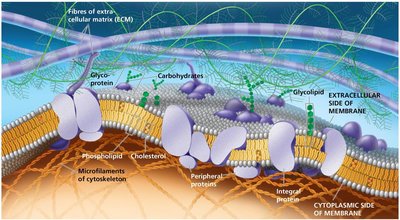
Functions of Membrane Proteins
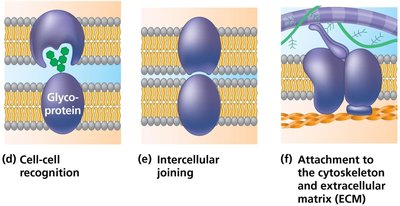
Membrane proteins perform diverse functions, including: - Transport of molecules and ions - Enzymatic activity - Signal transduction - Cell-cell recognition - Intercellular joining - Attachment to cytoskeleton and extracellular matrix 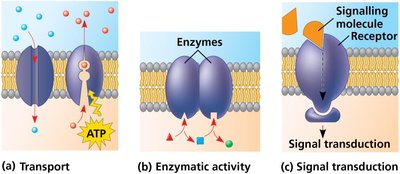
Membrane Carbohydrates and Cell-Cell Recognition
Membrane carbohydrates are involved in cell-cell recognition, allowing cells to distinguish neighbors. - Glycolipids: Carbohydrates covalently bonded to lipids - Glycoproteins: Carbohydrates covalently bonded to proteins - Example: Blood types (A, B, AB, O) are determined by carbohydrate variations on red blood cell glycoproteins.
Synthesis and Sidedness of Membranes
Membranes have distinct inside and outside faces, with asymmetrical distribution of proteins, lipids, and carbohydrates. - This arrangement is established during membrane synthesis in the ER and Golgi apparatus. 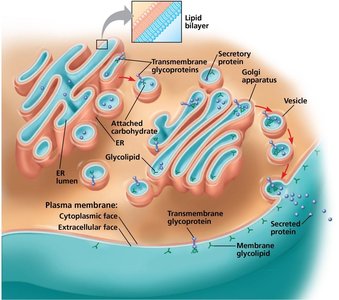
Membrane Permeability and Transport Proteins
Lipid Bilayer Permeability
- Small non-polar molecules (e.g., CO2, O2) cross easily. - Hydrophobic molecules pass through readily. - Ions and polar molecules (e.g., sugars, water) cross slowly or not at all. - Membrane proteins regulate transport of these substances.
Transport Proteins
Transport proteins facilitate movement across the membrane. - Channel proteins provide hydrophilic tunnels for molecules and ions. - Carrier proteins change shape to shuttle molecules across. - Example: Aquaporins allow rapid water transport. 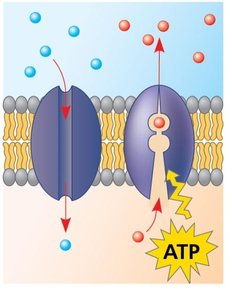
Protein Specificity
Transport proteins are highly specific, allowing only certain substances to cross. - Example: Glucose transporter in red blood cells transports glucose but not fructose.
Passive and Facilitated Transport
Passive Transport
Passive transport involves diffusion across the membrane without energy input. - Molecules move down their concentration gradient. - Dynamic equilibrium is reached when concentrations are equal on both sides. 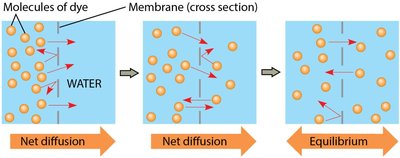
Facilitated Diffusion
Facilitated diffusion is passive transport aided by transmembrane proteins. - Channel proteins provide corridors for specific molecules or ions. - Ion channels may open or close in response to stimuli. - Carrier proteins undergo shape changes to move molecules. 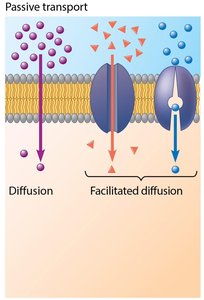
Active Transport and Membrane Potential
Active Transport
Active transport uses energy (usually ATP) to move solutes against their concentration gradients. - Carrier proteins are involved. - ATP hydrolysis provides energy, causing protein shape changes. 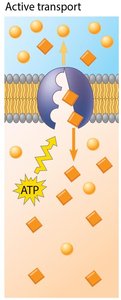
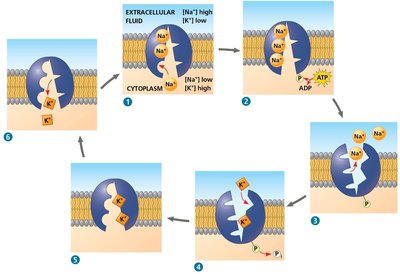
Sodium-Potassium Pump
The sodium-potassium pump maintains high K+ and low Na+ inside animal cells. - Pumps Na+ out and K+ in, using ATP. - Maintains membrane potential and electrochemical gradients.
Membrane Potential and Ion Pumps
- Voltage is the electrical potential energy from charge separation across the membrane. - The cytoplasmic side is negative relative to the extracellular side. - Electrogenic pumps generate voltage; examples include sodium-potassium pump (animals) and proton pump (plants, fungi, bacteria). 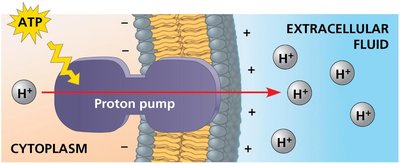
Cotransport
Cotransport couples the downhill diffusion of one solute to the uphill transport of another. - Example: H+/sucrose cotransporter in plants uses the proton gradient to import sucrose. 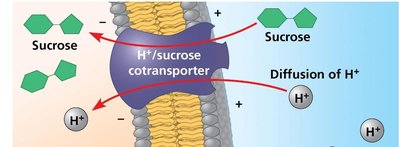
Summary Table: Types of Membrane Transport
Type | Energy Required | Direction | Protein Involved | Example |
|---|---|---|---|---|
Simple Diffusion | No | High to Low | No | O2, CO2 |
Facilitated Diffusion | No | High to Low | Yes (Channel/Carrier) | Glucose, ions |
Active Transport | Yes (ATP) | Low to High | Yes (Carrier) | Na+/K+ pump |
Cotransport | Indirect (uses gradient) | Varies | Yes | H+/sucrose cotransporter |
Key Equations
Osmosis and Water Potential
Where is water potential, is solute potential, and is pressure potential.
Membrane Potential
Where is voltage, is charge, and is capacitance.
Sodium-Potassium Pump Stoichiometry
For each ATP hydrolyzed, 3 sodium ions are pumped out and 2 potassium ions are pumped in.
Additional info:
- The notes expand on brief points with academic context, including definitions, examples, and relevant equations. - All included images directly reinforce the adjacent explanations and are strictly relevant to the topic discussed.
