 Indietro
Membrane Structure and Cell Transport: Study Notes for General Biology
Guida di studio - Note intelligenti
 Appunti personalizzati basati sui tuoi materiali, ampliati con definizioni chiave, esempi e contesto.
Membrane Structure
Functions of the Plasma Membrane
The plasma membrane is a selectively permeable barrier that separates the internal environment of the cell from the external environment. It plays a critical role in maintaining homeostasis by regulating the movement of substances into and out of the cell.
Separation of Compartments: The membrane divides the cell's cytoplasm from the extracellular fluid, creating distinct aqueous environments.
Selective Permeability: Only certain molecules can cross freely; others require assistance.
Communication: Membrane proteins allow cells to communicate with their environment and other cells.
Structural Support: The membrane provides shape and anchors the cytoskeleton.
The Fluid-Mosaic Model and Membrane Asymmetry
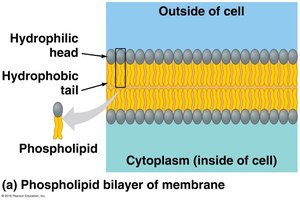
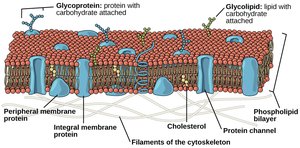
The fluid-mosaic model describes the structure of the plasma membrane as a dynamic and flexible bilayer of phospholipids with embedded proteins, cholesterol, glycolipids, and glycoproteins. The components are not static; they can move laterally within the layer, giving the membrane fluidity.
Phospholipid Bilayer: Composed of hydrophilic (water-attracting) heads and hydrophobic (water-repelling) tails, forming a double layer.
Mosaic of Proteins: Proteins are interspersed throughout the bilayer, each with specific functions.
Asymmetry: The two sides of the membrane have different compositions and functions, contributing to directional processes such as signaling and transport.
Membrane Components and Their Functions
The plasma membrane contains several key components, each with specialized roles:
Phospholipids: Main structural component; form a barrier to polar and ionic substances.
Proteins: Involved in transport, enzymatic activity, cell recognition, signaling, and structural support.
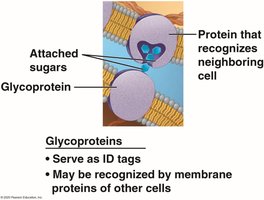
Glycoproteins and Glycolipids: Carbohydrate-attached molecules important for cell recognition, adhesion, and stability.
Cholesterol: Modulates membrane fluidity and stability, preventing extremes of rigidity or fluidity.
Variability in Phospholipids
Phospholipids can differ in the length and saturation of their fatty acid tails, affecting membrane properties:
Tail Length: Longer tails increase rigidity; shorter tails increase fluidity.
Saturation: Unsaturated tails (with double bonds) increase fluidity; saturated tails (no double bonds) make the membrane more rigid.
Membrane Permeability: More fluid membranes are generally more permeable to substances.
Types and Functions of Membrane Proteins
Membrane proteins are essential for the diverse functions of the plasma membrane. They can be classified based on their roles:
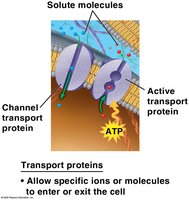
Transport Proteins: Facilitate the movement of substances across the membrane (channels, carriers, pumps).
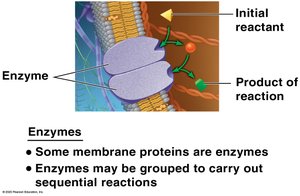
Enzymatic Proteins: Catalyze chemical reactions at the membrane surface.
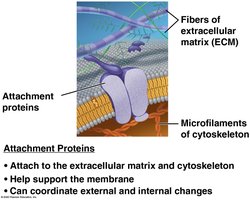
Attachment Proteins: Anchor the membrane to the cytoskeleton and extracellular matrix, providing structural support.
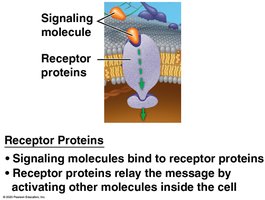
Receptor Proteins: Receive and transmit signals from the environment to the cell's interior.
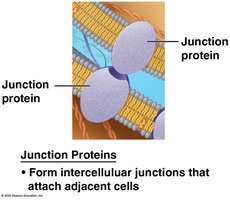
Junction Proteins: Form connections between adjacent cells.
Glycoproteins: Serve as identification tags for cell recognition.
Cell Transport Mechanisms
Overview of Membrane Transport
Cells regulate the movement of substances across their membranes using several mechanisms, which can be classified as passive or active transport.
Passive Transport: Does not require energy; substances move down their concentration gradient.
Active Transport: Requires energy (usually ATP); substances move against their concentration gradient.
Bulk Transport: Moves large molecules or many small molecules at once via vesicles (exocytosis and endocytosis).
Concentration Gradient
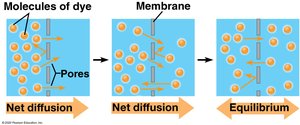
A concentration gradient is the difference in the concentration of a substance between two regions. Substances naturally move from areas of higher concentration to areas of lower concentration, a process known as diffusion.
Brownian Motion
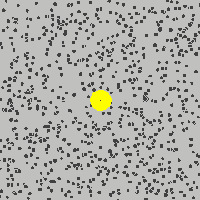
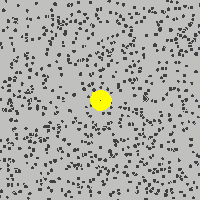
Brownian motion refers to the random movement of particles suspended in a fluid, resulting from collisions with molecules of the surrounding medium. This underlies the process of diffusion.
Diffusion
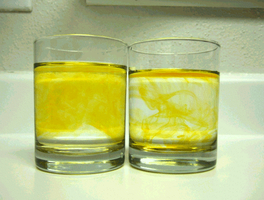
Diffusion is the passive movement of molecules from an area of high concentration to an area of low concentration, driven by the random motion of particles. This process continues until equilibrium is reached.
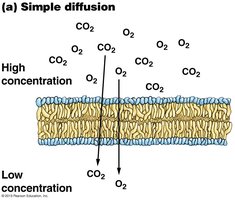
Simple Diffusion: Small, nonpolar molecules (e.g., O2, CO2) move directly through the lipid bilayer.
Equilibrium: When the concentration of molecules is equal on both sides, net movement stops, but molecules continue to move randomly.
Factors Affecting Rate of Diffusion
The rate at which molecules diffuse across a membrane depends on several factors:
Temperature: Higher temperatures increase molecular movement.
Concentration Gradient: Greater differences speed up diffusion.
Mass of Molecules: Smaller molecules diffuse faster.
Surface Area: Larger surface areas allow more diffusion.
Facilitated Diffusion
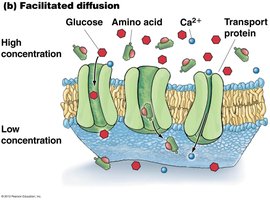
Facilitated diffusion is a type of passive transport where specific proteins help polar or charged substances cross the membrane. No energy is required, and substances move down their concentration gradient.
Channel Proteins: Provide corridors for specific molecules or ions to pass.
Carrier Proteins: Change shape to move substances across the membrane.
Gated Channels: Open or close in response to signals.
Osmosis
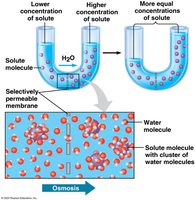
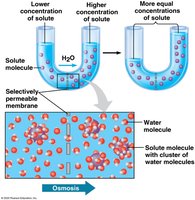
Osmosis is the diffusion of water across a selectively permeable membrane. Water moves from areas of high water concentration (low solute concentration) to areas of low water concentration (high solute concentration).
Only water moves by osmosis.
No energy required.
May use aquaporin proteins, but not always necessary.
Tonicity and Its Effects on Cells
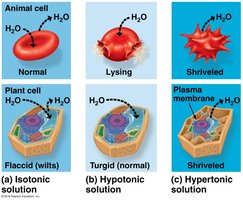
Tonicity describes the ability of a surrounding solution to cause a cell to gain or lose water. It is determined by the concentration of solutes outside the cell relative to inside.
Isotonic Solution: Equal solute concentration; no net water movement.
Hypotonic Solution: Lower solute concentration outside; water enters the cell.
Hypertonic Solution: Higher solute concentration outside; water leaves the cell.
Osmotic Regulation
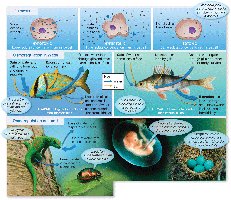
Organisms must regulate their internal water and solute balance to survive in different environments. Mechanisms include kidneys in humans, contractile vacuoles in protists, and osmoconformation in marine animals.
Active Transport
Mechanism of Active Transport
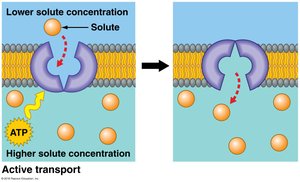
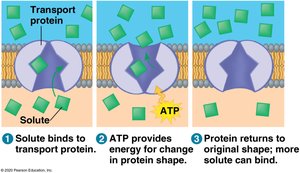
Active transport moves substances against their concentration gradient (from low to high concentration) using energy, typically from ATP, and always requires a carrier protein.
Carrier Proteins: Undergo conformational changes to transport molecules.
Energy Requirement: ATP is hydrolyzed to provide the necessary energy.
The Sodium-Potassium (Na+/K+) Pump
The Na+/K+ pump is a classic example of primary active transport. It maintains the electrochemical gradients essential for nerve impulse transmission and muscle contraction.
Three sodium ions (Na+) are pumped out of the cell.
Two potassium ions (K+) are pumped into the cell.
ATP provides the energy for these movements.
*Additional info: The pump is electrogenic, contributing to the negative charge inside the cell relative to the outside.*
Bulk Transport: Exocytosis and Endocytosis
Bulk transport moves large particles or large quantities of small particles across the membrane using vesicles.
Exocytosis: Vesicles fuse with the plasma membrane to release contents outside the cell.
Endocytosis: The membrane engulfs material, forming a vesicle that brings substances into the cell.
Types of Endocytosis:
Phagocytosis: "Cell eating"; uptake of large particles.
Pinocytosis: "Cell drinking"; uptake of extracellular fluid.
Receptor-mediated Endocytosis: Specific molecules are taken in after binding to receptors.
