 Indietro
Membrane Structure and Function 1
Guida di studio - Note intelligenti
 Appunti personalizzati basati sui tuoi materiali, ampliati con definizioni chiave, esempi e contesto.
Membrane Structure and Function
Introduction to Membrane Structure
The plasma membrane is a fundamental feature of all cells, serving as a selective barrier that regulates the movement of substances into and out of the cell. Its structure and composition are critical for maintaining cellular homeostasis and enabling communication with the environment.
Composition of Cell Membranes
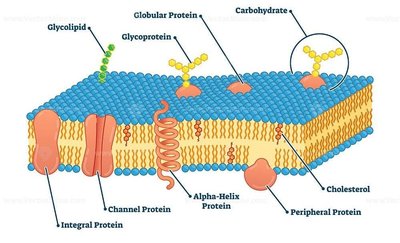
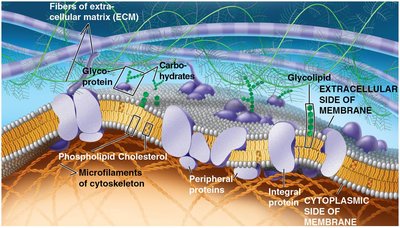
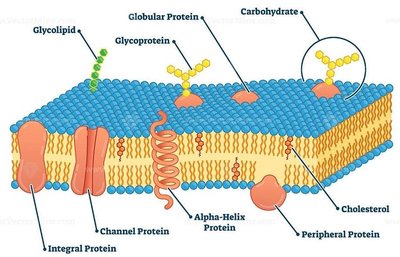
Phospholipids: The primary fabric of the membrane, forming a bilayer with hydrophilic (water-attracting) heads facing outward and hydrophobic (water-repelling) tails facing inward.
Proteins: Embedded within or attached to the membrane, proteins perform a variety of functions including transport, signaling, and structural support.
Carbohydrates: Often attached to proteins (glycoproteins) or lipids (glycolipids), carbohydrates serve as identification markers and play roles in cell-cell recognition.
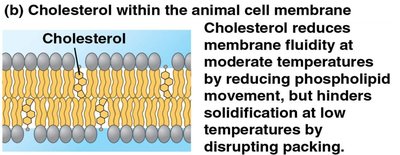
Cholesterol: Interspersed within the phospholipid bilayer of animal cells, cholesterol modulates membrane fluidity and stability.
The Fluid Mosaic Model
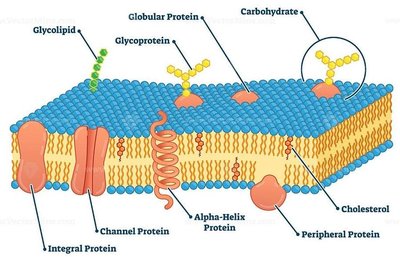
Cell membranes are described as 'fluid mosaic structures' because they consist of a dynamic arrangement of lipids and proteins that can move laterally within the layer. This fluidity is essential for membrane function, allowing for flexibility, self-healing, and the movement of embedded proteins.
Amphipathic Nature: Both phospholipids and many membrane proteins have hydrophobic and hydrophilic regions, allowing them to interact with both the aqueous environment and the membrane interior.
Asymmetry: The distribution of proteins, lipids, and carbohydrates is not uniform across the two leaflets of the bilayer.
Membrane Fluidity and Its Regulation
Membrane fluidity is crucial for proper function. It is influenced by temperature, lipid composition, and the presence of cholesterol.
Hydrophobic Interactions: Weak interactions between fatty acid tails allow for lateral movement of lipids and proteins.
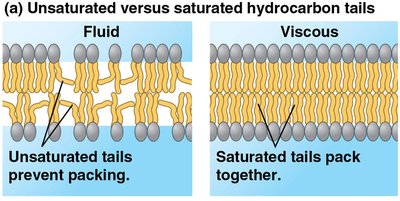
Lipid Composition: Membranes with more unsaturated fatty acids are more fluid, while those with more saturated fatty acids are more viscous.
Cholesterol: Acts as a fluidity buffer, reducing fluidity at high temperatures and preventing solidification at low temperatures.
Adaptation of Membrane Composition
Organisms adapt their membrane lipid composition to environmental conditions. For example, organisms in cold climates have membranes with higher proportions of unsaturated fatty acids to maintain fluidity, while those in hot climates have more saturated fatty acids for stability.
Types of Membrane Proteins
Membrane proteins are classified based on their association with the lipid bilayer:
Integral Proteins: Penetrate the hydrophobic core; some span the entire membrane (transmembrane proteins).
Peripheral Proteins: Loosely bound to the membrane surface, often attached to integral proteins or phospholipids.
Functions of Membrane Proteins
Transport: Channel and carrier proteins facilitate the movement of substances across the membrane.
Enzymatic Activity: Some proteins catalyze reactions at the membrane surface.
Signal Transduction: Receptor proteins transmit signals from the external environment to the cell's interior.
Cell-Cell Recognition: Glycoproteins serve as identification tags recognized by other cells.
Attachment: Proteins anchor the membrane to the cytoskeleton and extracellular matrix.
Selective Permeability of Membranes
The plasma membrane is selectively permeable, allowing some substances to cross more easily than others:
Hydrophobic (nonpolar) molecules: Pass through the lipid bilayer easily (e.g., O2, CO2).
Hydrophilic (polar) molecules and ions: Require transport proteins to cross the membrane.
Mechanisms of Membrane Transport
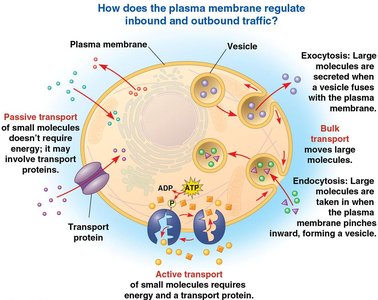
Passive Transport: Movement of molecules down their concentration gradient without energy input. Includes simple diffusion and facilitated diffusion via channel or carrier proteins.
Active Transport: Movement of molecules against their concentration gradient, requiring energy (usually ATP) and transport proteins.
Bulk Transport: Large molecules are transported via vesicles in processes such as endocytosis (into the cell) and exocytosis (out of the cell).
Specialized Transport Proteins
Channel Proteins: Provide hydrophilic tunnels for specific molecules or ions to pass through the membrane.
Carrier Proteins: Bind to molecules and change shape to shuttle them across the membrane.
Aquaporins: Specialized channel proteins that facilitate rapid water transport across the membrane.
Summary Table: Types of Membrane Transport
Transport Type | Energy Required? | Direction | Example |
|---|---|---|---|
Simple Diffusion | No | Down gradient | O2, CO2 |
Facilitated Diffusion | No | Down gradient | Glucose via carrier protein |
Active Transport | Yes (ATP) | Against gradient | Na+/K+ pump |
Bulk Transport | Yes (ATP) | In or out | Endocytosis, exocytosis |
Key Equations
Fick's Law of Diffusion:
Where J is the rate of diffusion, D is the diffusion coefficient, and \frac{dC}{dx} is the concentration gradient.
Summary
Cell membranes are dynamic, selectively permeable barriers composed of a phospholipid bilayer with embedded proteins, carbohydrates, and cholesterol.
Membrane fluidity and composition are regulated to maintain function under varying environmental conditions.
Proteins carry out most membrane functions, including transport, signaling, and cell recognition.
Transport across membranes occurs via passive, active, and bulk mechanisms, with specialized proteins facilitating the movement of hydrophilic molecules.
