 Indietro
Membrane Structure and Function: Study Guide for General Biology
Guida di studio - Note intelligenti
 Appunti personalizzati basati sui tuoi materiali, ampliati con definizioni chiave, esempi e contesto.
The Membrane
Overview of Membrane Structure and Function
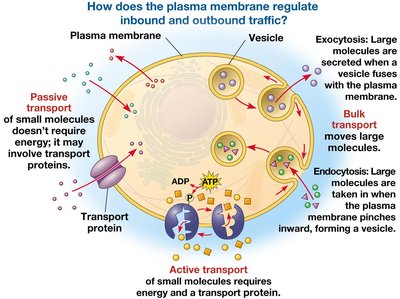
The plasma membrane is a fundamental structure in all cells, regulating the movement of substances into and out of the cell. It is composed primarily of lipids, proteins, and carbohydrates, and its selective permeability is essential for cellular homeostasis.
Passive transport: Small molecules move across the membrane without energy input, sometimes using transport proteins.
Active transport: Requires energy (usually ATP) and transport proteins to move molecules against their concentration gradient.
Bulk transport: Large molecules are moved via exocytosis (out of the cell) or endocytosis (into the cell).
Membrane Structure
Fluid Mosaic Model
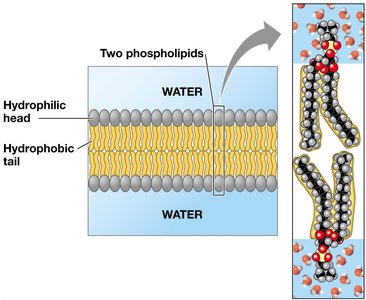
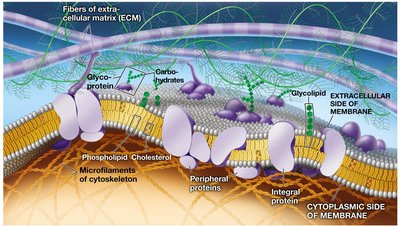
Cellular membranes are described by the fluid mosaic model, which depicts the membrane as a dynamic structure with proteins embedded in a fluid bilayer of phospholipids.
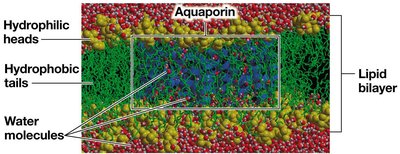
Phospholipids: Amphipathic molecules with hydrophilic heads and hydrophobic tails.
Bilayer formation: Hydrophobic tails face inward, hydrophilic heads face outward toward water.
Proteins: Not randomly distributed; often grouped for specific functions.
Membrane Fluidity
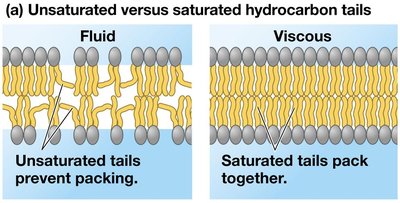
Membrane fluidity is crucial for function and is influenced by lipid composition and temperature.
Hydrophobic interactions: Hold the membrane together, allowing lateral movement of lipids and proteins.
Unsaturated vs. saturated fatty acids: Unsaturated tails increase fluidity; saturated tails decrease fluidity.
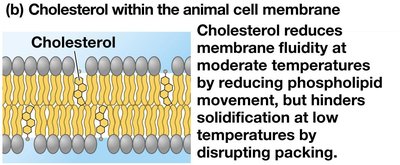
Cholesterol: Buffers fluidity in animal cells, restraining movement at high temperatures and preventing solidification at low temperatures.
Membrane Proteins
Types and Functions of Membrane Proteins
Membrane proteins are diverse and perform many essential functions.
Peripheral proteins: Bound to the membrane surface.
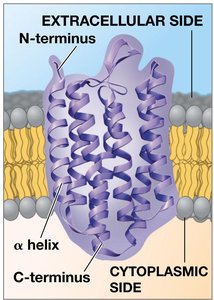
Integral proteins: Penetrate the hydrophobic core; transmembrane proteins span the membrane.
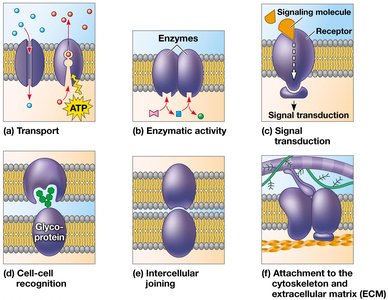
Functions: Transport, enzymatic activity, signal transduction, cell-cell recognition, intercellular joining, attachment to cytoskeleton and extracellular matrix.
Medical Relevance
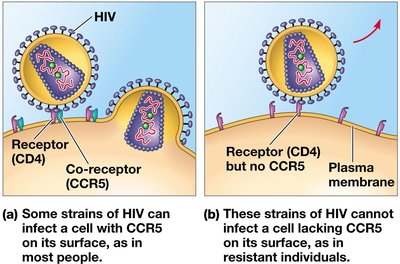
Cell-surface proteins are important in medicine, such as HIV resistance due to the absence of the CCR5 co-receptor.
HIV entry: Requires CD4 and CCR5 or CXCR4 co-receptors.
CCR5 deficiency: Confers resistance to certain HIV strains.
Membrane Carbohydrates
Cell-Cell Recognition
Carbohydrates attached to lipids (glycolipids) or proteins (glycoproteins) serve as markers for cell identification and are crucial for cell-cell recognition.
Diversity: Enables specific cell identification and communication.
Synthesis and Sidedness
Membranes have distinct inside and outside faces, with asymmetrical distribution of proteins, lipids, and carbohydrates. 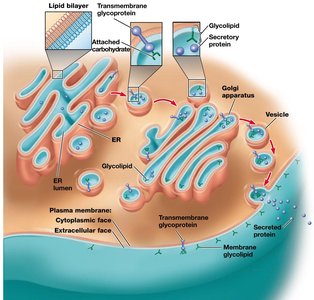
Selective Permeability
Lipid Bilayer Permeability
The plasma membrane allows some substances to cross more easily than others.
Hydrophobic molecules: Pass rapidly (e.g., hydrocarbons, O2, CO2).
Hydrophilic molecules: Pass slowly or not at all (e.g., sugars, ions).
Transport Proteins
Transport proteins facilitate the movement of hydrophilic substances.
Channel proteins: Provide hydrophilic tunnels.
Carrier proteins: Bind and shuttle molecules across the membrane.
Aquaporins: Specialized channels for water transport.
Passive Transport
Diffusion
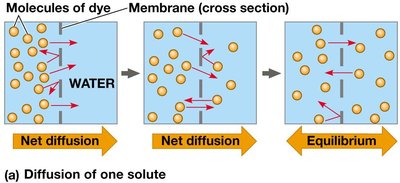
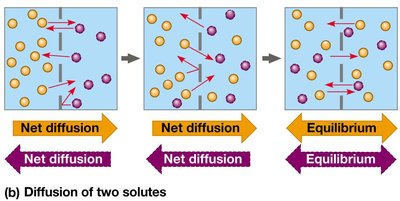
Diffusion is the movement of particles from high to low concentration, driven by the concentration gradient.
Dynamic equilibrium: Equal movement in both directions.
Potential energy: The concentration gradient represents potential energy.
Osmosis
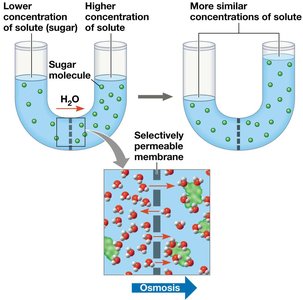
Osmosis is the diffusion of free water across a selectively permeable membrane, from lower to higher solute concentration.
Water balance: Water moves until solute concentrations are equal on both sides.
Water Balance of Cells
Cells Without Cell Walls
Tonicity: Ability of a solution to cause a cell to gain or lose water.
Isotonic: Equal solute concentration; cell volume stable.
Hypertonic: Higher solute outside; cell loses water and shrivels.
Hypotonic: Lower solute outside; cell gains water, swells, and may burst.
Osmoregulation
Organisms in extreme environments use osmoregulation to control water balance.
Paramecium: Uses contractile vacuole to expel excess water in hypotonic environments.
Cells With Cell Walls
Turgor pressure: Pressure exerted by the cell wall when a plant cell takes up water in a hypotonic solution; cell is turgid (firm).
Isotonic: Plant cell becomes flaccid (limp), plant wilts.
Hypertonic: Cell shrivels, membrane pulls away from wall (plasmolysis), plant wilts.
Facilitated Diffusion
Transport Proteins in Facilitated Diffusion
Facilitated diffusion uses channel and carrier proteins to speed passive movement of molecules.
Channel proteins: Provide corridors for specific molecules or ions.
Carrier proteins: Change shape to move solute across the membrane.
Gated channels: Open or close in response to stimuli (electrical or chemical).
Active Transport
Mechanism and Importance
Active transport moves solutes against their concentration gradients using energy, typically from ATP hydrolysis.
Carrier proteins: All active transport proteins are carrier proteins.
Sodium-potassium pump: Maintains high K+ and low Na+ inside animal cells.
Membrane Potential and Ion Pumps
Membrane potential: Voltage across the membrane due to ion distribution.
Electrochemical gradient: Combination of chemical and electrical forces driving ion diffusion.
Electrogenic pumps: Generate voltage; sodium-potassium pump in animals, proton pump in plants, fungi, and bacteria.
Cotransport
Cotransport couples the active transport of one solute to the passive transport of another.
Example in plants: Proton gradient drives sucrose uptake.
Example in animals: Sodium gradient drives glucose uptake in intestines.
Bulk Transport
Exocytosis and Endocytosis
Bulk transport moves large molecules via vesicles.
Exocytosis: Vesicles fuse with the membrane to release contents outside the cell.
Endocytosis: Membrane forms vesicles to bring in macromolecules.
Types of endocytosis: Phagocytosis (cellular eating), pinocytosis (cellular drinking), receptor-mediated endocytosis (specific uptake).
Summary Table: Types of Membrane Transport
Type | Energy Required | Transport Protein | Direction | Example |
|---|---|---|---|---|
Passive Transport | No | Sometimes | Down gradient | O2 diffusion |
Facilitated Diffusion | No | Yes | Down gradient | Glucose via carrier protein |
Active Transport | Yes (ATP) | Yes | Against gradient | Sodium-potassium pump |
Bulk Transport | Yes | No | Variable | Exocytosis, endocytosis |
Key Equations
Osmosis and Water Potential
Water potential () determines the direction of water movement: where is solute potential and is pressure potential.
Membrane Potential
Membrane potential () is calculated as: where is charge and is capacitance.
Conclusion
Understanding membrane structure and function is essential for grasping how cells interact with their environment, maintain homeostasis, and perform vital biological processes. The plasma membrane's selective permeability, dynamic structure, and transport mechanisms are central to cell biology.
