 Indietro
Membrane Structure and Function: Study Guide for General Biology
Guida di studio - Note intelligenti
 Appunti personalizzati basati sui tuoi materiali, ampliati con definizioni chiave, esempi e contesto.
Membrane Structure and Function
Overview of Cellular Membranes
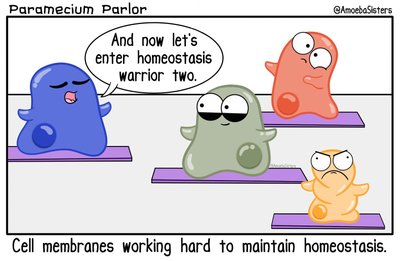
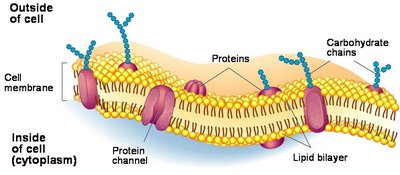
Cellular membranes are essential for maintaining homeostasis and regulating the internal environment of the cell. The plasma membrane is a dynamic structure composed primarily of lipids and proteins, with carbohydrates playing a key role in cell recognition.
Fluid Mosaic Model: The membrane is a mosaic of protein molecules drifting laterally in a fluid bilayer of phospholipids.
Main Components: Lipids (especially phospholipids), proteins, and carbohydrates.
Selective Permeability: Membranes allow certain substances to pass while restricting others.
Phospholipids: Structure and Properties
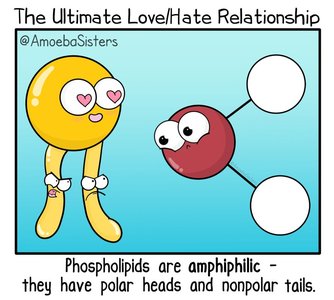
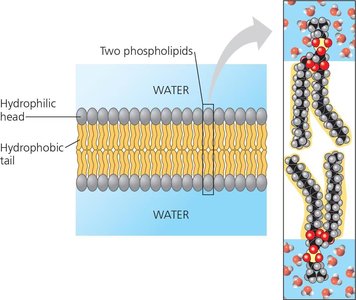
Phospholipids are the most abundant lipid in cell membranes and are amphipathic, meaning they have both hydrophilic and hydrophobic regions. This property is crucial for membrane formation and function.
Hydrophilic Head: Attracts water.
Hydrophobic Tail: Repels water.
Amphipathic Nature: Drives the formation of the bilayer, with heads facing outward toward water and tails inward away from water.
Membrane Proteins: Types and Functions
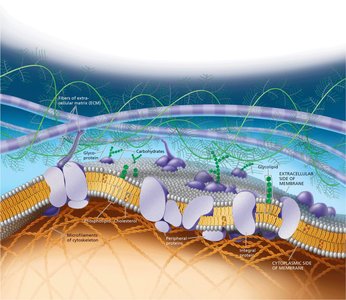
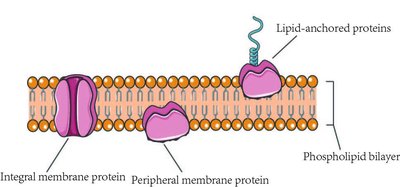
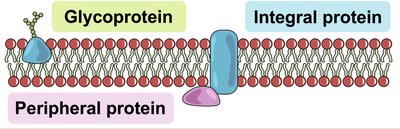
Proteins embedded in the membrane determine most of its functions. They can be integral (spanning the membrane) or peripheral (attached to the surface).
Integral Proteins: Penetrate the hydrophobic interior; most are transmembrane.
Peripheral Proteins: Loosely bound to the membrane surface or to integral proteins.
Functions: Transport, enzymatic activity, signal transduction, cell-cell recognition, intercellular joining, and attachment to the cytoskeleton and extracellular matrix.
Membrane Fluidity
The fluidity of the membrane is vital for its function, affecting permeability and the movement of proteins. Fluidity is influenced by temperature, cholesterol, and the saturation of fatty acid tails.
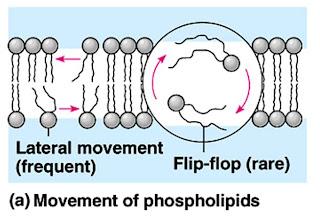
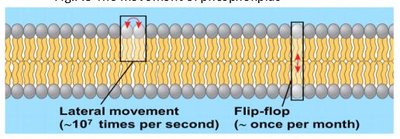
Hydrophobic Interactions: Hold the membrane together, allowing lateral movement of lipids and proteins.
Lateral Movement: Lipids move rapidly sideways; flip-flop across the membrane is rare.
Factors Affecting Fluidity:
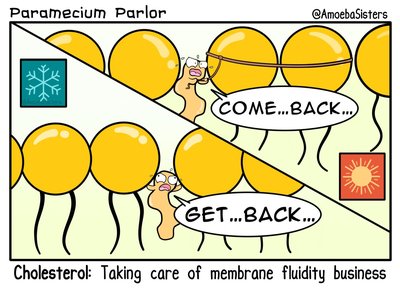
Temperature: Lower temperatures can solidify the membrane.
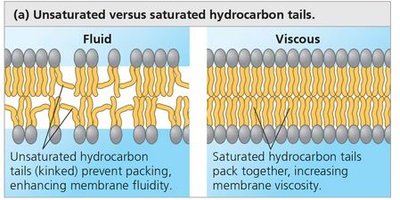
Unsaturated Fatty Acids: Increase fluidity due to kinks in tails.
Saturated Fatty Acids: Decrease fluidity by packing tightly.
Cholesterol: Acts as a fluidity buffer, maintaining membrane stability across temperatures.
Evolutionary Adaptations in Membrane Lipid Composition
Organisms adapt their membrane lipid composition to environmental conditions to maintain proper fluidity.
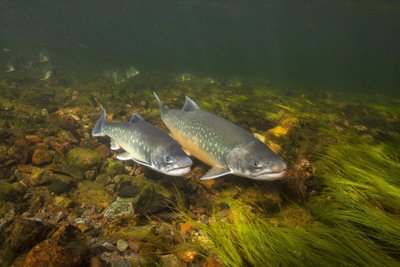
Cold Environments: More unsaturated hydrocarbon tails to prevent solidification (e.g., fish in cold water).
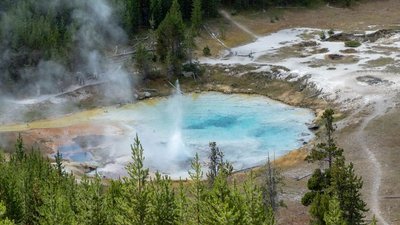
Hot Environments: More saturated fatty acids to maintain membrane integrity (e.g., bacteria in hot springs).
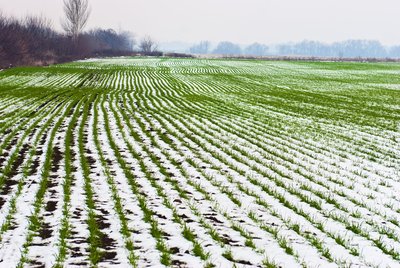
Plants: Increase unsaturated phospholipids in cold seasons to prevent membrane solidification.
Membrane Carbohydrates and Cell-Cell Recognition
Carbohydrates attached to lipids (glycolipids) or proteins (glycoproteins) on the membrane surface are crucial for cell-cell recognition.
Cell-Cell Recognition: Allows cells to distinguish neighboring cells, important for immune response.
Blood Types: Determined by carbohydrate variations on glycoproteins of red blood cells.
Selective Permeability of the Membrane
The membrane's structure allows selective permeability, regulating the passage of substances.
Cross Easily: Small nonpolar molecules (e.g., O2, CO2).
Cross Slowly: Polar molecules (e.g., water, glucose).
Do Not Cross: Ions and large polar molecules without transport proteins.
Transport Proteins
Transport proteins facilitate the movement of hydrophilic substances across the membrane.
Channel Proteins: Provide hydrophilic channels for molecules or ions.
Carrier Proteins: Change shape to shuttle substances across.
Specificity: Each transport protein is specific for the substance it moves.
Passive Transport
Passive transport involves the diffusion of substances across the membrane without energy expenditure.
Diffusion: Movement from high to low concentration.
Osmosis: Diffusion of water across a selectively permeable membrane.
Tonicity: The ability of a solution to cause a cell to gain or lose water.
Water Balance in Cells
Isotonic: No net movement of water; cell volume stable.
Hypertonic: Cell loses water and shrivels.
Hypotonic: Cell gains water, swells, and may burst.
Osmoregulation: Adaptations to control solute concentrations and water balance.
Plant Cells: Cell wall prevents excessive swelling; turgid state is healthy.
Plasmolysis: Shrinking of cytoplasm away from cell wall in hypertonic solutions.
Facilitated Diffusion
Facilitated diffusion is passive transport aided by proteins, allowing molecules and ions to move down their concentration gradients.
Ion Channels: Many are gated, opening or closing in response to stimuli.
Active Transport
Active transport moves substances against their concentration gradients, requiring energy (usually from ATP).
Carrier Proteins: Mediate active transport.
Example: Sodium-potassium pump maintains high K+ and low Na+ inside animal cells.
ATP Hydrolysis: Powers active transport by transferring a phosphate group to the transport protein, inducing a shape change.
Membrane Potential and Ion Pumps
Membrane Potential: Voltage across the membrane due to unequal distribution of ions.
Electrochemical Gradient: Combination of chemical and electrical forces driving ion diffusion.
Electrogenic Pumps: Generate voltage across the membrane (e.g., sodium-potassium pump in animals, proton pump in plants, fungi, bacteria).
Cotransport: Coupling of downhill diffusion of one substance to uphill transport of another.
Bulk Transport: Exocytosis and Endocytosis
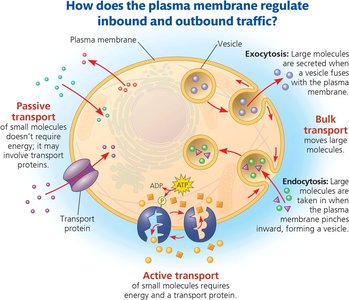
Large molecules are transported across the membrane in bulk via vesicles.
Exocytosis: Secretion of molecules by fusion of vesicles with the plasma membrane.
Endocytosis: Uptake of molecules by formation of vesicles from the plasma membrane.
Phagocytosis: "Cellular eating" of large particles.
Pinocytosis: "Cellular drinking" of extracellular fluid.
Receptor-Mediated Endocytosis: Specific uptake of molecules via receptor proteins.
Summary Table: Types of Membrane Transport
Type | Energy Required | Direction | Example |
|---|---|---|---|
Passive Transport | No | Down concentration gradient | O2 diffusion |
Facilitated Diffusion | No | Down concentration gradient | Glucose transport |
Active Transport | Yes (ATP) | Against concentration gradient | Sodium-potassium pump |
Bulk Transport | Yes (ATP) | In or out of cell | Exocytosis, endocytosis |
Key Equations
Membrane Potential: Where V is voltage, Q is charge, and C is capacitance.
Diffusion: Where J is flux, D is diffusion coefficient, C is concentration, and x is position.
Additional info:
Membrane fluidity is essential for proper function of membrane proteins and permeability.
Adaptations in lipid composition are crucial for survival in extreme environments.
Cell-cell recognition is fundamental for immune response and tissue formation.
