 Indietro
Membrane Structure and Function: Study Notes for General Biology
Guida di studio - Note intelligenti
 Appunti personalizzati basati sui tuoi materiali, ampliati con definizioni chiave, esempi e contesto.
The Plasma Membrane
Overview and Structure
The plasma membrane is a fundamental cellular structure that separates the living cell from its external environment. It is primarily composed of a phospholipid bilayer and is best described by the fluid mosaic model. This model highlights the dynamic and heterogeneous nature of the membrane, where lipids and proteins move laterally within the layer, contributing to membrane fluidity and function.
Selective permeability: The membrane allows some substances to cross more easily than others, maintaining homeostasis.
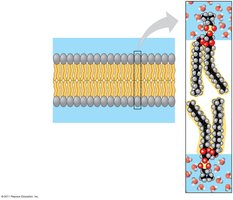
Phospholipids: Amphipathic molecules with hydrophilic (water-attracting) heads and hydrophobic (water-repelling) tails.
Proteins: Embedded within or attached to the bilayer, serving various functions such as transport, signaling, and structural support.
Phospholipid Bilayer
The phospholipid bilayer forms the basic structure of the membrane, with hydrophilic heads facing outward toward water and hydrophobic tails oriented inward, away from water. This arrangement creates a semi-permeable barrier.
Hydrophilic heads: Interact with aqueous environments inside and outside the cell.
Hydrophobic tails: Form the core of the membrane, preventing free passage of water-soluble substances.
Fluid Mosaic Model
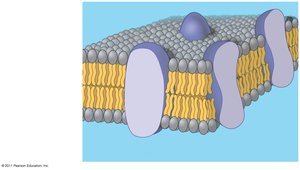
The fluid mosaic model describes the membrane as a mosaic of protein molecules bobbing in a fluid bilayer of phospholipids. This fluidity is essential for membrane function, allowing for the movement of proteins and lipids within the layer.
Lateral movement: Lipids and some proteins move side-to-side frequently.
Flip-flop movement: Rare movement of lipids from one leaflet to the other.
Membrane Components
Complexity of Membranes
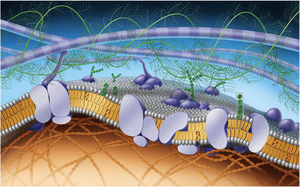
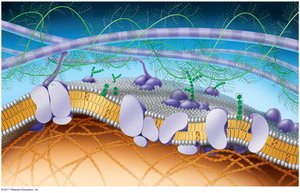
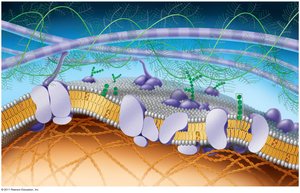
Membranes are complex structures containing various proteins, carbohydrates, and lipids. These components contribute to the diverse functions of the membrane, including communication, transport, and structural integrity.
Integral proteins: Span the membrane and are involved in transport and signaling.
Peripheral proteins: Loosely attached to the membrane surface, often involved in signaling or maintaining cell shape.
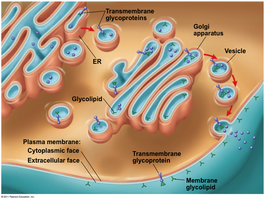
Carbohydrates: Attached to proteins (glycoproteins) or lipids (glycolipids), playing a role in cell recognition.
Cholesterol: Modulates membrane fluidity and stability.
Membrane Fluidity
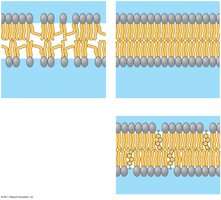
Membrane fluidity is influenced by temperature, fatty acid composition, and cholesterol content. Fluidity is crucial for membrane function, affecting the movement of materials and the activity of membrane proteins.
Temperature: Lower temperatures decrease fluidity; higher temperatures increase it.
Fatty acid composition: Unsaturated fatty acids increase fluidity; saturated fatty acids decrease it.
Cholesterol: Acts as a fluidity buffer, increasing fluidity at low temperatures and decreasing it at high temperatures.
Unique Adaptations in Membrane Fluidity
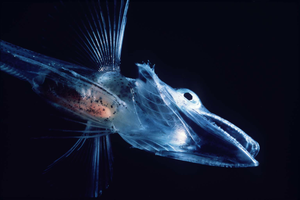
Certain organisms, such as icefish, have unique adaptations in their membrane composition to maintain fluidity in extreme environments.
Example: Icefish have membranes rich in unsaturated fatty acids, preventing rigidity in cold temperatures.
Membrane Proteins
Types of Membrane Proteins
Membrane proteins are classified based on their association with the lipid bilayer:
Integral proteins: Penetrate the hydrophobic core; often transmembrane proteins.
Peripheral proteins: Bound to the surface of the membrane.
Transmembrane Proteins
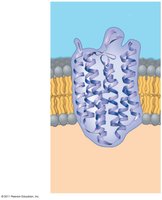
Transmembrane proteins span the entire membrane and are involved in various functions such as transport, signal transduction, and cell recognition.
Structure: Often contain alpha-helical regions that traverse the membrane.
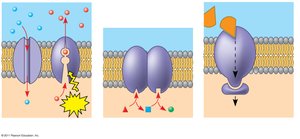
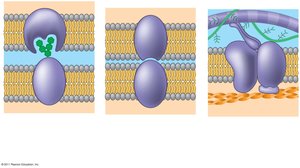
Functions of Membrane Proteins
Membrane proteins perform a variety of essential functions:
Transport: Channel and carrier proteins facilitate the movement of substances across the membrane.
Enzymatic activity: Some proteins act as enzymes, catalyzing reactions at the membrane surface.
Signal transduction: Receptor proteins transmit signals from the external environment to the cell interior.
Cell-cell recognition: Glycoproteins serve as identification tags for cell recognition.
Intercellular joining: Proteins help cells adhere to one another.
Attachment: Proteins anchor the membrane to the cytoskeleton and extracellular matrix.
Membrane Carbohydrates
Role in Cell-Cell Recognition
Membrane carbohydrates are crucial for cell-cell recognition, allowing cells to identify and interact with each other. They are usually covalently bonded to lipids (forming glycolipids) or proteins (forming glycoproteins).
Example: Blood type antigens are determined by specific glycoproteins on red blood cell membranes.
Membrane Transport
Selective Permeability
The plasma membrane exhibits selective permeability, allowing certain molecules to pass while restricting others.
Pass easily: Small, nonpolar molecules (e.g., O2, CO2), lipids, and some small polar molecules (e.g., H2O).
Do not pass easily: Large, polar molecules (e.g., proteins, polysaccharides) and ions (e.g., K+, Na+).
Transport Proteins
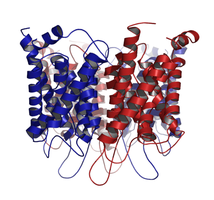
Transport proteins facilitate the movement of hydrophilic substances across the membrane. There are two main types:
Channel proteins: Provide hydrophilic tunnels for specific molecules or ions.
Carrier proteins: Bind to molecules and change shape to shuttle them across the membrane.
Diffusion
Diffusion is the passive movement of molecules from an area of higher concentration to an area of lower concentration, down their concentration gradient. This process does not require energy.
Example: Oxygen entering a cell by diffusion.
Osmosis and Tonicity
Osmosis is the diffusion of water across a selectively permeable membrane. Tonicity describes the ability of a solution to cause a cell to gain or lose water:
Isotonic: No net water movement; cell remains stable.
Hypertonic: Cell loses water and shrivels.
Hypotonic: Cell gains water and may burst (animal cells) or become turgid (plant cells).
Facilitated Diffusion
Facilitated diffusion is a passive transport process where transport proteins speed the movement of molecules down their concentration gradient.
Active Transport
Active transport moves molecules against their concentration gradient and requires energy, usually in the form of ATP.
Example: Sodium-potassium pump in animal cells.
Ion Pumps and Membrane Potential
Ion pumps are transport proteins that move ions across the membrane, contributing to the membrane potential—the voltage difference across a membrane. This creates an electrochemical gradient that drives many cellular processes.
Cotransport
Cotransport occurs when the active transport of one solute indirectly drives the transport of another solute. For example, the proton pump creates a gradient used to transport sucrose into the cell.
Bulk Transport
Large molecules are transported across the membrane via bulk transport mechanisms:
Exocytosis: Movement of large molecules out of the cell by vesicle fusion with the plasma membrane.
Endocytosis: Movement of large molecules into the cell by forming vesicles from the plasma membrane.
