 Indietro
Membrane Structure and Function: Study Notes for General Biology
Guida di studio - Note intelligenti
 Appunti personalizzati basati sui tuoi materiali, ampliati con definizioni chiave, esempi e contesto.
Membrane Structure and Function
Overview of Cellular Membranes
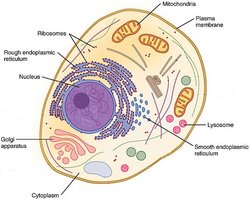
Cellular membranes are essential structures that define the boundaries of cells and organelles. All cells possess a plasma membrane, while only eukaryotic cells have internal organelles surrounded by membranes. The plasma membrane separates the living cell from its environment and regulates the movement of substances in and out of the cell.
Plasma membrane: Encloses the entire cell, maintaining the internal environment.
Organelle membranes: Surround structures such as the nucleus, mitochondria, and endoplasmic reticulum in eukaryotes.
Functions of the Plasma Membrane
The plasma membrane performs several critical functions for the cell:
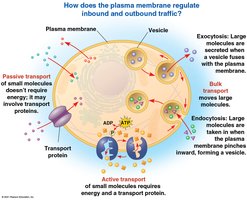
Selective barrier: Controls inbound and outbound trafficking of molecules.
Cell-cell interactions: Facilitates communication and recognition between cells.
Maintains homeostasis: Regulates the internal environment by selective permeability.
Components of Cellular Membranes
Major Components
Cellular membranes are composed of three main types of molecules:
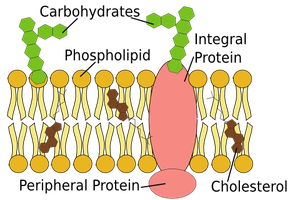
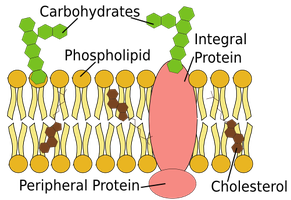
Lipids: Primarily phospholipids (most abundant), and cholesterol (in animal cells).
Proteins: Integral and peripheral proteins with diverse functions.
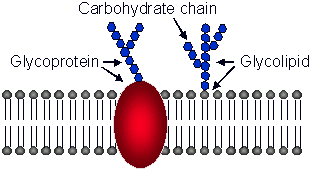
Carbohydrates: Attached to lipids (glycolipids) or proteins (glycoproteins), mainly on the extracellular surface.
Phospholipids and the Lipid Bilayer
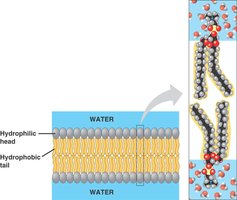
Phospholipids are amphipathic molecules with hydrophilic heads and hydrophobic tails. In aqueous environments, they spontaneously form bilayers, which are the fundamental structure of all cellular membranes.
Hydrophilic head: Interacts with water.
Hydrophobic tails: Associate with each other, avoiding water.
Bilayer formation: Provides a stable barrier between two aqueous compartments.
Fluidity of Membranes
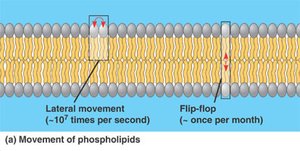
Membranes are dynamic structures. Lipids and some proteins move laterally within the layer, contributing to membrane fluidity. Fluidity is essential for membrane function and is influenced by temperature and fatty acid composition.
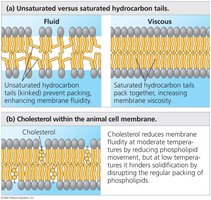
Unsaturated fatty acids: Increase fluidity due to kinks in tails.
Saturated fatty acids: Decrease fluidity by packing tightly.
Cholesterol: Modulates fluidity in animal cells.
The Fluid Mosaic Model
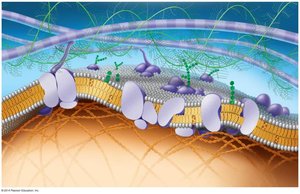
The fluid mosaic model describes the membrane as a mosaic of proteins floating in or on a fluid lipid bilayer. Proteins are not randomly distributed and the two sides of the membrane are distinct in composition and function.
Membrane Proteins
Membrane proteins are responsible for most of the specific functions of membranes. They can be classified as:
Integral proteins: Penetrate the hydrophobic core of the bilayer.
Peripheral proteins: Loosely bound to the membrane surface.
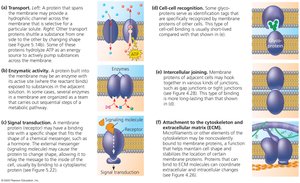
Functions of Membrane Proteins
Transport: Move substances across the membrane.
Enzymatic activity: Catalyze reactions at the membrane surface.
Signal transduction: Relay signals from outside to inside the cell.
Cell-cell recognition: Identify and interact with other cells.
Intercellular joining: Connect adjacent cells.
Attachment: Anchor the membrane to the cytoskeleton and extracellular matrix.
Membrane Carbohydrates
Carbohydrates are found on the extracellular surface of the plasma membrane, attached to proteins (glycoproteins) or lipids (glycolipids). They play a key role in cell-cell recognition and specifying cell identity.
Cell recognition: Important for immune response and tissue formation.
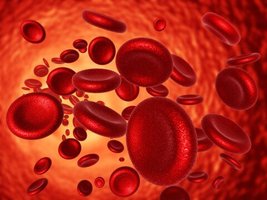
Blood types: Determined by specific glycoproteins on red blood cells.
Synthesis and Sidedness of Membranes
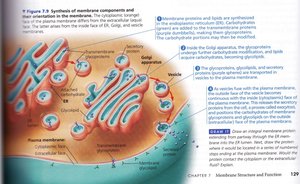
All components of the plasma membrane are synthesized in the endoplasmic reticulum (ER) and Golgi apparatus, then transported to the membrane by vesicles. The orientation of proteins and lipids is maintained during this process.
Membrane Permeability and Transport
Selective Permeability
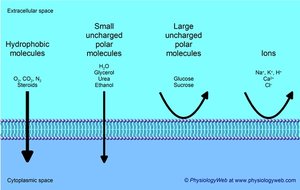
The plasma membrane is selectively permeable, allowing some substances to cross more easily than others. Both size and charge of molecules affect their ability to cross the membrane.
Hydrophobic (nonpolar) molecules: Pass through rapidly (e.g., O2, CO2).
Small uncharged polar molecules: Pass through slowly (e.g., H2O).
Ions and large polar molecules: Require transport proteins.
Mechanisms of Transport
Molecules move across the plasma membrane by two main mechanisms:
Passive transport: Does not require energy (diffusion, facilitated diffusion, osmosis).
Active transport: Requires energy (ATP) to move substances against their concentration gradient.
Passive Transport: Diffusion
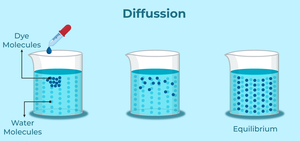
Diffusion is the movement of molecules from an area of high concentration to an area of low concentration until equilibrium is reached.
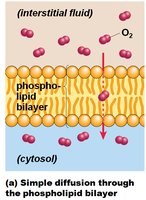
Simple diffusion: Directly through the lipid bilayer (e.g., O2, CO2).
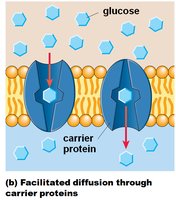
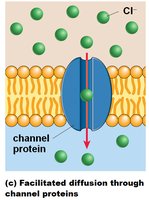
Facilitated diffusion: Via transport proteins (carrier or channel proteins) for ions and polar molecules.
Osmosis
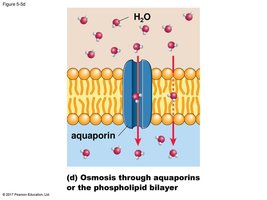
Osmosis is the diffusion of free water across a selectively permeable membrane. Water moves from regions of higher free water concentration (lower solute) to lower free water concentration (higher solute).
Tonicity and Water Balance
Tonicity describes the ability of a surrounding solution to cause a cell to gain or lose water. It depends on the concentration of non-penetrating solutes.
Isotonic: No net water movement; cell remains stable.
Hypertonic: Cell loses water; shrinks.
Hypotonic: Cell gains water; may swell or burst.
Active Transport
Active transport moves substances against their concentration gradients using energy (usually ATP). This process is essential for maintaining concentration differences across membranes.
Sodium-potassium pump: Pumps 3 Na+ out and 2 K+ in, creating an electrochemical gradient.
Membrane potential: Voltage across the membrane due to ion distribution.
Electrogenic pumps: Generate voltage across membranes (e.g., sodium-potassium pump in animals).
Bulk Transport
Large molecules and particles are transported across the membrane in bulk via vesicles. These processes require energy.
Exocytosis: Secretion of materials by fusion of vesicles with the plasma membrane.
Endocytosis: Uptake of materials by forming vesicles from the plasma membrane.
Phagocytosis: "Cellular eating" of large particles.
Pinocytosis: "Cellular drinking" of extracellular fluid.
