 Indietro
Membrane Structure and Function: Study Notes for General Biology
Guida di studio - Note intelligenti
 Appunti personalizzati basati sui tuoi materiali, ampliati con definizioni chiave, esempi e contesto.
The Membrane
Overview of Membrane Function
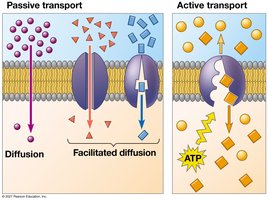
The plasma membrane is a critical structure that regulates the movement of substances into and out of the cell. It achieves this through selective permeability, allowing only certain molecules to pass while blocking others. - Passive transport: Small molecules move across the membrane without energy input, sometimes requiring transport proteins. - Active transport: Some molecules require both energy and transport proteins to cross the membrane. - Bulk transport: Large molecules use exocytosis or endocytosis to move in and out of the cell.
Membrane Structure
Fluid Mosaic Model
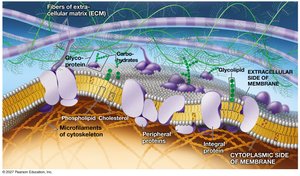
Cellular membranes are composed mainly of lipids and proteins, with carbohydrates also playing important roles. The fluid mosaic model describes the membrane as a mosaic of protein molecules floating in a fluid bilayer of phospholipids. - Phospholipids: Amphipathic molecules with hydrophobic tails and hydrophilic heads. - Proteins: Not randomly distributed; often grouped for common functions. - Carbohydrates: Important for cell-cell recognition. 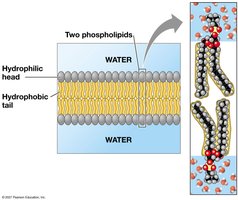
Membrane Fluidity
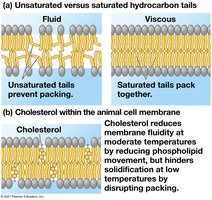
Membrane fluidity is essential for proper function, affecting permeability and protein movement. Fluidity is influenced by the types of lipids present and the presence of cholesterol. - Hydrophobic interactions: Hold the membrane together. - Lipid movement: Most lipids and some proteins move sideways; flip-flop is rare. - Adaptation: Organisms in extreme temperatures adjust membrane lipid composition. 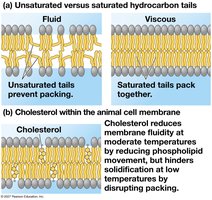
Membrane Proteins
Membrane proteins are classified as peripheral or integral, with transmembrane proteins spanning the membrane. - Peripheral proteins: Bound to the membrane surface. - Integral proteins: Penetrate the hydrophobic core; transmembrane proteins span the membrane. - Hydrophobic regions: Often consist of nonpolar amino acids in α helices. 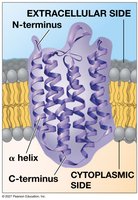
Functions of Membrane Proteins
Cell-surface membrane proteins perform various functions essential for cell survival and communication. - Transport: Move substances across the membrane. - Enzymatic activity: Catalyze reactions. - Signal transduction: Relay signals from outside to inside the cell. - Cell-cell recognition: Identify other cells. - Intercellular joining: Connect cells. - Attachment: Link to cytoskeleton and extracellular matrix. 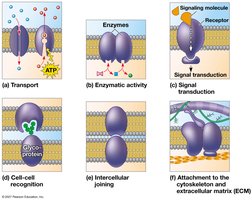
Membrane Carbohydrates and Cell-Cell Recognition
Membrane carbohydrates are crucial for cell-cell recognition, often attached to lipids (glycolipids) or proteins (glycoproteins). - Diversity: Surface carbohydrates serve as markers for cell identification.
Selective Permeability
Lipid Bilayer Permeability
The plasma membrane's structure results in selective permeability, controlling the exchange of materials. - Hydrophobic molecules: Pass rapidly through the membrane. - Hydrophilic molecules: Pass slowly or not at all.
Transport Proteins
Hydrophilic substances cross membranes more efficiently via transport proteins. - Channel proteins: Provide hydrophilic channels. - Carrier proteins: Bind and shuttle molecules across.
Passive Transport
Diffusion
Diffusion is the movement of particles from high to low concentration, resulting in equilibrium. - Dynamic equilibrium: Equal movement in both directions. - Concentration gradient: Drives diffusion; represents potential energy. 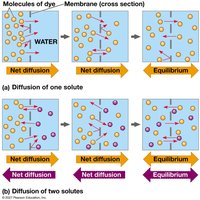
Osmosis
Osmosis is the diffusion of free water across a selectively permeable membrane. Water moves from lower to higher solute concentration until equilibrium is reached. 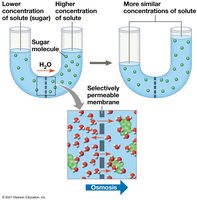
Water Balance and Tonicity
Tonicity describes a solution's ability to cause a cell to gain or lose water, depending on solute concentration. - Cells without cell walls: Water movement depends on tonicity. - Cells with cell walls: Plant cells become turgid in hypotonic solutions; plasmolysis occurs in hypertonic environments.
Facilitated Diffusion
Facilitated diffusion uses transport proteins to speed passive movement of molecules. - Channel proteins: Form tunnels. - Carrier proteins: Change shape to move molecules. 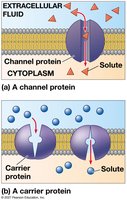
Active Transport
Mechanism of Active Transport
Active transport moves solutes against their concentration gradients using energy, typically ATP. - Facilitated diffusion: Passive, down gradient. - Active transport: Requires energy, up gradient. 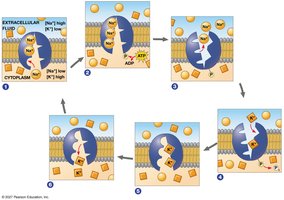
Membrane Potential and Ion Pumps
Membrane potential is the voltage across a membrane, created by ion distribution. - Electrochemical gradient: Combination of chemical and electrical forces. - Electrogenic pumps: Generate voltage; sodium-potassium pump in animals, proton pump in plants, fungi, and bacteria. 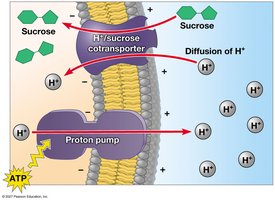
Bulk Transport
Exocytosis
Exocytosis is the process by which cells export large molecules via vesicles that fuse with the plasma membrane. - Example: Pancreatic cells secrete insulin by exocytosis. 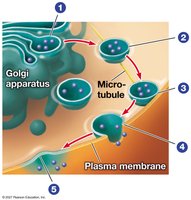
Endocytosis
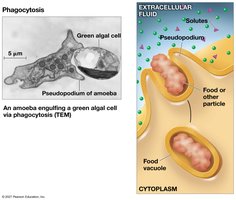
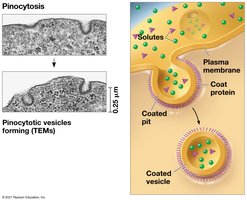
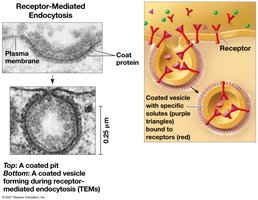
Endocytosis allows cells to import large molecules by engulfing them in vesicles. There are three types: - Phagocytosis: "Cellular eating"; cell engulfs particles. - Pinocytosis: "Cellular drinking"; cell takes in fluid. - Receptor-mediated endocytosis: Specific molecules are taken in after binding to receptors. 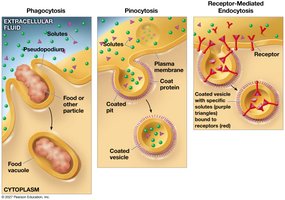
Scientific Skills Exercise
Application Example: Water Movement in Cells
Understanding membrane transport is essential for predicting how cells respond to their environment, such as changes in solute concentration. 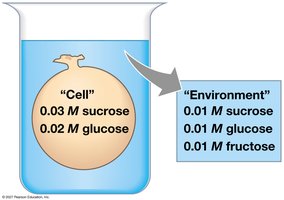
Summary Table: Types of Membrane Transport
Type | Energy Required | Direction | Example |
|---|---|---|---|
Passive Transport | No | Down gradient | Diffusion, Osmosis |
Facilitated Diffusion | No | Down gradient | Glucose transport |
Active Transport | Yes (ATP) | Against gradient | Sodium-potassium pump |
Bulk Transport | Yes (ATP) | Variable | Exocytosis, Endocytosis |
Key Equations
Osmosis and Water Potential
Water potential () determines the direction of water movement: where is solute potential and is pressure potential.
Membrane Potential
The Nernst equation describes the equilibrium potential for an ion: Additional info: Equations and summary table added for academic completeness and exam preparation.
