 Indietro
Chapter 7
Guida di studio - Note intelligenti
 Appunti personalizzati basati sui tuoi materiali, ampliati con definizioni chiave, esempi e contesto.
Membrane Structure and Function
Overview of Membranes
Cellular membranes are essential structures that define the boundaries of cells and organelles, regulate the passage of substances, and facilitate communication. Their unique composition allows for selective permeability, enabling cells to maintain homeostasis.
Selective permeability: Membranes allow certain molecules to pass while restricting others.
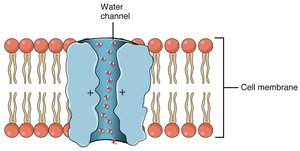
Aquaporin: Specialized protein channels that facilitate water transport across membranes.
7.1 Cellular Membranes are Fluid Mosaics of Lipids and Proteins
Phospholipids and Amphipathic Nature
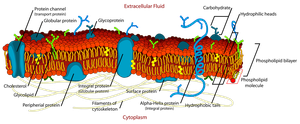
Phospholipids are the primary component of cellular membranes, forming a bilayer due to their amphipathic nature. This means each molecule has both hydrophobic (water-repelling) and hydrophilic (water-attracting) regions.
Hydrophobic tails: Face inward, away from water.
Hydrophilic heads: Face outward, toward water.
Bilayer: Structure formed by two layers of phospholipids.
Proteins in the Membrane
Membrane proteins are also often amphipathic, with hydrophobic regions embedded in the membrane and hydrophilic regions exposed to the aqueous environment. They serve various functions, including transport, signaling, and structural support.
Fluid mosaic model: Describes the membrane as a dynamic structure with proteins and lipids moving laterally.
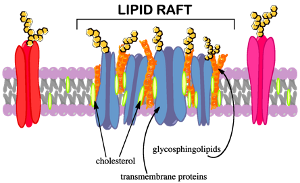
Lipid rafts: Specialized microdomains rich in cholesterol and sphingolipids, often involved in signaling.
Fluidity of Membranes
Movement of Membrane Components
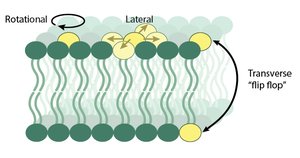
Membrane components, especially lipids, move laterally within the bilayer, contributing to membrane fluidity. Rarely, lipids may flip from one side to the other (transverse movement).
Lateral movement: Most common, allows flexibility.
Transverse "flip-flop": Rare, requires energy.
Cytoskeleton: Can anchor some proteins, restricting their movement.
Factors Affecting Fluidity
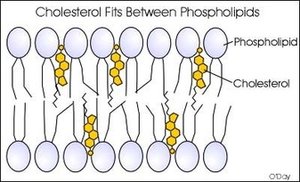
Membrane fluidity is influenced by the types of lipids present and the presence of cholesterol.
Unsaturated fatty acids: Cause kinks, increasing fluidity.
Cholesterol: Acts as a buffer, making membranes less fluid at high temperatures and more fluid at low temperatures.
Evolution of Differences in Membrane Lipid Composition
Adaptations to Environmental Extremes
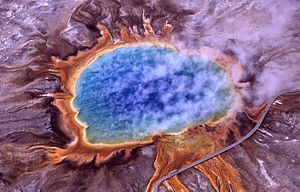
Organisms adapt their membrane lipid composition to survive in extreme temperatures.
Extreme cold: More unsaturated lipids to maintain fluidity.
Extreme heat: Specialized lipids to prevent excessive fluidity.
Dynamic adjustment: Some organisms can alter the ratio of saturated to unsaturated lipids as temperatures change.
Membrane Proteins and Their Functions
Types of Membrane Proteins
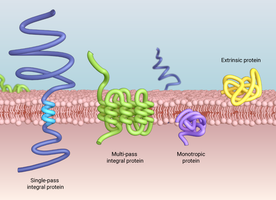
Membrane proteins are classified based on their association with the membrane.
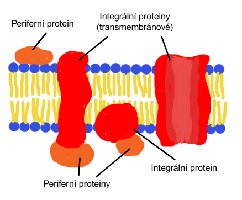
Integral proteins: Embedded within the membrane; may span the entire membrane (transmembrane).
Peripheral proteins: Loosely attached to the membrane surface; not embedded.
Protein Functions and Interactions
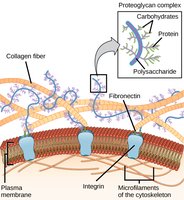
Membrane proteins interact with the cytoskeleton and extracellular matrix (ECM) to provide structural support and facilitate communication.
Cytoskeleton: May anchor proteins inside the cell.
ECM: May attach to proteins outside the cell.
Integrin: A transmembrane protein connecting the ECM to the cytoskeleton.
The Role of Membrane Carbohydrates in Cell-Cell Recognition
Carbohydrates as Cellular Markers
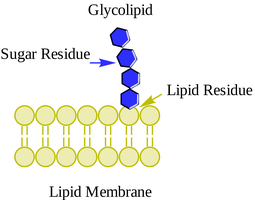
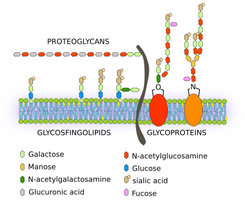
Membrane carbohydrates are crucial for cell-cell recognition, acting as markers to distinguish different cell types.
Glycolipids: Carbohydrates bound to lipids.
Glycoproteins: Carbohydrates bound to proteins.
7.2 Membrane Structure Results in Selective Permeability
Permeability of the Membrane
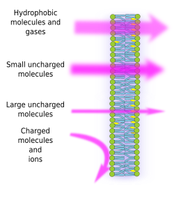
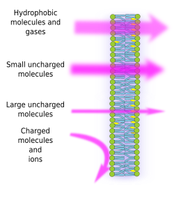
The lipid bilayer allows certain molecules to pass while restricting others based on their polarity and charge.
Nonpolar (hydrophobic) molecules: Pass easily (e.g., CO2, O2).
Polar (hydrophilic) molecules and ions: Cannot pass easily.
Charged molecules: Restricted from crossing the membrane.
Transport Proteins
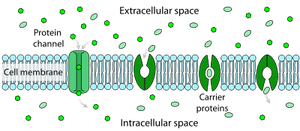
Transport proteins facilitate the movement of substances across the membrane.
Channel proteins: Provide hydrophilic passageways (e.g., aquaporins).
Carrier proteins: Change shape to move substances across.
7.3 Passive Transport: Diffusion Across a Membrane
Diffusion and Passive Transport
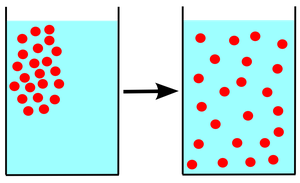
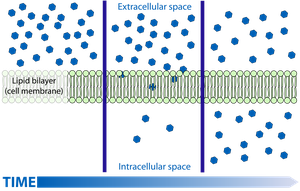
Passive transport involves the movement of molecules down their concentration gradient without energy investment.
Diffusion: Spontaneous movement from high to low concentration.
Equilibrium: State where concentrations are equal on both sides.
Passive transport: Includes simple diffusion and facilitated diffusion.
Osmosis
Osmosis is the diffusion of water across a selectively permeable membrane, aiming to equalize solute concentrations.
Solvent movement: Water moves, not solute.
Establishes equilibrium: Water moves to balance solute concentrations.
Water Balance of Cells Without Cell Walls
Tonicity describes how a solution affects cell water movement.
Isotonic: No net water movement.
Hypertonic: Cell loses water.
Hypotonic: Cell gains water.
Water Balance of Cells with Cell Walls
Cell walls help maintain shape and prevent excessive water uptake or loss.
Turgor pressure: Pressure exerted by the cell wall against water uptake.
Plasmolysis: Shriveling of the cell in hypertonic solutions.
Facilitated Diffusion
Facilitated diffusion is passive transport that requires protein assistance for molecules that are charged, polar, or too large.
Channel proteins: Allow ions or water to diffuse.
Ion channels: May be gated, opening in response to stimuli.
7.4 Active Transport Uses Energy to Move Solutes Against Their Gradient
Active Transport
Active transport moves substances against their concentration gradient, requiring energy (usually ATP).
Carrier proteins: All active transporters are carrier proteins.
Unfavorable movement: Goes from low to high concentration.
Sodium-Potassium Pump
The sodium-potassium pump is a classic example of active transport, maintaining membrane potential and concentration gradients.
Pumps sodium out: 3 Na+ ions.
Pumps potassium in: 2 K+ ions.
ATP hydrolysis: Provides energy.
Membrane potential: Negative charge inside the cell.
Electrogenic pump: Creates charge difference.
Proton pump: Another example of electrogenic pump.
Cotransport
Cotransport uses the energy from one molecule's diffusion down its gradient to drive the transport of another molecule against its gradient.
7.5 Bulk Transport Across the Plasma Membrane
Exocytosis and Endocytosis
Bulk transport mechanisms move large quantities of substances across the membrane.
Exocytosis: Vesicles fuse with the membrane to release contents outside the cell.
Endocytosis: Cell engulfs substances by wrapping the membrane around them.
Phagocytosis: "Cell eating" of large particles.
Pinocytosis: "Cell drinking" of fluids.
Receptor-mediated endocytosis: Specific molecules bind to receptors, triggering uptake.
Summary Table: Types of Membrane Transport
Type | Energy Required | Direction | Example |
|---|---|---|---|
Simple Diffusion | No | Down gradient | O2, CO2 |
Facilitated Diffusion | No | Down gradient | Glucose, ions |
Active Transport | Yes | Against gradient | Sodium-potassium pump |
Bulk Transport | Yes | Varies | Exocytosis, endocytosis |
Example: The sodium-potassium pump maintains cellular ion balance and membrane potential, which is essential for nerve impulse transmission.
Additional info: The notes above expand on brief points with academic context, definitions, and examples to ensure completeness and clarity for exam preparation.
