 Indietro
Membrane Structure and Function: The Fluid Mosaic Model and Transport Mechanisms
Guida di studio - Note intelligenti
 Appunti personalizzati basati sui tuoi materiali, ampliati con definizioni chiave, esempi e contesto.
Membrane Structure and Function
Phospholipid Bilayer Structure
The plasma membrane is a fundamental structure that separates the living cell from its environment. It is primarily composed of a phospholipid bilayer, which provides both fluidity and selective permeability.
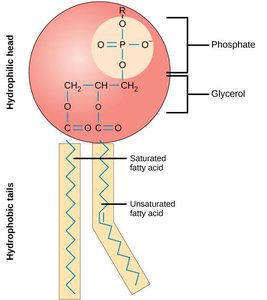
Phospholipids are amphipathic molecules, meaning they have both hydrophilic (water-loving) heads and hydrophobic (water-fearing) tails.
The hydrophilic heads face outward toward the aqueous environments inside and outside the cell, while the hydrophobic tails face inward, away from water.
This arrangement forms a bilayer, creating a stable barrier between two aqueous compartments.
Fluid Mosaic Model: The membrane is described as a fluid mosaic, with proteins embedded within the phospholipid bilayer, not randomly distributed but organized for specific functions.
Membrane Proteins and Their Functions
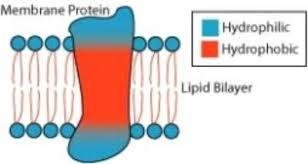
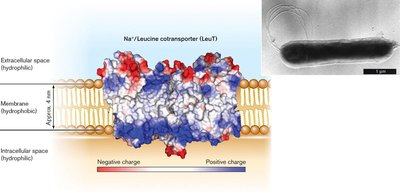
Membrane proteins are crucial for the diverse functions of the plasma membrane. They are classified as peripheral or integral proteins, with integral proteins often spanning the membrane (transmembrane proteins).
Integral proteins penetrate the hydrophobic core and often span the membrane.
Peripheral proteins are bound to the membrane surface.
Proteins serve functions such as transport, enzymatic activity, signal transduction, cell-cell recognition, intercellular joining, and attachment to the cytoskeleton and extracellular matrix (ECM).
Fluidity of Membranes
Membrane fluidity is essential for proper function and is influenced by temperature, lipid composition, and cholesterol content.
Phospholipids and some proteins move laterally within the bilayer; flip-flop movement is rare.
As temperature decreases, membranes become less fluid and more solid.
Unsaturated fatty acid tails increase fluidity by preventing tight packing, while saturated tails make the membrane more viscous.
Cholesterol acts as a fluidity buffer, restraining movement at high temperatures and preventing tight packing at low temperatures.
Evolutionary Adaptations in Membrane Lipids
Organisms adapt their membrane lipid composition to environmental conditions.
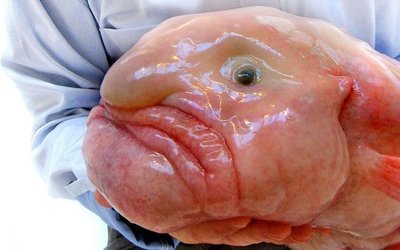
Deep-sea organisms have membranes with more unsaturated tails to maintain fluidity in cold environments.
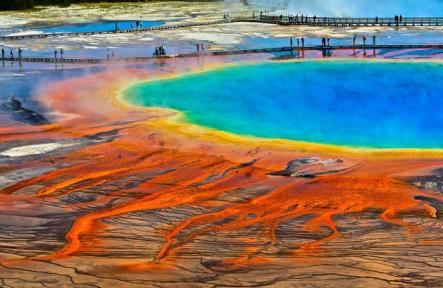
Thermophilic archaea have saturated tails and unique lipids to prevent excessive fluidity in hot environments.
Cold-water fish have higher levels of unsaturated fats, resulting in higher omega-3 content in their oils.
Selective Permeability of the Plasma Membrane
The plasma membrane is selectively permeable, allowing some substances to cross more easily than others.
Hydrophobic (nonpolar) molecules such as hydrocarbons and steroids can dissolve in the lipid bilayer and pass through rapidly.
Small non-polar molecules like O2 and CO2 also cross easily.
Polar molecules (e.g., sugars, amino acids, ions) do not cross the membrane easily and require transport proteins.
Transport Proteins and Membrane Transport
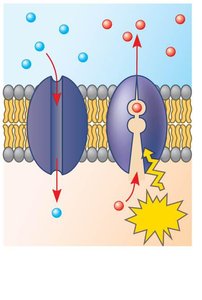
Transport proteins facilitate the movement of hydrophilic substances across the membrane.
Channel proteins provide hydrophilic corridors for specific molecules or ions.
Aquaporins are channel proteins that facilitate water transport.
Carrier proteins bind to molecules and change shape to shuttle them across the membrane.
Transport proteins are specific for the substances they move.
Passive Transport: Diffusion and Osmosis
Passive transport is the movement of substances across a membrane without energy investment.
Diffusion is the tendency for molecules to spread out evenly; substances move down their concentration gradient.
Osmosis is the diffusion of water across a selectively permeable membrane, from lower solute concentration to higher.
Tonicity describes the effect of a solution on cell water balance: isotonic (no net movement), hypertonic (cell loses water), hypotonic (cell gains water).
Osmoregulation is necessary for organisms in hypertonic or hypotonic environments.
Facilitated Diffusion
Facilitated diffusion is passive transport aided by proteins.
Channel and carrier proteins allow specific molecules or ions to cross the membrane.
Ion channels may be gated, opening or closing in response to stimuli.
Energy for facilitated diffusion comes from the concentration gradient, not the cell.
Active Transport
Active transport moves substances against their concentration gradients and requires energy, usually from ATP.
Allows cells to maintain concentration gradients different from their surroundings.
The sodium-potassium pump is a key example, moving Na+ out and K+ in.
Equation for ATP hydrolysis:
Membrane Potential and Electrochemical Gradients
Membrane potential is the voltage difference across a membrane, created by ion distribution.
Electrochemical gradient combines chemical (concentration) and electrical (charge) forces.
Electrogenic pumps (e.g., sodium-potassium pump, proton pump) help store energy for cellular work.
Cotransport
Cotransport occurs when active transport of one solute indirectly drives the transport of another.
Plants use proton gradients to drive nutrient uptake.
Energy from ATP is used to create a gradient, which powers cotransport.
Bulk Transport: Exocytosis and Endocytosis
Large molecules cross the membrane via vesicles in processes requiring energy.
Exocytosis: Vesicles fuse with the membrane to release contents outside the cell.
Endocytosis: Cell takes in macromolecules by forming vesicles from the membrane.
Types of endocytosis: Phagocytosis (cellular eating), Pinocytosis (cellular drinking), Receptor-mediated endocytosis (specific uptake).
A ligand is any molecule that binds specifically to a receptor site.
Membrane Carbohydrates and Cell-Cell Recognition
Membrane carbohydrates play a key role in cell-cell recognition.
Carbohydrates attach to lipids (glycolipids) or proteins (glycoproteins).
These molecules vary by species, individual, and cell type, underlying tissue formation and immune recognition.
Summary Table: Membrane Transport Mechanisms
Transport Type | Energy Required? | Direction | Example |
|---|---|---|---|
Simple Diffusion | No | Down gradient | O2, CO2 |
Facilitated Diffusion | No | Down gradient | Glucose, ions |
Active Transport | Yes (ATP) | Against gradient | Na+/K+ pump |
Bulk Transport | Yes | Variable | Exocytosis, endocytosis |
Additional info:
Membrane fluidity is critical for processes such as endocytosis, exocytosis, and cell signaling.
Membrane proteins are often glycosylated in the Golgi apparatus, contributing to cell identity and communication.
