 Indietro
Membrane Structure and Function: Transport Mechanisms in Cells
Guida di studio - Note intelligenti
 Appunti personalizzati basati sui tuoi materiali, ampliati con definizioni chiave, esempi e contesto.
Membrane Structure and Function
Overview of Biological Membranes
Biological membranes are essential structures that define the boundaries of cells and organelles. They are primarily composed of a lipid bilayer with embedded proteins, creating a selectively permeable barrier that regulates the movement of substances in and out of the cell.
Lipid Bilayer: Consists of phospholipids with hydrophilic (water-attracting) heads facing outward and hydrophobic (water-repelling) tails facing inward.
Fluid Mosaic Model: Describes the dynamic and flexible nature of membranes, where lipids and proteins can move laterally within the layer.
Membrane Proteins: Integral and peripheral proteins perform critical functions, including transport, signaling, and cell recognition.
Passive Transport Mechanisms
Diffusion Across Membranes
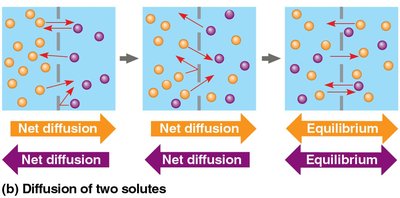
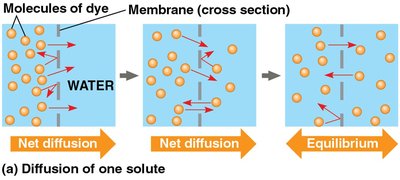
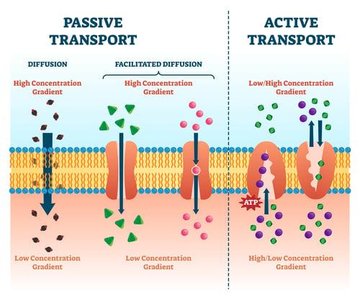
Diffusion is the passive movement of molecules from an area of higher concentration to an area of lower concentration, driven by the concentration gradient. This process does not require energy input from the cell.
Simple Diffusion: Small, nonpolar molecules (e.g., O2, CO2) move directly through the lipid bilayer.
Factors Affecting Diffusion Rate: Concentration gradient and membrane permeability.
Equilibrium: Achieved when the concentration of molecules is equal on both sides of the membrane.
Osmosis
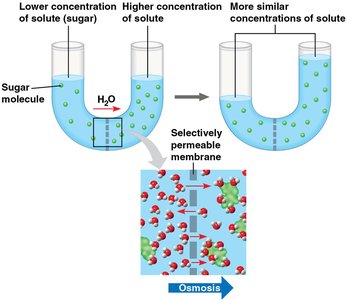
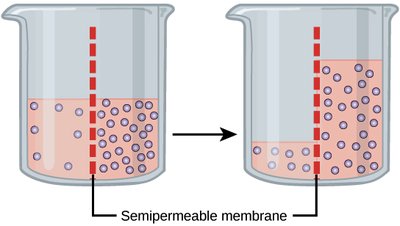
Osmosis is the diffusion of water molecules across a selectively permeable membrane. Water moves from regions of low solute concentration to regions of high solute concentration, aiming to equalize solute concentrations on both sides of the membrane.
Osmotic Pressure: The pressure required to stop the net flow of water by osmosis.
Importance: Maintains cell turgor and volume.
Tonicity and Its Effects on Cells
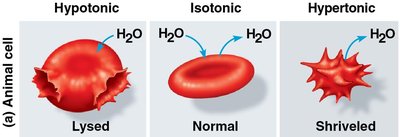
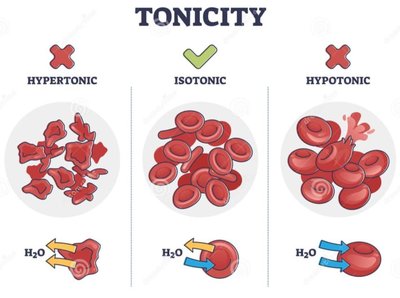
Tonicity describes the ability of a surrounding solution to cause a cell to gain or lose water. It depends on the concentration of non-permeable solutes outside the cell relative to inside.
Isotonic Solution: Equal solute concentration inside and outside the cell; no net water movement.
Hypertonic Solution: Higher solute concentration outside; water leaves the cell, causing it to shrink.
Hypotonic Solution: Lower solute concentration outside; water enters the cell, causing it to swell or burst.
Osmoregulation
Osmoregulation is the process by which organisms regulate the balance of water and solutes within their cells and bodies. This is crucial for survival, especially in environments where water availability fluctuates.
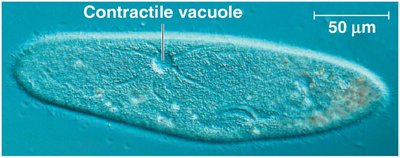
Contractile Vacuole: Found in protists like Paramecium, pumps excess water out of the cell in hypotonic environments.
Cell Walls and Water Balance
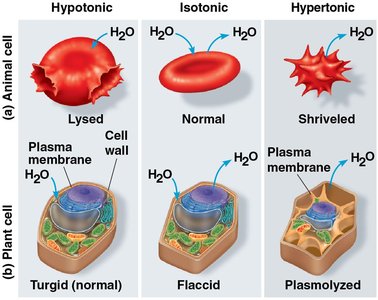
Plant, fungal, some protist, and prokaryotic cells possess cell walls that provide structural support and prevent excessive water uptake.
Turgor Pressure: Pressure exerted by the plasma membrane against the cell wall, keeping plant cells firm (turgid).
Plasmolysis: In hypertonic environments, the plasma membrane pulls away from the cell wall as the cell loses water.
Facilitated Diffusion
Transport Proteins
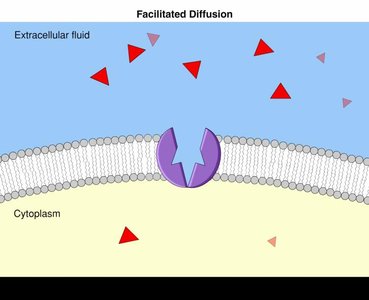
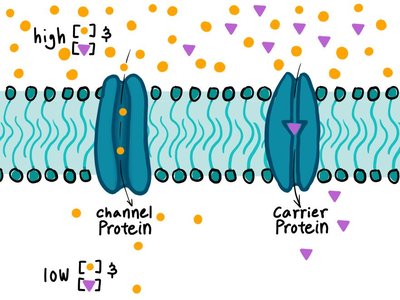
Facilitated diffusion is a type of passive transport where specific membrane proteins assist the movement of hydrophilic molecules and ions across the membrane.
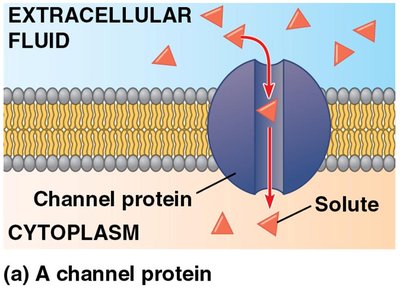
Channel Proteins: Form hydrophilic corridors for molecules or ions to pass through (e.g., aquaporins for water, ion channels for ions).
Carrier Proteins: Bind to specific molecules and undergo conformational changes to shuttle them across the membrane.
Gated Channels
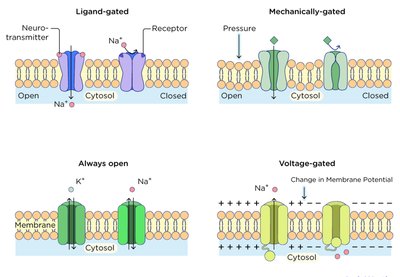
Some ion channels are gated, opening or closing in response to specific stimuli such as chemicals (ligands), voltage changes, or mechanical forces.
Ligand-Gated Channels: Open in response to binding of a chemical messenger.
Voltage-Gated Channels: Open or close in response to changes in membrane potential.
Mechanically-Gated Channels: Respond to physical deformation of the membrane.
Active Transport
Mechanism of Active Transport
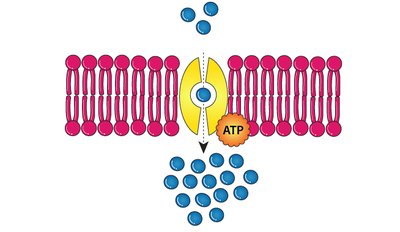
Active transport moves molecules against their concentration gradient, requiring energy input, usually from ATP. This process is essential for maintaining concentration gradients of ions and other substances necessary for cellular function.
Carrier Proteins: Integral membrane proteins that use energy to transport substances.
ATP: The primary energy source for active transport processes.
Sodium-Potassium Pump (Na+/K+ Pump)
The sodium-potassium pump is a classic example of active transport in animal cells. It maintains high K+ and low Na+ concentrations inside the cell, which is critical for nerve impulse transmission and other cellular processes.
Mechanism: Pumps 3 Na+ ions out and 2 K+ ions into the cell per ATP molecule hydrolyzed.
Electrogenic Pump: Generates a voltage across the membrane (membrane potential).
Membrane Potential and Electrochemical Gradients
The membrane potential is the voltage difference across a cell membrane, resulting from the unequal distribution of ions. The electrochemical gradient combines the chemical gradient (difference in ion concentration) and the electrical gradient (difference in charge).
Electrochemical Gradient: Drives the passive movement of ions across membranes.
Electrogenic Pumps: Such as the sodium-potassium pump in animals and proton pumps in plants, fungi, and bacteria, maintain these gradients.
Cotransport
Cotransport involves the coupling of the "downhill" diffusion of one solute to the "uphill" transport of another. For example, the proton gradient established by a proton pump can drive the active transport of sugars into plant cells.
Symport: Both substances move in the same direction.
Antiport: Substances move in opposite directions.
Bulk Transport
Exocytosis and Endocytosis
Large molecules and particles are transported across membranes in bulk via vesicles. This process requires energy.
Exocytosis: Vesicles fuse with the plasma membrane to release contents outside the cell.
Endocytosis: The cell membrane engulfs material, forming vesicles that bring substances into the cell.
Types of Endocytosis
Type | Description | Example |
|---|---|---|
Phagocytosis | Cell engulfs large particles or cells by extending pseudopods | White blood cell engulfing bacteria |
Pinocytosis | Cell "gulps" extracellular fluid and dissolved solutes into vesicles | Uptake of nutrients by intestinal cells |
Receptor-Mediated Endocytosis | Specific molecules bind to receptors, triggering vesicle formation | Cholesterol uptake via LDL receptors |
Summary
Cell membranes regulate the movement of substances via passive (diffusion, osmosis, facilitated diffusion) and active transport mechanisms.
Water movement is governed by tonicity and osmoregulation.
Ions move according to electrochemical gradients, maintained by pumps and channels.
Large molecules are transported via vesicular mechanisms such as phagocytosis, pinocytosis, receptor-mediated endocytosis, and exocytosis.
