 Indietro
Membrane Structure and Selective Permeability
Guida di studio - Note intelligenti
 Appunti personalizzati basati sui tuoi materiali, ampliati con definizioni chiave, esempi e contesto.
The Membrane
Membrane Structure and Selective Permeability
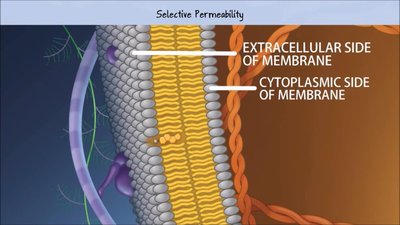
The biological membrane is a dynamic structure that controls the movement of substances into and out of the cell. Its selective permeability is essential for maintaining cellular homeostasis, allowing some molecules to cross more easily than others. This property is explained by the fluid mosaic model, which describes the membrane as a mosaic of proteins floating in or on the fluid lipid bilayer.
Selective Permeability: The membrane allows certain substances to pass while restricting others, enabling the cell to regulate its internal environment.
Form Fits Function: The structure of the membrane is closely related to its function in regulating molecular traffic.
Examples of Transport: Nutrients such as sugars and amino acids enter the cell, while waste products are expelled. Gases like O2 and CO2 are exchanged, and ion concentrations (Na+, K+, Ca2+, Cl−) are tightly regulated.
The Permeability of the Lipid Bilayer
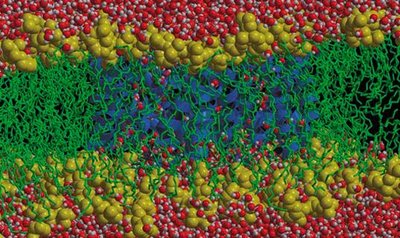
The lipid bilayer is composed primarily of phospholipids, which have hydrophobic (water-repelling) tails and hydrophilic (water-attracting) heads. This arrangement creates a semi-permeable barrier:
Nonpolar Molecules: Substances like hydrocarbons, O2, and CO2 are hydrophobic and can dissolve in the lipid bilayer, crossing the membrane easily without assistance.
Polar Molecules and Ions: Hydrophilic substances, including ions and polar molecules (e.g., glucose, water), cannot easily penetrate the hydrophobic core of the membrane. Their passage is slow or blocked without assistance.
Role of Membrane Proteins: The lipid bilayer alone does not account for all selective permeability; membrane proteins are crucial for the transport of many substances.
Transport Proteins
Transport proteins embedded in the membrane facilitate the movement of specific molecules and ions that cannot diffuse freely through the lipid bilayer.
Channel Proteins: These proteins form hydrophilic channels that allow certain molecules or ions to pass through the membrane. For example, aquaporins are channel proteins that greatly increase the rate of water transport across the membrane.
Carrier Proteins: These proteins bind to specific molecules and change shape to shuttle them across the membrane. Each carrier protein is selective for a particular substance or group of related substances.
Specificity: Transport proteins are highly specific. For example, a glucose transporter in red blood cells moves glucose much faster than it would diffuse on its own and does not transport fructose, even though it is a structural isomer of glucose.
Examples and Applications
Aquaporins: These channel proteins allow water molecules to pass through the membrane at a rate of up to 3 billion molecules per second. Without aquaporins, water would cross the membrane much more slowly.
Glucose Transporters: These carrier proteins enable rapid and selective transport of glucose into cells, essential for cellular metabolism.
Summary Table: Permeability of the Lipid Bilayer
Type of Molecule | Permeability | Transport Mechanism |
|---|---|---|
Nonpolar (e.g., O2, CO2, hydrocarbons) | High | Simple diffusion through lipid bilayer |
Small polar (e.g., H2O) | Moderate (slow without proteins) | Facilitated by aquaporins (channel proteins) |
Large polar (e.g., glucose) | Low | Facilitated by carrier proteins |
Ions (e.g., Na+, K+, Cl−) | Very low | Facilitated by specific channel or carrier proteins |
Key Questions for Review
What property allows O2 and CO2 to cross a lipid bilayer without the aid of membrane proteins?
Why is a transport protein needed to move many water molecules rapidly across a membrane?
What might be the basis of selectivity in aquaporins that allows passage of water and glycerol but not hydronium ions (H3O+)?
Additional info: The selectivity of aquaporins is based not only on size but also on the chemical properties of the channel, such as charge and the arrangement of amino acids lining the pore, which can exclude ions like H3O+ even if they are similar in size to water.
