 Indietro
Membrane Structure and Transport: Lipids, Diffusion, and Membrane Proteins
Guida di studio - Note intelligenti
 Appunti personalizzati basati sui tuoi materiali, ampliati con definizioni chiave, esempi e contesto.
Membrane Structure and Function
Introduction to Biological Membranes
Biological membranes are essential barriers that separate the interior of cells from their external environment. They are primarily composed of lipids and proteins, which together regulate the movement of substances into and out of the cell.
Plasma membrane: The defining boundary of all cells, composed mainly of a phospholipid bilayer and embedded proteins.
Selective permeability: The property of membranes that allows some substances to cross more easily than others.
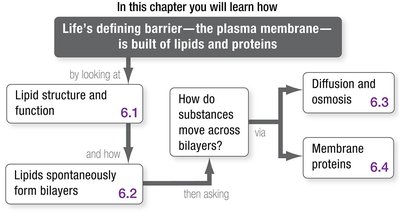
Diffusion and Osmosis
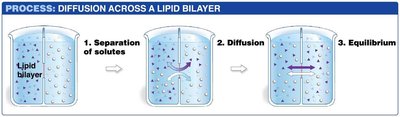
Diffusion Across Membranes
Diffusion is the spontaneous movement of molecules from regions of high concentration to regions of low concentration. This process is passive and does not require energy input.
Concentration gradient: The difference in solute concentration across a membrane.
Equilibrium: Achieved when the concentration of solute is equal on both sides of the membrane, resulting in no net movement.
Exergonic process: Diffusion is energetically favorable and increases entropy.
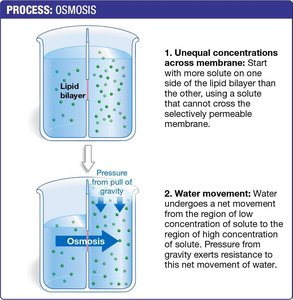
Osmosis: Diffusion of Water
Osmosis is the diffusion of water across a selectively permeable membrane. Water moves from areas of low solute concentration (high water concentration) to areas of high solute concentration (low water concentration).
Osmosis: Movement of water molecules through a membrane in response to a solute concentration gradient.
Selective permeability: Only water can cross the membrane, not the solute.
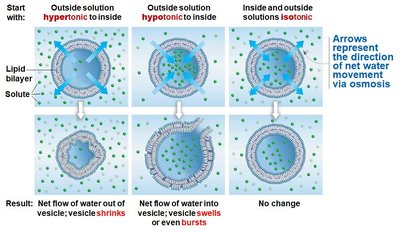
Tonicity and Its Effects on Cells
Tonicity describes how the concentration of solutes in a solution affects the volume of a cell. It determines the direction of water movement via osmosis.
Hypertonic solution: Higher solute concentration outside the cell; water leaves the cell, causing it to shrink.
Hypotonic solution: Lower solute concentration outside the cell; water enters the cell, causing it to swell or burst.
Isotonic solution: Equal solute concentration; no net water movement, cell volume remains unchanged.
Lipid Bilayers and Selective Permeability
Properties of the Lipid Bilayer
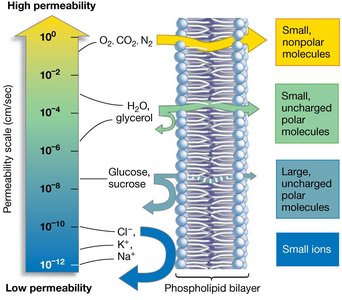
The lipid bilayer is selectively permeable, allowing certain molecules to pass while restricting others. Permeability depends on the size, polarity, and charge of the molecules.
Small, nonpolar molecules (e.g., O2, CO2): Cross easily.
Small, uncharged polar molecules (e.g., H2O, glycerol): Cross at a moderate rate.
Large, uncharged polar molecules (e.g., glucose): Cross slowly.
Ions (e.g., Na+, K+, Cl-): Do not cross without assistance.
Membrane Proteins and the Fluid Mosaic Model
The Fluid Mosaic Model
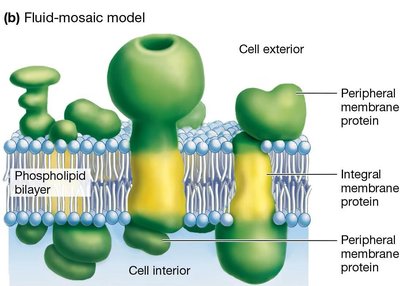
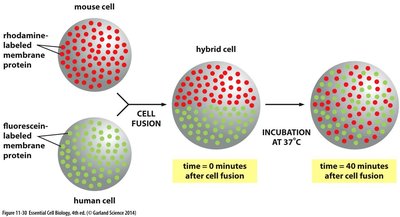
The fluid mosaic model describes the structure of cell membranes as a mosaic of proteins floating in or on the fluid lipid bilayer. Membrane proteins can move laterally within the layer, contributing to membrane fluidity and function.
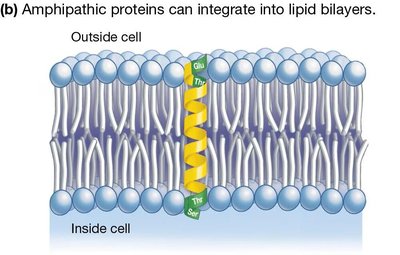
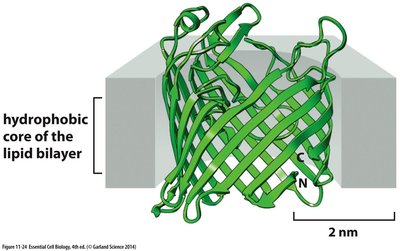
Integral membrane proteins: Span the bilayer and are amphipathic.
Peripheral membrane proteins: Attach to the membrane surface.
Amphipathic Nature of Membrane Proteins
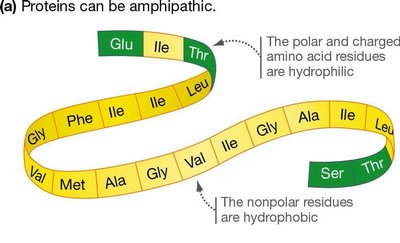
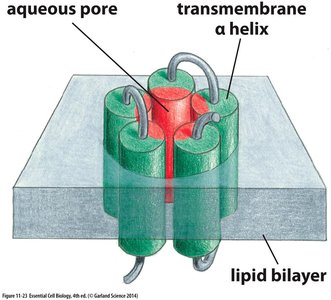
Membrane proteins often have both hydrophilic and hydrophobic regions, allowing them to integrate into the lipid bilayer and form functional structures such as channels and pores.
Amphipathic: Having both hydrophilic (water-loving) and hydrophobic (water-fearing) regions.
Integral proteins can form channels for selective transport of molecules.
Membrane Transport Mechanisms
Passive Transport: Simple and Facilitated Diffusion
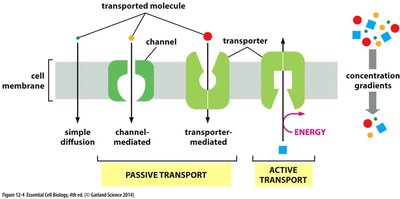
Passive transport moves substances down their concentration gradients without energy input. It includes simple diffusion, channel-mediated diffusion, and carrier-mediated (facilitated) diffusion.
Simple diffusion: Direct movement through the lipid bilayer.
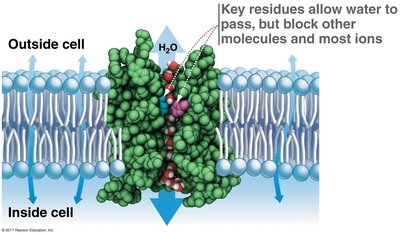
Facilitated diffusion: Movement via channel or carrier proteins.
Channel proteins: Form hydrophilic pores for specific ions or water (e.g., aquaporins).
Carrier proteins: Undergo conformational changes to transport molecules (e.g., glucose transporters).
Gated Ion Channels and Membrane Potential
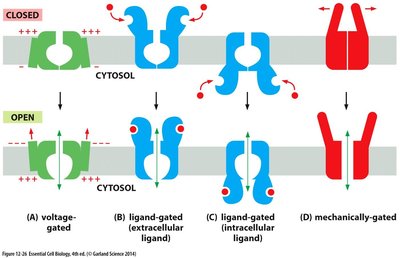
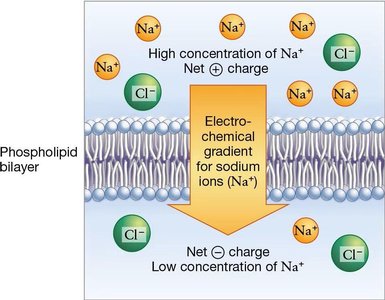
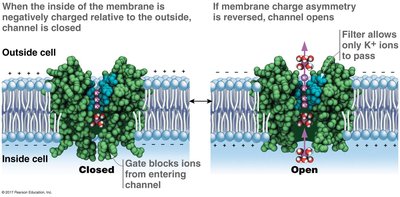
Gated ion channels open or close in response to specific signals, allowing selective ion movement. The membrane potential is the voltage difference across the membrane, typically negative inside the cell.
Voltage-gated channels: Respond to changes in membrane potential.
Ligand-gated channels: Open in response to binding of a molecule.
Mechanically-gated channels: Respond to physical deformation.
Electrochemical gradient: Combination of concentration and electrical gradients driving ion movement.
Facilitated Diffusion by Carrier Proteins
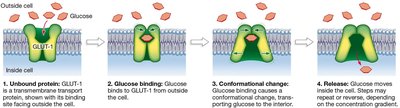
Carrier proteins facilitate the diffusion of specific molecules, such as glucose, by undergoing conformational changes that transport the molecule across the membrane.
GLUT-1: A glucose transporter that binds glucose, changes shape, and releases it inside the cell.
Active Transport
Primary Active Transport
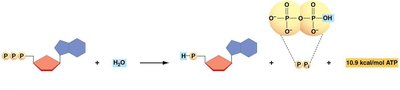
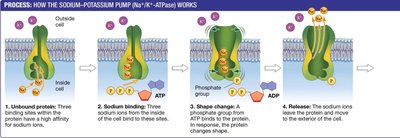
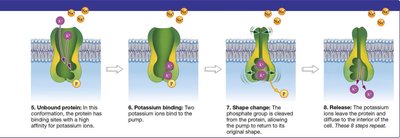
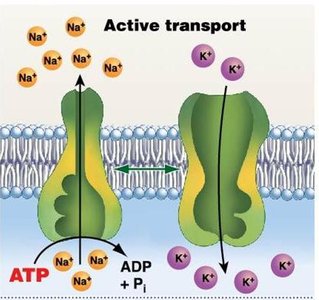
Active transport moves substances against their concentration gradients using energy, usually from ATP hydrolysis. The sodium-potassium pump (Na+/K+-ATPase) is a classic example.
Primary active transport: Direct use of ATP to transport molecules.
Sodium-potassium pump: Moves 3 Na+ out and 2 K+ into the cell per ATP hydrolyzed, maintaining electrochemical gradients.
Secondary Active Transport (Coupled Transport)
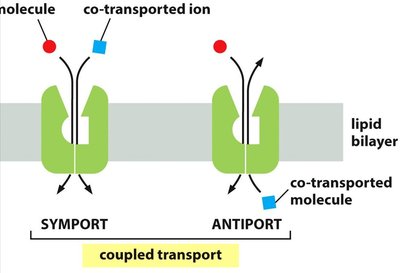
Secondary active transport uses the energy stored in electrochemical gradients, established by primary active transport, to move other substances against their gradients. This can occur via symport (same direction) or antiport (opposite direction).
Symport: Both molecules move in the same direction.
Antiport: Molecules move in opposite directions.
Example: Sodium-glucose symporter uses the Na+ gradient to import glucose into cells.
Summary Table: Types of Membrane Transport
Transport Type | Energy Required? | Direction | Example |
|---|---|---|---|
Simple Diffusion | No | Down gradient | O2, CO2 |
Facilitated Diffusion | No | Down gradient | Glucose via GLUT-1 |
Primary Active Transport | Yes (ATP) | Against gradient | Na+/K+-ATPase |
Secondary Active Transport | Indirect (gradient) | Against gradient | Na+/glucose symporter |
Key Equations
ATP Hydrolysis:
Electrochemical Gradient: where is the free energy change, is the gas constant, is temperature, is concentration, is ion charge, is Faraday's constant, and is membrane potential.
Additional info: This guide covers the core concepts of membrane structure, diffusion, osmosis, and membrane transport proteins, as outlined in General Biology Chapter 6.
