 Indietro
Membrane Structure and Transport: Surface Area, Fluidity, and Permeability
Guida di studio - Note intelligenti
 Appunti personalizzati basati sui tuoi materiali, ampliati con definizioni chiave, esempi e contesto.
Membrane Structure and Transport
Surface Area to Volume Ratio in Cells
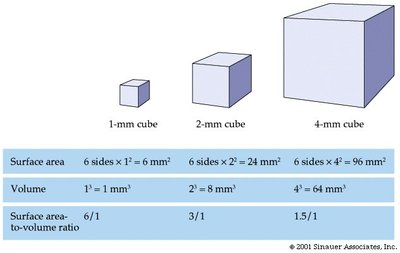
The surface area to volume (SA/V) ratio is a critical factor that limits cell size and influences cellular function. As a cell grows, its volume increases faster than its surface area, affecting the rate at which materials can enter or leave the cell.
Metabolic Compartment: The cell is a site for numerous chemical reactions essential for life.
Volume and Reactions: The number of metabolic reactions increases with cell volume.
Material Exchange: All raw materials for metabolism must cross the cell membrane.
Surface Area Limitation: The amount of material that can enter or exit is limited by the available surface area.
SA/V Ratio: As cells grow, the SA/V ratio decreases, eventually limiting further growth because the surface area becomes insufficient to support the metabolic needs of the increased volume.
Biological Implication: Cells divide or adopt specialized shapes to maintain a high SA/V ratio for efficient exchange.
Structure of the Plasma Membrane
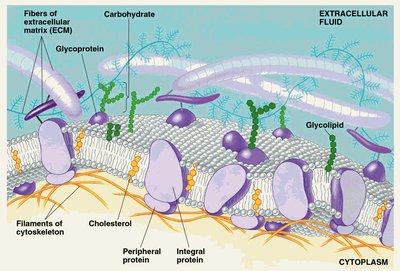
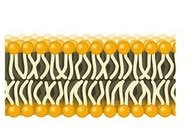
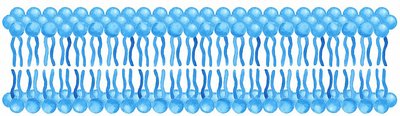
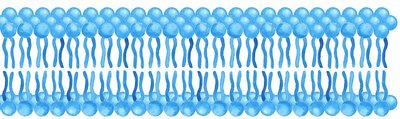
The plasma membrane is a selectively permeable barrier composed primarily of a phospholipid bilayer with embedded proteins, cholesterol, and carbohydrates. This structure allows the cell to maintain homeostasis and communicate with its environment.
Phospholipid Bilayer: Forms the fundamental structure, with hydrophilic heads facing outward and hydrophobic tails inward.
Integral Proteins: Span the membrane and are involved in transport, enzymatic activity, signaling, cell recognition, and attachment to the cytoskeleton and extracellular matrix (ECM).
Peripheral Proteins: Loosely attached to the membrane surface, often interacting with integral proteins or phospholipid heads.
Cholesterol: Interspersed within the bilayer, it modulates membrane fluidity and stability.
Carbohydrates (Glycoproteins and Glycolipids): Serve as recognition and signaling molecules, facilitating cell-cell adhesion and communication.
Phospholipid Bilayer and Membrane Fluidity
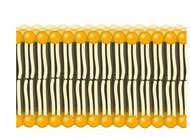
The fluidity of the membrane is essential for its function, allowing for the movement of proteins and lipids within the layer and enabling membrane fusion, vesicle formation, and cell signaling.
Phospholipid Structure: The bilayer consists of two layers of phospholipids with hydrophobic tails facing inward and hydrophilic heads facing outward.
Fluid Mosaic Model: Describes the dynamic and flexible nature of the membrane, with proteins and lipids able to move laterally.
Cholesterol's Role: Cholesterol helps maintain fluidity by preventing tight packing of phospholipids at low temperatures and restraining movement at high temperatures.
Types of Membrane Transport
Cells regulate the movement of substances across their membranes through various transport mechanisms, which can be passive or active.
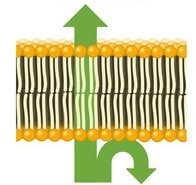
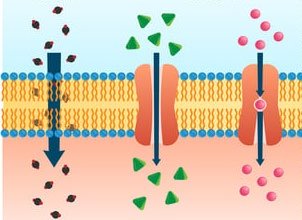
Simple Diffusion: Movement of small, nonpolar molecules (e.g., O2, CO2) directly through the lipid bilayer without energy or transport proteins.
Facilitated Diffusion: Movement of larger or polar molecules via specific transport proteins (channel or carrier proteins) without energy input.
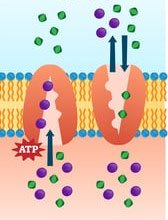
Primary Active Transport: Uses ATP to move substances against their concentration gradient via transport proteins (e.g., sodium-potassium pump).
Co-transport (Secondary Active Transport): Uses the energy from the movement of one substance down its gradient to drive the transport of another substance against its gradient.
Bulk Transport: Involves the movement of large particles or volumes via vesicles (endocytosis and exocytosis).
Selective Permeability of the Membrane
The plasma membrane is selectively permeable, allowing some substances to cross more easily than others. This property is essential for maintaining the internal environment of the cell.
Permeable to: Small, nonpolar molecules and some small polar molecules (e.g., water, gases).
Impermeable to: Large, polar molecules and ions without the aid of transport proteins.
Transport Proteins: Channel and carrier proteins facilitate the movement of specific molecules across the membrane.
Diffusion and Equilibrium
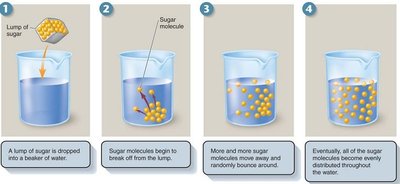
Diffusion is the passive movement of molecules from an area of higher concentration to an area of lower concentration until equilibrium is reached. It is a fundamental process for the movement of substances within and between cells.
Random Movement: Molecules move randomly due to kinetic energy.
Concentration Gradient: The difference in concentration drives diffusion.
Equilibrium: Achieved when molecules are evenly distributed, but random movement continues.
Osmosis and Tonicity
Osmosis is the diffusion of free water across a selectively permeable membrane. Tonicity describes the ability of a surrounding solution to cause a cell to gain or lose water, which is critical for cell survival.
Osmosis: Water moves from areas of low solute concentration to areas of high solute concentration.
Tonicity: Refers to the relative concentration of solutes in the solution outside the cell compared to inside.
Types of Solutions:
Isotonic: No net water movement; cell volume remains stable.
Hypertonic: Cell loses water and shrinks.
Hypotonic: Cell gains water and may burst.
Summary Table: Types of Membrane Transport
Type of Transport | Energy Required? | Transport Protein? | Direction (relative to gradient) | Examples |
|---|---|---|---|---|
Simple Diffusion | No | No | Down | O2, CO2 |
Facilitated Diffusion | No | Yes | Down | Glucose, ions |
Primary Active Transport | Yes (ATP) | Yes | Up | Na+/K+ pump |
Co-transport (Secondary Active) | Indirect (uses gradient) | Yes | Up (one), Down (another) | Sucrose-H+ co-transport |
Bulk Transport | Yes | No | Varies | Endocytosis, exocytosis |
Additional info: This guide expands on the original notes by providing definitions, examples, and a summary table for clarity and completeness.
