 Indietro
Membrane Transport and Cell Signaling: Structure, Function, and Mechanisms
Guida di studio - Note intelligenti
 Appunti personalizzati basati sui tuoi materiali, ampliati con definizioni chiave, esempi e contesto.
Biological Membranes
Structure and Composition of Biological Membranes
Biological membranes are essential structures that define the boundaries of cells and organelles, controlling the movement of substances in and out. The primary component of these membranes is the phospholipid bilayer, which is amphipathic—meaning each molecule has both hydrophilic (water-attracting) and hydrophobic (water-repelling) regions. Embedded within this bilayer are various molecules such as proteins and cholesterol, which contribute to membrane function and fluidity.
Phospholipids: Form the fundamental structure of the membrane, creating a semi-permeable barrier.
Proteins: Integral and peripheral proteins are involved in transport, signaling, and structural support.
Cholesterol: Modulates membrane fluidity and stability, especially in animal cells.
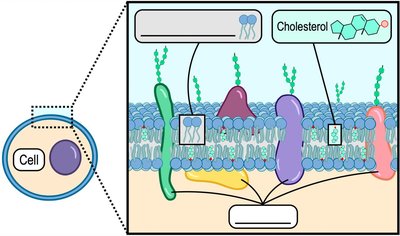
Fluid Mosaic Model: This model describes the membrane as a dynamic and flexible structure with proteins and other molecules moving laterally within the lipid bilayer, resembling a mosaic.
Types of Membrane Proteins
Integral and Peripheral Membrane Proteins
Membrane proteins are classified based on their association with the lipid bilayer:
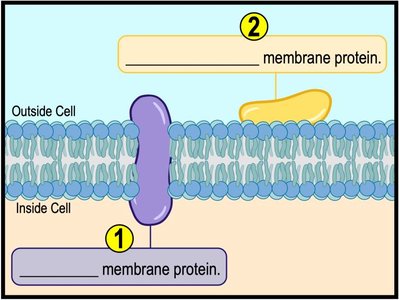
Integral Membrane Proteins: Span the entire membrane and are involved in transport and signaling.
Peripheral Membrane Proteins: Loosely attached to the membrane's surface, often playing roles in signaling or maintaining cell shape.
Functions of Membrane Proteins
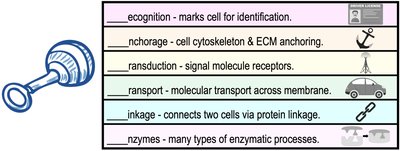
Membrane-associated proteins perform a variety of essential functions:
Recognition: Mark cells for identification (e.g., immune response).
Anchorage: Attach the cytoskeleton to the extracellular matrix (ECM).
Transduction: Act as receptors for signal molecules.
Transport: Facilitate movement of molecules across the membrane.
Linkage: Connect adjacent cells via protein linkages.
Enzymatic Activity: Catalyze various biochemical reactions.
Concentration Gradients and Diffusion
Concentration Gradients
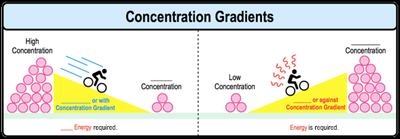
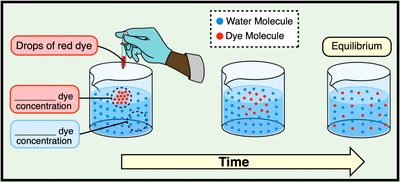
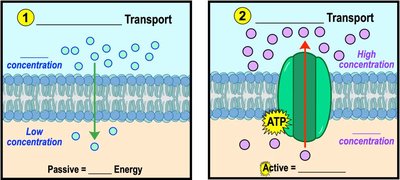
A concentration gradient exists when there is a difference in the concentration of a substance across a space or membrane. Molecules naturally move from areas of high concentration to areas of low concentration (down the gradient), a process that does not require energy. Movement against the gradient (from low to high concentration) requires energy input.
Diffusion
Diffusion is the passive movement of molecules from an area of higher concentration to an area of lower concentration, driven by the random motion of particles. This process continues until equilibrium is reached.
Example: When dye is added to water, it spreads out until evenly distributed.
Membrane Permeability and Selective Transport
Selectively Permeable Membranes
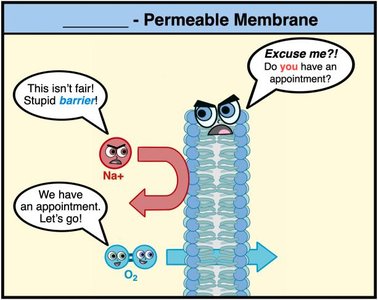
Biological membranes are selectively permeable, meaning they allow some substances to cross more easily than others. This selectivity is crucial for maintaining cellular homeostasis.
Molecules That Freely Cross Membranes
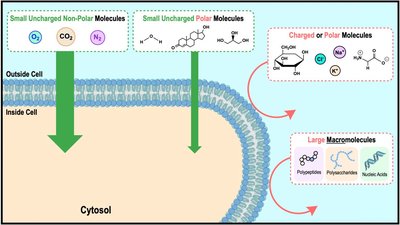
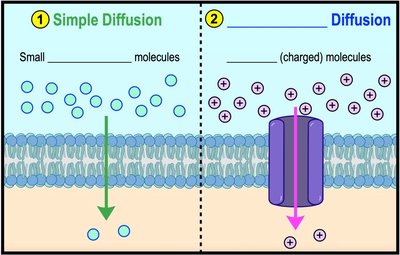
Small, nonpolar, and uncharged molecules can typically diffuse freely across the lipid bilayer, while large, polar, or charged molecules require assistance from transport proteins.

Membrane Transport Mechanisms
Overview of Membrane Transport
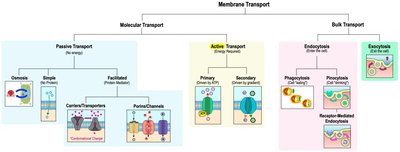
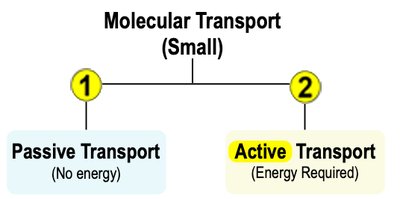
Transport across membranes can be divided into molecular (small molecules) and bulk (large molecules) transport. Molecular transport includes passive and active mechanisms, while bulk transport involves processes like endocytosis and exocytosis.
Passive vs. Active Transport
There are two main types of molecular transport:
Passive Transport: Moves substances down their concentration gradient without energy input.
Active Transport: Moves substances against their concentration gradient, requiring energy (usually from ATP).
Classes of Membrane Transport Proteins
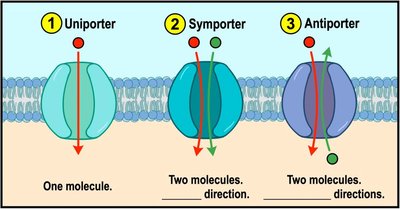
Transport proteins are classified by their mechanism:
Uniporters: Transport one molecule at a time in one direction.
Symporters: Cotransport two or more molecules in the same direction.
Antiporters: Cotransport two or more molecules in opposite directions.
Osmosis and Tonicity
Osmosis
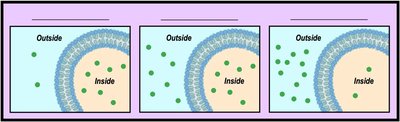
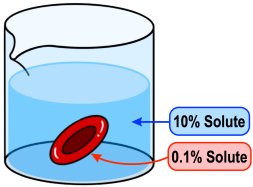
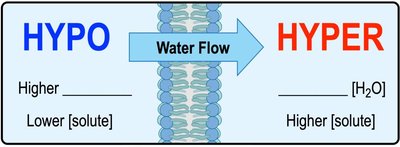
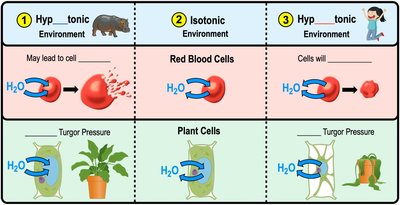
Osmosis is the passive diffusion of water across a semi-permeable membrane. The direction of water movement depends on the relative concentration of solutes (tonicity) on either side of the membrane.
Hypotonic Solution: Lower solute concentration outside the cell; water enters the cell.
Isotonic Solution: Equal solute concentrations; no net water movement.
Hypertonic Solution: Higher solute concentration outside the cell; water exits the cell.
Simple and Facilitated Diffusion
Types of Passive Transport
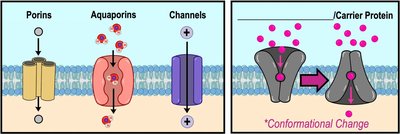
Passive transport includes both simple and facilitated diffusion:
Simple Diffusion: Direct movement of small, uncharged molecules through the lipid bilayer.
Facilitated Diffusion: Movement of charged or larger molecules via specific transport proteins (channels or carriers).
Active Transport
Primary and Secondary Active Transport
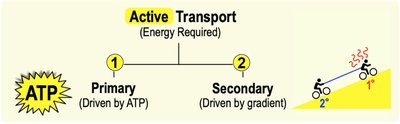
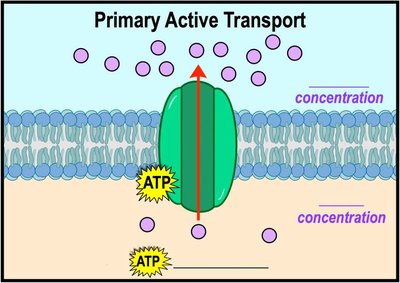
Active transport mechanisms move molecules against their concentration gradients and require energy:
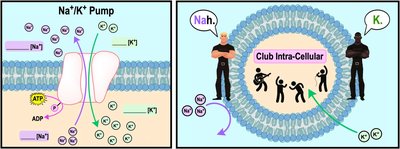
Primary Active Transport: Directly uses ATP to transport molecules (e.g., Na+/K+ pump).
Secondary Active Transport: Uses the energy stored in concentration gradients established by primary active transport to move other substances.
Bulk Transport: Endocytosis and Exocytosis
Endocytosis
Endocytosis is the process by which cells engulf large molecules or particles by wrapping the plasma membrane around them and forming a vesicle. Types include:
Phagocytosis: "Cell eating"—engulfment of large particles.
Pinocytosis: "Cell drinking"—engulfment of extracellular fluid.
Receptor-Mediated Endocytosis: Specific uptake of molecules via receptor proteins.
Exocytosis
Exocytosis is the process by which cells expel materials in vesicles that fuse with the plasma membrane, releasing their contents outside the cell. This is important for secretion of hormones, neurotransmitters, and waste products.
Summary Table: Membrane Transport Mechanisms
Transport Type | Energy Required? | Direction Relative to Gradient | Example |
|---|---|---|---|
Simple Diffusion | No | Down | O2 diffusion |
Facilitated Diffusion | No | Down | Glucose transport |
Primary Active Transport | Yes (ATP) | Up | Na+/K+ pump |
Secondary Active Transport | Indirect (gradient) | Up (for one molecule) | Na+-glucose cotransporter |
Endocytosis/Exocytosis | Yes | Bulk | Phagocytosis, hormone secretion |
