 Indietro
Membrane Transport and Cell Signaling: Study Notes for General Biology
Guida di studio - Note intelligenti
 Appunti personalizzati basati sui tuoi materiali, ampliati con definizioni chiave, esempi e contesto.
Membrane Transport
Types of Membrane Transporters
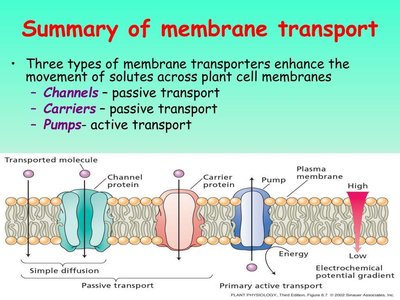
The plasma membrane regulates the movement of solutes across plant and animal cell membranes through specialized transport proteins. These proteins are classified based on their mechanism and energy requirements:
Channels: Facilitate passive transport by forming hydrophilic pathways for specific molecules or ions to diffuse down their concentration gradients.
Carriers: Also enable passive transport, but operate by binding to a molecule and undergoing a conformational change to move it across the membrane.
Pumps: Mediate active transport, using energy (usually from ATP) to move substances against their concentration or electrochemical gradients.
Passive transport does not require energy input, while active transport does. The direction of movement is determined by the concentration gradient or electrochemical gradient.
Functions of Membrane Proteins
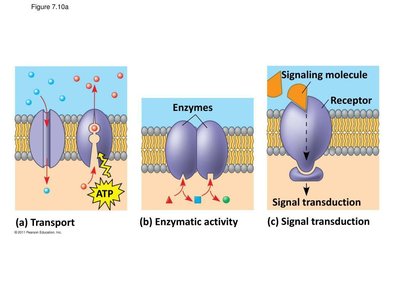
Membrane proteins perform diverse functions essential for cell survival and communication:
Transport: Move substances across the membrane, either passively or actively.
Enzymatic activity: Catalyze reactions at the membrane surface.
Signal transduction: Relay external signals to the cell's interior, triggering cellular responses.
These functions are illustrated below:
Attachment to the Cytoskeleton and Extracellular Matrix (ECM)
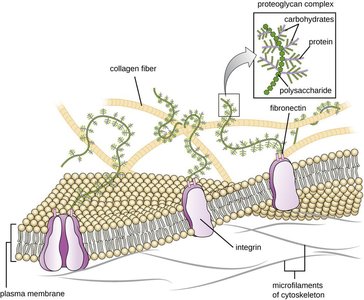
Membrane proteins anchor the cell internally to the cytoskeleton and externally to the ECM. This attachment maintains cell shape, provides structural support, and facilitates communication between cells and their environment.
Integrins: Transmembrane proteins that connect the cytoskeleton to the ECM.
Proteoglycan complexes: Composed of proteins and polysaccharides, these structures help organize the ECM and mediate cell signaling.
Cell-Cell Recognition
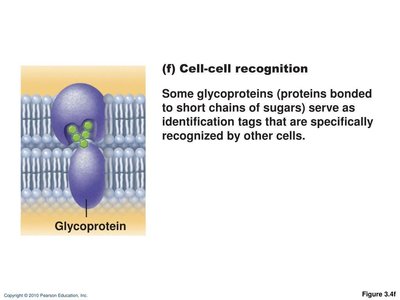
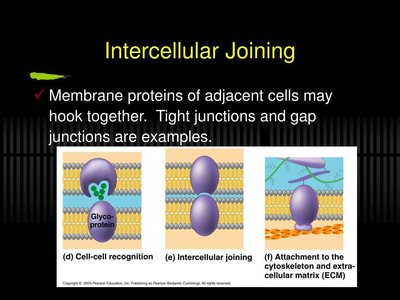
Cell-cell recognition is crucial for immune responses, tissue formation, and development. Glycoproteins (proteins with attached carbohydrate chains) serve as identification tags that are recognized by other cells.
Glycoproteins: Enable cells to distinguish self from non-self and facilitate communication.
Intercellular Joining
Membrane proteins of adjacent cells may connect, forming tight junctions, gap junctions, or other structures that hold cells together and allow communication.
Tight junctions: Seal cells together, preventing passage of materials.
Gap junctions: Allow direct exchange of ions and small molecules between cells.
Cell Signaling
Signal Transduction Pathway
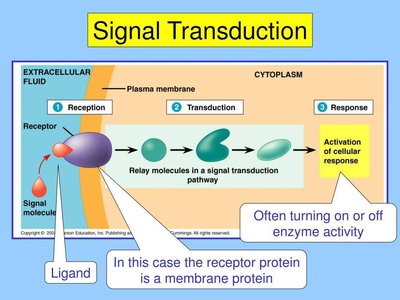
Cell signaling involves the transmission of information from the cell's exterior to its interior, resulting in a specific cellular response. The process typically follows three stages:
Reception: A signaling molecule (ligand) binds to a receptor protein on the cell membrane.
Transduction: The receptor activates relay molecules in a signal transduction pathway, often involving phosphorylation cascades.
Response: The cell responds by activating or inhibiting enzymes, changing gene expression, or altering cellular activity.
Signal transduction often turns enzymes on or off, regulating cellular functions.
Tonicity and Osmosis
Effects of Tonicity on Animal Cells
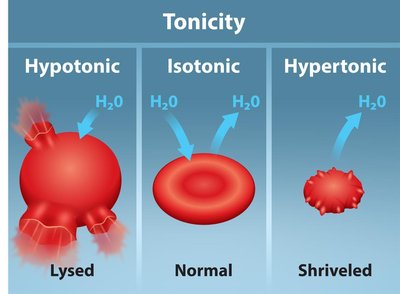
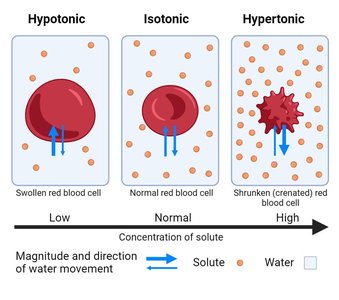
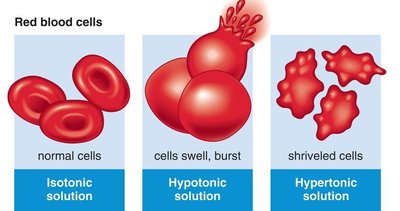
Tonicity describes how the concentration of solutes in the surrounding solution affects the movement of water into or out of a cell:
Hypotonic solution: Lower solute concentration outside the cell; water enters, causing the cell to swell and potentially lyse (burst).
Isotonic solution: Equal solute concentration; no net water movement, cell remains normal.
Hypertonic solution: Higher solute concentration outside; water leaves, causing the cell to shrink (crenate).
These effects are critical for understanding cell survival and function in different environments.
Bulk Transport: Endocytosis and Exocytosis
Phagocytosis
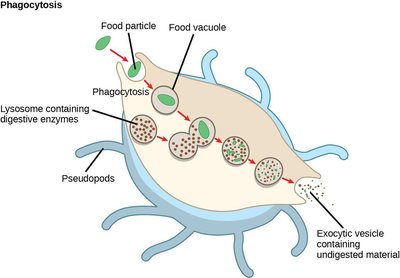
Phagocytosis is a form of endocytosis where the cell engulfs large particles or microorganisms. The cell extends pseudopodia around the target, forming a food vacuole that fuses with lysosomes for digestion.
Pseudopodia: Extensions of the cell membrane used to surround and engulf particles.
Lysosomes: Organelles containing digestive enzymes that break down engulfed material.
Pinocytosis
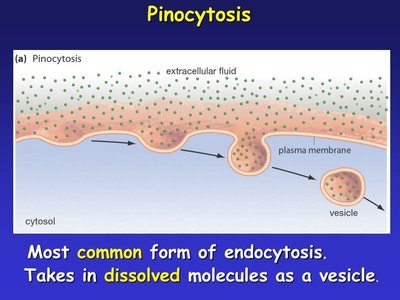
Pinocytosis is the most common form of endocytosis, where the cell takes in extracellular fluid and dissolved molecules by forming small vesicles.
Vesicle: Membrane-bound compartment formed during pinocytosis.
Receptor-Mediated Endocytosis
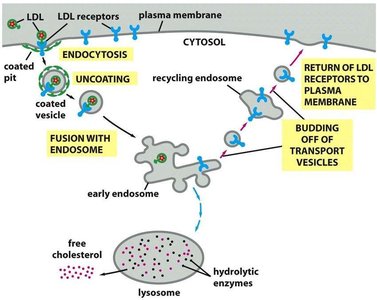
This selective process allows cells to concentrate and absorb specific molecules by binding them to membrane receptors, forming coated pits and vesicles. It is essential for uptake of substances like LDL cholesterol.
Coated pit: Specialized region of the membrane with receptor proteins.
LDL receptors: Bind and internalize cholesterol-containing particles.
Types of Cell Signaling
Paracrine Signaling
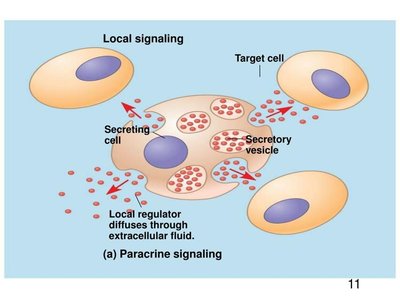
Paracrine signaling involves the release of local regulators that diffuse to nearby target cells, influencing their activity. This is common in growth factor signaling.
Autocrine Signaling
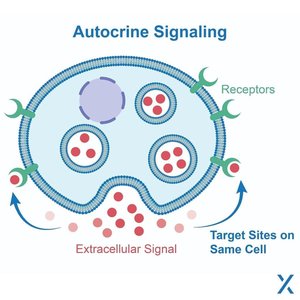
Autocrine signaling occurs when a cell releases a signal that binds to receptors on its own surface, regulating its own activity. This is important in immune cell regulation.
Endocrine Signaling
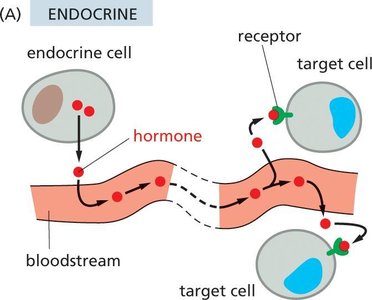
Endocrine signaling uses hormones released into the bloodstream to affect distant target cells. Only cells with the appropriate receptors respond to the hormone.
Synaptic Signaling
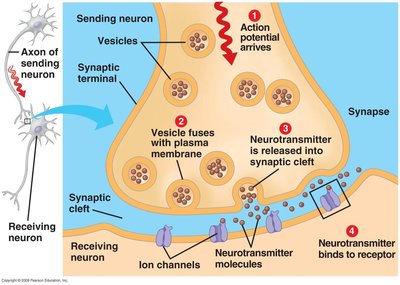
Synaptic signaling is used by neurons to communicate with other neurons or muscle cells. Neurotransmitters are released across a synapse and bind to receptors on the target cell.
Summary Table: Membrane Transport Types
Transport Type | Energy Required | Protein Required | Direction | Example |
|---|---|---|---|---|
Simple Diffusion | No | No | Down gradient | O2 across bilayer |
Facilitated Diffusion | No | Yes | Down gradient | Glucose transporter |
Active Transport | Yes (ATP) | Yes | Against gradient | Na+/K+ pump |
Key Equations and Facts
Sodium-potassium pump: $3\ \text{Na}^+ \text{out},\ 2\ \text{K}^+ \text{in},\ 1\ \text{ATP used per cycle}$
Osmosis: Water moves toward higher effective solute concentration when solutes cannot cross.
Electrochemical gradient: Combines chemical and electrical driving forces for ions.
Additional info:
These notes integrate textbook content, exam review, and video explanations to provide a comprehensive overview of membrane transport and cell signaling. The included images directly reinforce the mechanisms and concepts described in each section.
