 Indietro
Membrane Transport and Cell Signaling: Study Notes
Guida di studio - Note intelligenti
 Appunti personalizzati basati sui tuoi materiali, ampliati con definizioni chiave, esempi e contesto.
Membrane Structure and Function
Overview of the Plasma Membrane
The plasma membrane is a dynamic boundary that separates the internal environment of the cell from its external surroundings. It is selectively permeable, allowing certain substances to cross more easily than others, and plays a critical role in maintaining cellular homeostasis.
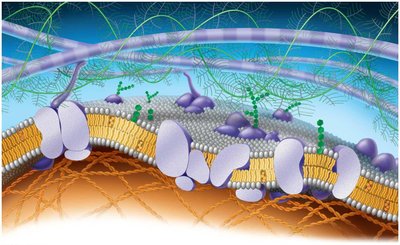
Phospholipids are the most abundant lipids in the membrane, forming a bilayer with hydrophilic heads facing outward and hydrophobic tails inward.
The fluid mosaic model describes the membrane as a mosaic of proteins floating in or on the fluid lipid bilayer.
Membrane proteins and carbohydrates contribute to the membrane's diverse functions, including transport, signaling, and cell recognition.
Phospholipid Bilayer and Amphipathic Nature
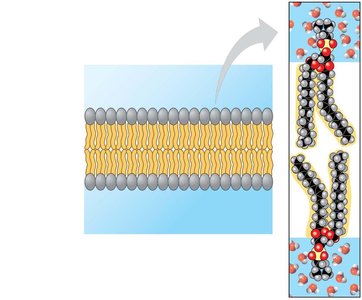
Phospholipids are amphipathic molecules, containing both hydrophobic and hydrophilic regions. This property allows them to form stable bilayers in aqueous environments, creating a barrier that separates two aqueous compartments.
Hydrophilic (water-loving) heads face outward toward water.
Hydrophobic (water-fearing) tails face inward, away from water.
Membrane Fluidity
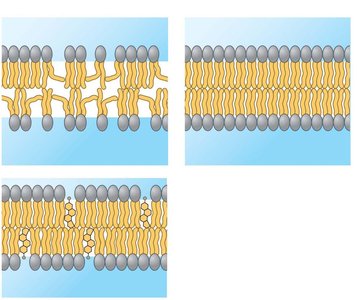
The fluidity of the membrane is essential for its function. Lipids and some proteins can move laterally within the layer, contributing to membrane flexibility and the ability to self-heal.
Unsaturated hydrocarbon tails prevent tight packing, increasing fluidity.
Saturated hydrocarbon tails pack together, making the membrane more viscous.
Cholesterol modulates membrane fluidity depending on temperature.
Membrane Proteins and Their Functions
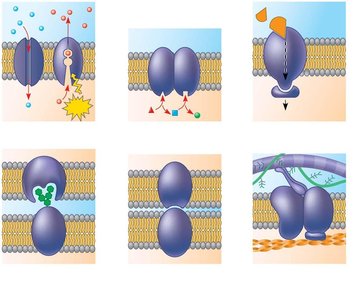
Membrane proteins are embedded within or attached to the lipid bilayer and are responsible for most of the membrane's specific functions.
Integral proteins penetrate the hydrophobic core; if they span the membrane, they are called transmembrane proteins.
Peripheral proteins are loosely bound to the membrane surface.
Functions include transport, enzymatic activity, signal transduction, cell-cell recognition, intercellular joining, and attachment to the cytoskeleton and extracellular matrix.
Membrane Carbohydrates and Cell-Cell Recognition
Carbohydrates attached to proteins (glycoproteins) or lipids (glycolipids) on the extracellular surface of the membrane play a key role in cell-cell recognition. These structures are highly variable among species and cell types.
Synthesis and Sidedness of Membranes
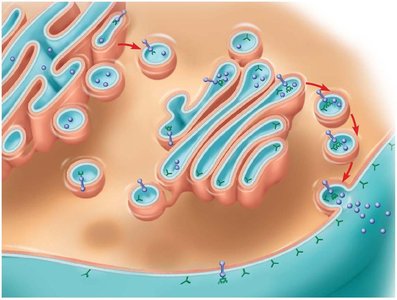
The asymmetrical arrangement of proteins, lipids, and carbohydrates in the membrane is established during membrane synthesis in the endoplasmic reticulum (ER) and Golgi apparatus.
Membrane Permeability and Transport
Selective Permeability
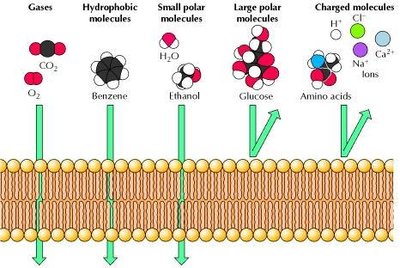
The plasma membrane is selectively permeable, allowing some substances to cross more easily than others. This property is crucial for maintaining the internal environment of the cell.
Nonpolar (hydrophobic) molecules, such as O2 and CO2, pass easily through the lipid bilayer.
Polar molecules and ions, such as glucose and Na+, do not cross the membrane easily and require transport proteins.
Transport Proteins
Transport proteins facilitate the movement of hydrophilic substances across the membrane. They are specific for the substances they transport.
Channel proteins provide hydrophilic tunnels for certain molecules or ions (e.g., aquaporins for water).
Carrier proteins bind to molecules and change shape to shuttle them across the membrane.
Passive Transport
Diffusion
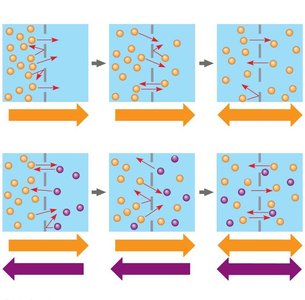
Diffusion is the movement of molecules from an area of higher concentration to an area of lower concentration, down their concentration gradient. It is a form of passive transport that does not require energy.
At dynamic equilibrium, molecules continue to move, but there is no net change in concentration.
Osmosis
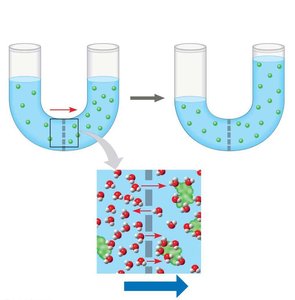
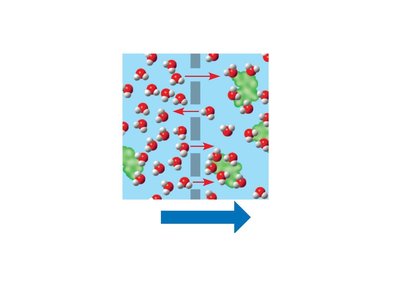
Osmosis is the diffusion of free water across a selectively permeable membrane. Water moves from regions of lower solute concentration to regions of higher solute concentration until equilibrium is reached.
Tonicity and Water Balance
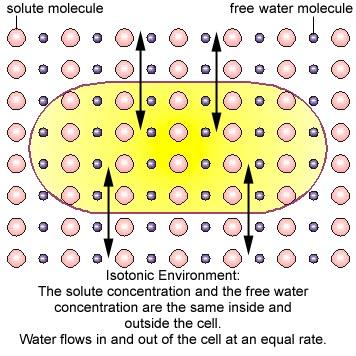
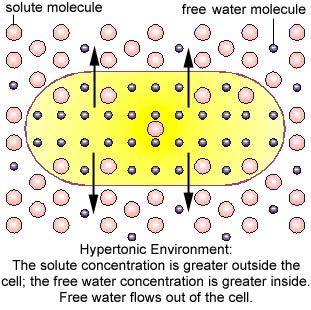
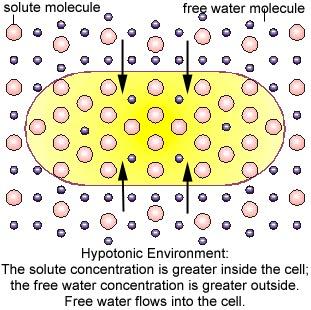
Tonicity describes the ability of a surrounding solution to cause a cell to gain or lose water.
Isotonic solution: Solute concentration is equal inside and outside the cell; no net water movement.
Hypertonic solution: Higher solute concentration outside the cell; cell loses water.
Hypotonic solution: Lower solute concentration outside the cell; cell gains water.
Solution Type | Solute Concentration | Water Movement |
|---|---|---|
Isotonic | Equal inside and outside | No net movement |
Hypertonic | Higher outside | Water leaves cell |
Hypotonic | Lower outside | Water enters cell |
Facilitated Diffusion
Facilitated diffusion is a type of passive transport aided by proteins. Channel and carrier proteins help specific molecules or ions cross the membrane without energy input.
Active Transport
Mechanism of Active Transport
Active transport moves substances against their concentration gradients, requiring energy, usually from ATP. This process allows cells to maintain internal concentrations of small molecules that differ from concentrations in their environment.
The sodium-potassium pump is a classic example, exchanging Na+ and K+ across animal cell membranes.
Bulk Transport
Exocytosis and Endocytosis
Large molecules, such as proteins and polysaccharides, cross the membrane in bulk via vesicles in processes called exocytosis (export) and endocytosis (import).
Phagocytosis: "Cellular eating"; cell engulfs large particles.
Pinocytosis: "Cellular drinking"; cell engulfs extracellular fluid.
Receptor-mediated endocytosis: Specific molecules are taken in after binding to receptors.
Cell Signaling
Overview of Cell Communication
Cells communicate through chemical signals, which are essential for coordinating activities in multicellular organisms. Signaling can be local (paracrine, synaptic) or long-distance (endocrine/hormonal).
Reception: Signal molecule binds to receptor.
Transduction: Signal is relayed and amplified through a cascade of molecular interactions.
Response: Cellular activity is altered, such as gene expression or enzyme activity.
Types of Membrane Receptors
G protein-coupled receptors (GPCRs): Work with G proteins to transmit signals.
Ligand-gated ion channels: Open or close in response to binding of a signaling molecule, allowing ions to pass through.
Signal Transduction Pathways
Signal transduction often involves phosphorylation cascades, where protein kinases transfer phosphate groups to activate proteins, and protein phosphatases remove them to deactivate proteins. Second messengers like cAMP and Ca2+ ions play key roles in amplifying and spreading the signal within the cell.
Cellular Responses
The final outcome of cell signaling can be regulation of gene expression, changes in enzyme activity, or alterations in cell metabolism, allowing the cell to respond appropriately to external signals.
