 Indietro
Membrane Transport and Facilitated Diffusion: Study Guide
Guida di studio - Note intelligenti
 Appunti personalizzati basati sui tuoi materiali, ampliati con definizioni chiave, esempi e contesto.
Membrane Transport
Overview of Membrane Transport
The plasma membrane is a selectively permeable barrier that regulates the movement of substances into and out of the cell. This selective permeability is essential for maintaining cellular homeostasis and proper function.
Selective Permeability: Some substances cross the membrane more easily than others.
Hydrophobic (nonpolar) molecules: Such as hydrocarbons, CO2, O2, and N2, can dissolve in the lipid bilayer and cross easily.
Hydrophilic (polar) molecules: Such as sugars and water, do not cross the membrane easily and often require assistance from transport proteins.
Types of Membrane Transport
Transport across the membrane occurs via two main mechanisms: passive and active transport.
Passive Transport: Movement of molecules without energy input, down their concentration or electrochemical gradient.
Active Transport: Movement of molecules against their concentration gradient, requiring energy (usually ATP).
Passive Transport
Diffusion
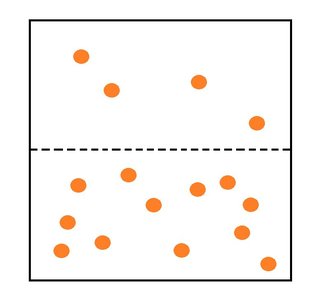
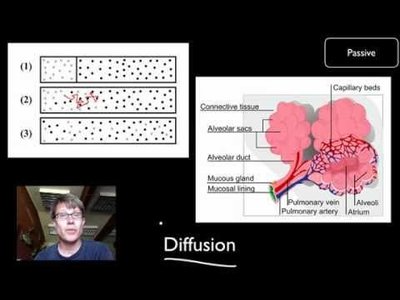
Diffusion is the spontaneous movement of molecules from an area of high concentration to an area of low concentration. It is a fundamental process for the distribution of substances within biological systems.
Concentration Gradient: The difference in concentration across a space.
Dynamic Equilibrium: When molecules are evenly distributed, but still move randomly.
No Energy Required: Diffusion is a passive process.
Selective Permeability: Even with diffusion, the membrane only allows certain molecules to pass.
Example: Oxygen and carbon dioxide gases diffuse across cell membranes during respiration.
Osmosis
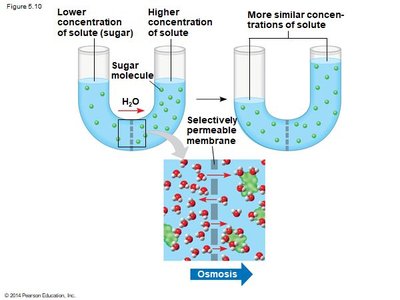
Osmosis is the diffusion of water across a selectively permeable membrane. It is crucial for maintaining water balance in cells.
Direction: Water moves from regions of lower solute concentration to regions of higher solute concentration.
Equilibrium: Water movement continues until solute concentrations are equal on both sides.
Example: Plant cells absorb water from soil via osmosis.
Facilitated Diffusion
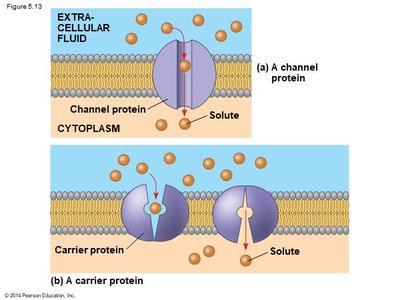
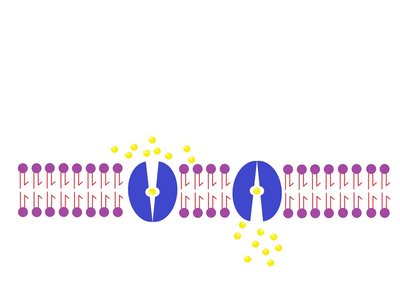
Facilitated diffusion is the passive movement of molecules across the membrane with the help of transport proteins. It is essential for the transport of ions, water, and carbohydrates that cannot diffuse directly through the lipid bilayer.
Transport Proteins: Channel and carrier proteins assist in the movement of specific substances.
Specificity: Each transport protein is specific for the substance it moves.
No Energy Required: Substances move down their concentration gradient.
Example: Aquaporins facilitate water movement; glucose transporters move glucose into cells.
Active Transport
Overview of Active Transport
Active transport moves substances against their concentration gradients and requires energy, usually in the form of ATP. This process is vital for maintaining cellular ion balances and membrane potential.
Pumps: Transport proteins that use energy to move ions or molecules.
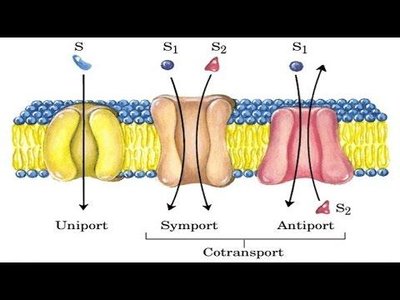
Cotransport: Coupling the movement of one substance with another.
Bulk Transport: Movement of large molecules via vesicles (exocytosis and endocytosis).
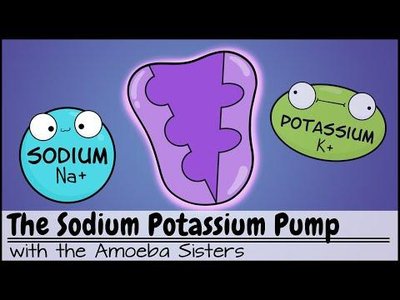
Sodium-Potassium Pump
The sodium-potassium pump is a classic example of active transport in animal cells. It maintains the relative concentrations of Na+ and K+ inside and outside the cell, which is essential for membrane potential.
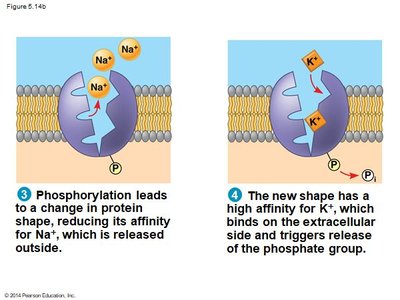
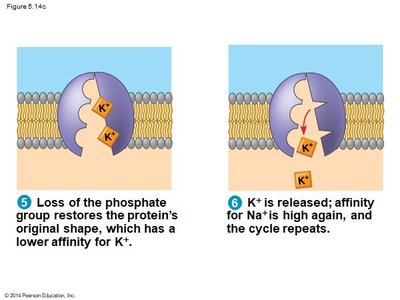
Mechanism: 3 Na+ ions are pumped out, 2 K+ ions are pumped in, resulting in a net positive charge outside.
ATP Use: ATP phosphorylates the pump, causing conformational changes.
Cycle: The pump alternates between shapes to bind and release Na+ and K+.
Example: Nerve cells use the sodium-potassium pump to generate action potentials.
Proton Pump
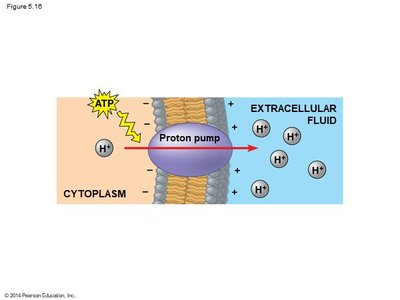
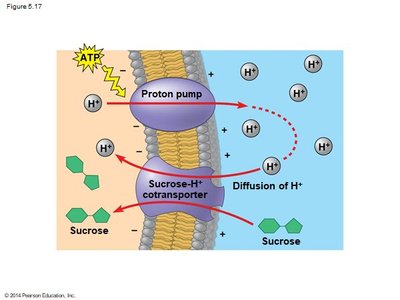
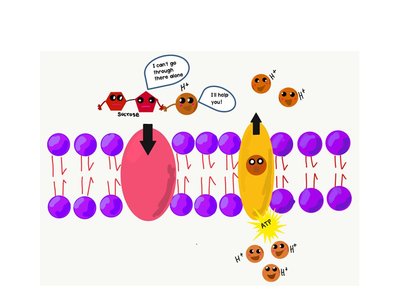
Proton pumps are used by plants, fungi, and bacteria to move H+ ions out of the cell, creating an electrochemical gradient that can be used for other cellular processes.
ATP Use: Energy from ATP drives the movement of protons.
Membrane Potential: The pump generates voltage across the membrane.
Cotransport
Cotransport involves the coupling of the favorable movement of one substance (down its gradient) with the unfavorable movement of another (against its gradient). This is often seen in plant cells, where the proton gradient drives the uptake of nutrients.
Symport: Both substances move in the same direction.
Antiport: Substances move in opposite directions.
Example: Sucrose-H+ cotransporter in plants.
Bulk Transport: Exocytosis and Endocytosis
Exocytosis
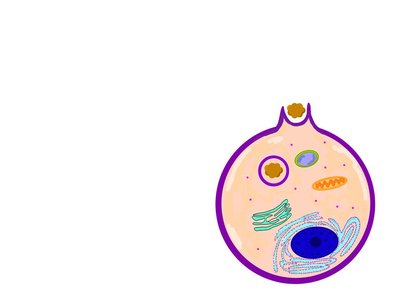
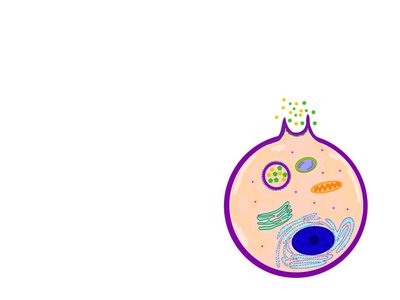
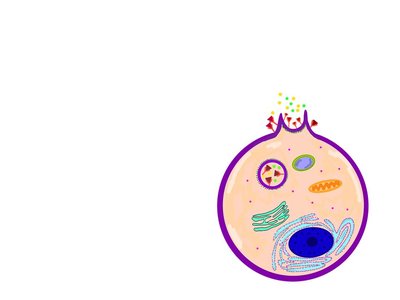
Exocytosis is the process by which cells secrete large molecules via vesicles that fuse with the plasma membrane. This is essential for the release of hormones, neurotransmitters, and waste products.
Mechanism: Vesicles form a bilayer with the membrane and release contents outside.
Example: Nerve cells releasing neurotransmitters.
Endocytosis
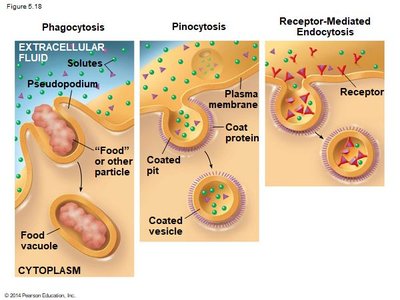
Endocytosis is the uptake of molecules by the cell via vesicles formed from the plasma membrane. There are three main types:
Phagocytosis: Cell engulfs particles to be digested by lysosomes.
Pinocytosis: Nonspecific uptake of extracellular fluid containing dissolved molecules.
Receptor-mediated endocytosis: Specific uptake of molecules via solute binding to membrane receptors.
Summary Table: Types of Membrane Transport
Type | Energy Required? | Direction | Example |
|---|---|---|---|
Diffusion | No | Down gradient | O2 across membrane |
Osmosis | No | Down gradient | Water movement |
Facilitated Diffusion | No | Down gradient | Glucose transport |
Active Transport | Yes (ATP) | Against gradient | Sodium-potassium pump |
Cotransport | Indirect (ATP) | Coupled | Sucrose-H+ cotransporter |
Bulk Transport | Yes | Varies | Exocytosis, endocytosis |
Additional info: This guide expands on the original notes by providing definitions, examples, and a summary table for clarity and completeness.
