 Indietro
Membrane Transport Mechanisms: Active Transport, Cotransport, and Bulk Transport
Guida di studio - Note intelligenti
 Appunti personalizzati basati sui tuoi materiali, ampliati con definizioni chiave, esempi e contesto.
Membrane Structure and Function
Overview of Membrane Transport
The plasma membrane regulates the movement of substances into and out of the cell, maintaining cellular homeostasis. Transport mechanisms are classified as passive or active, depending on whether they require energy input.
Passive transport: Movement of substances down their concentration gradient without energy input (e.g., simple diffusion, facilitated diffusion, osmosis).
Active transport: Movement of substances against their concentration gradient, requiring energy (usually ATP).
Bulk transport: Movement of large molecules or particles via endocytosis and exocytosis.
Primary Active Transport
Sodium-Potassium Pump (Na+-K+ Pump)
Primary active transport uses ATP to move ions or molecules against their concentration gradients. The sodium-potassium pump is a classic example, crucial for maintaining membrane potential and cellular function.
Directional transport: Moves Na+ out and K+ into the cell.
Electrogenic pump: Creates an electrical gradient across the membrane.
Mechanism: For each cycle, 3 Na+ ions are exported and 2 K+ ions are imported, using one ATP molecule.
Importance: Maintains cell volume, membrane potential, and drives secondary transport.
Equation: 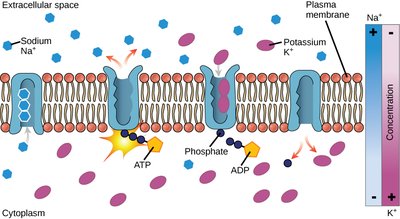
Secondary Active Transport (Cotransport)
Symporters and Antiporters
Secondary active transport uses the energy stored in ion gradients (often established by primary active transport) to move other substances against their gradients.
Symporter: Moves two substances in the same direction (e.g., Na+-glucose symporter).
Antiporter: Moves substances in opposite directions.
Mechanism: As Na+ diffuses back into the cell (passive), it "drags" glucose (active) with it, allowing glucose uptake against its gradient.
Example: Na+-glucose symporter in intestinal cells. 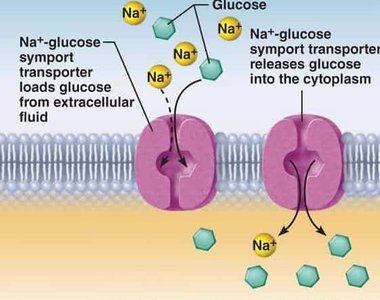
Bulk Transport: Endocytosis and Exocytosis
Endocytosis
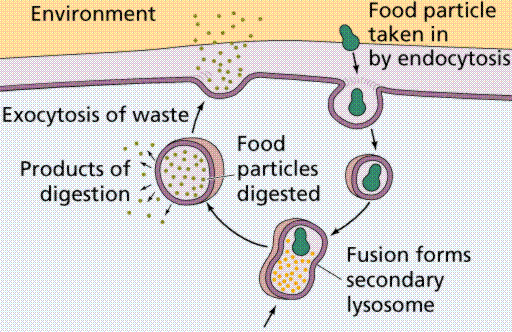
Endocytosis is the process by which cells take in substances by engulfing them with the plasma membrane, forming vesicles. There are three main types:
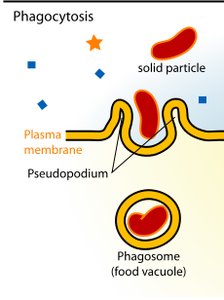
Phagocytosis: "Cell eating"; the cell engulfs large particles or whole cells, forming a phagosome.
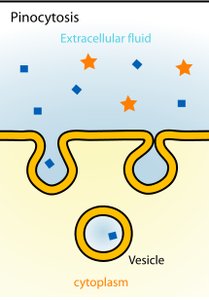
Pinocytosis: "Cell drinking"; the cell engulfs extracellular fluid and dissolved substances.
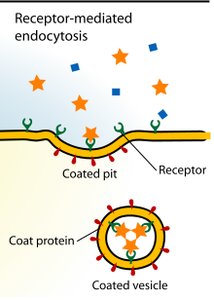
Receptor-mediated endocytosis: The cell selectively takes in specific macromolecules via receptor proteins and coated pits.
Phagocytosis
Used by immune cells to engulf pathogens.
Formation of a food vacuole (phagosome).
Pinocytosis
Non-specific uptake of extracellular fluid.
Formation of small vesicles.
Receptor-Mediated Endocytosis
Highly specific; receptors bind to ligands.
Formation of coated vesicles.
Exocytosis
Exocytosis is the process by which cells expel substances by fusing vesicles with the plasma membrane.
Function: Secretion of hormones, neurotransmitters, and waste products.
Mechanism: Vesicles containing substances fuse with the membrane, releasing contents outside the cell.
Terminology and Key Concepts
Important Terms
Active transport: Energy-requiring movement against a gradient.
Antiporter: Transporter moving substances in opposite directions.
Aquaporins: Channel proteins for water transport.
Carrier protein: Protein that binds and transports substances across the membrane.
Channel protein: Forms pores for passive transport.
Concentration gradient: Difference in concentration across a membrane.
Cotransport: Coupled transport of two substances.
Electrochemical gradient: Combined effect of concentration and electrical gradients.
Electrogenic pump: Creates charge separation across the membrane.
Endocytosis: Uptake of substances via vesicle formation.
Exocytosis: Release of substances via vesicle fusion.
Facilitated diffusion: Passive transport via proteins.
Fluid mosaic model: Describes membrane structure.
Gated channel: Channel protein regulated by signals.
Ligand: Molecule that binds to a receptor.
Membrane potential: Voltage across the membrane.
Osmosis: Diffusion of water.
Passive transport: Movement without energy input.
Phagocytosis: Uptake of large particles.
Pinocytosis: Uptake of fluid.
Primary active transport: Direct use of ATP.
Receptor-mediated endocytosis: Specific uptake via receptors.
Selective permeability: Membrane allows certain substances to pass.
Simple diffusion: Passive movement of small molecules.
Sodium-potassium pump: Maintains gradients of Na+ and K+.
Symporter: Moves substances in the same direction.
Transmembrane protein: Spans the membrane.
Voltage channel: Opens/closes in response to voltage changes.
Additional info:
Membrane transport is essential for nutrient uptake, waste removal, and signal transduction.
Disruption of transport mechanisms can lead to disease states (e.g., cystic fibrosis, diabetes).
