 Indietro
Mendel and the Gene: Foundations of Mendelian Genetics
Guida di studio - Note intelligenti
 Appunti personalizzati basati sui tuoi materiali, ampliati con definizioni chiave, esempi e contesto.
Mendel and the Gene
Introduction to Inheritance
Inheritance is the process by which traits are passed from parents to offspring. Early observations noted that offspring often resemble their parents in both appearance and behavior due to inherited traits. However, the mechanisms behind inheritance were not understood until the work of Gregor Mendel in the mid-1800s, which laid the foundation for modern genetics.
Inherited traits include characteristics such as height, color, and shape.
Patterns of inheritance were observed as early as 300 BC, but the underlying mechanisms remained unknown until Mendel's experiments.
The Blending Hypothesis vs. Particulate Hypothesis
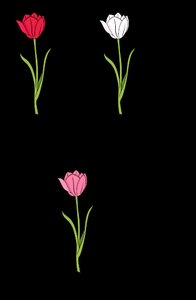
Before Mendel, the blending hypothesis suggested that parental traits mixed in offspring, similar to blending paints. For example, crossing a red-flowered plant with a white-flowered plant would yield pink offspring. However, this hypothesis could not explain why some traits disappeared in one generation and reappeared in the next.
If blending were true, variation would decrease over generations, but this was not observed.
Mendel proposed the particulate hypothesis: traits are inherited as discrete units (now called genes) that retain their identity across generations.
Each parent contributes one unit for every trait, and these units do not blend but can be masked or expressed depending on their combination.
Genetic Vocabulary
Understanding Mendelian genetics requires familiarity with several key terms:
Gene: A unit of heredity that encodes information for a trait.
Allele: Different versions of a gene.
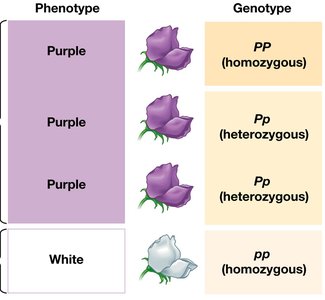
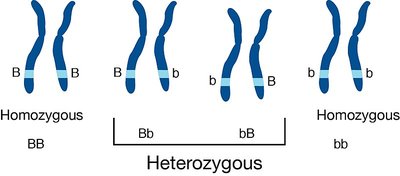
Homozygous: Having two identical alleles for a gene (e.g., PP or pp).
Heterozygous: Having two different alleles for a gene (e.g., Pp).
Genotype: The genetic makeup of an organism.
Phenotype: The observable characteristics or traits of an organism.
Mendel’s Experiments with Pea Plants
Experimental Approach
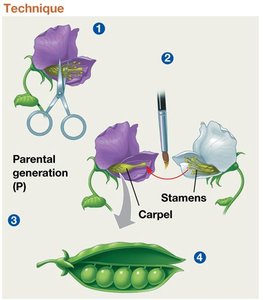
Mendel chose pea plants for his experiments because they exhibited clear, contrasting traits and could be easily manipulated for controlled breeding. He used techniques such as removing pollen-producing parts to prevent self-fertilization and manually transferring pollen from one plant to another.
He started with true-breeding plants, which consistently produced offspring with the same trait.
He crossed plants with different traits and observed the resulting generations.
Results of Mendel’s Flower-Color Experiment
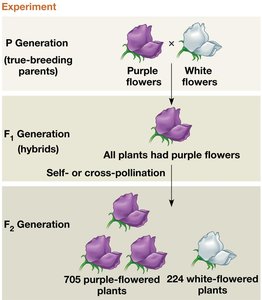
Mendel crossed purple-flowered and white-flowered pea plants (P generation). All offspring in the first filial (F1) generation had purple flowers. When these F1 plants self-fertilized, the second filial (F2) generation showed a 3:1 ratio of purple to white flowers, indicating that the white trait was not lost but masked in the F1 generation.
The trait visible in the F1 generation is called dominant; the masked trait is recessive.
This pattern was consistent across seven different characteristics Mendel studied.
Summary Table: Mendel’s Seven Pea Plant Traits
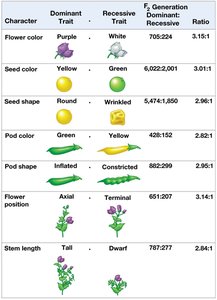
Mendel observed similar inheritance patterns for seven different traits in pea plants. The table below summarizes his findings:
Character | Dominant Trait | Recessive Trait | F2 Generation Dominant:Recessive | Ratio |
|---|---|---|---|---|
Flower color | Purple | White | 705:224 | 3.15:1 |
Seed color | Yellow | Green | 6,022:2,001 | 3.01:1 |
Seed shape | Round | Wrinkled | 5,474:1,850 | 2.96:1 |
Pod color | Green | Yellow | 428:152 | 2.82:1 |
Pod shape | Inflated | Constricted | 882:299 | 2.95:1 |
Flower position | Axial | Terminal | 651:207 | 3.14:1 |
Stem length | Tall | Dwarf | 787:277 | 2.84:1 |
How Alleles Affect Traits
Alleles and Flower Color
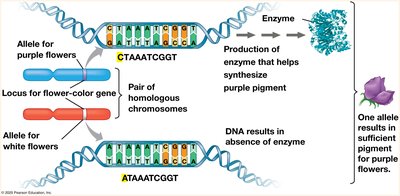
The purple-flower allele (P) enables the production of purple pigment, while the white-flower allele (p) does not. One P allele is sufficient for purple flowers, so both PP and Pp plants are purple. Only pp plants are white.
During meiosis, alleles segregate so each gamete receives one allele.
At fertilization, offspring inherit one allele from each parent, forming combinations such as PP, Pp, or pp.
Punnett Squares and Predicting Outcomes
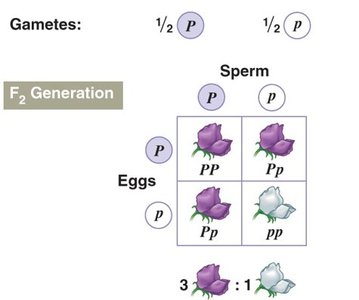
A Punnett square is a tool used to predict the possible genetic combinations and probabilities of offspring traits from parental crosses. Uppercase letters represent dominant alleles, and lowercase letters represent recessive alleles.
For a cross between two heterozygous parents (Pp × Pp), the Punnett square predicts a 1:2:1 genotypic ratio and a 3:1 phenotypic ratio.
Mendelian Inheritance in Humans
Single-Gene Traits
Some human traits are determined mainly by a single gene and follow Mendelian inheritance patterns. These can be dominant or recessive.
Dominant inheritance: One copy of the allele is sufficient for the trait to appear (e.g., Huntington disease).
Recessive inheritance: The trait appears only when both alleles are recessive (e.g., cystic fibrosis).
Huntington’s Disease (Dominant)
Caused by a dominant mutation in the HTT gene.
Symptoms include uncontrolled movements, mood changes, and cognitive decline.
One altered copy is sufficient for disease; each child of an affected parent has a 50% chance of inheriting the mutation.
Cystic Fibrosis (Recessive)
Caused by mutations in the CFTR gene.
Leads to thick mucus in the lungs and digestive system, causing breathing difficulties and poor nutrient absorption.
Only individuals with two disease-causing alleles have cystic fibrosis; carriers (one normal, one mutated allele) are typically healthy.
Alternatives to Simple Mendelian Patterns
Incomplete Dominance
In incomplete dominance, neither allele is completely dominant. The heterozygote shows an intermediate phenotype, but parental traits can reappear in later generations. For example, crossing red and white snapdragons yields pink offspring in the F1 generation, with a 1:2:1 ratio of red:pink:white in the F2 generation.
Familial hypercholesterolemia (FH) is another example, where heterozygotes have intermediate cholesterol levels.
Codominance
In codominance, both alleles are fully expressed in the heterozygote. Traits do not blend but appear side by side. For example, roan cattle have both red and white hairs, and humans with AB blood type express both A and B antigens.
Human ABO blood group is a classic example of codominance and multiple alleles.
Multiple Alleles
Some genes have more than two alleles in the population, increasing genetic diversity. Each individual still inherits only two alleles, but many combinations are possible. The ABO blood group system is an example, with three alleles (IA, IB, i).
Type A: IAIA or IAi
Type B: IBIB or IBi
Type AB: IAIB
Type O: ii
Pleiotropy
Pleiotropy occurs when one gene influences multiple traits. For example, Marfan syndrome is caused by a mutation in the FBN1 gene, affecting connective tissue throughout the body and leading to symptoms in the skeleton, eyes, and cardiovascular system.
Nature and Nurture: Gene–Environment Interactions
Most traits are influenced by both genes and the environment, known as multifactorial traits. Environmental factors can enhance, reduce, or modify genetic expression. Examples include:
Hydrangea flower color (blue in acidic soil, pink in basic soil)
Human height (influenced by nutrition and genetics)
Skin pigmentation (affected by sun exposure)
Complex diseases such as heart disease, type 2 diabetes, and obesity, which depend on both genetic predisposition and lifestyle factors
Understanding gene–environment interactions is crucial for explaining variation in disease risk and trait expression among individuals.
