 Indietro
Mendel and the Gene Idea: Principles of Inheritance
Guida di studio - Note intelligenti
 Appunti personalizzati basati sui tuoi materiali, ampliati con definizioni chiave, esempi e contesto.
Chapter 14 – Mendel and the Gene Idea
Historical Perspectives on Inheritance
The understanding of inheritance has evolved significantly, from early misconceptions to Mendel's scientific approach. Prior to Mendel, several theories attempted to explain how traits were passed from one generation to the next.
Blending Theory: Proposed that offspring are a blend of parental traits, leading to uniformity over generations. This theory could not explain the reappearance of traits or selection for extremes.
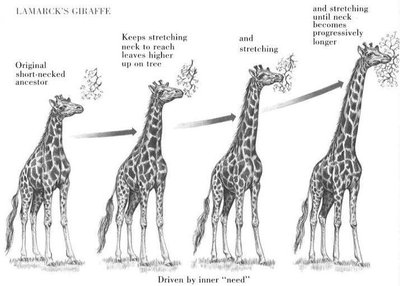
Inheritance of Acquired Characters: Suggested that traits acquired during an organism's lifetime could be passed to offspring. This lacked a mechanism and was not supported by evidence.
Mendel's Particulate Theory: Mendel introduced the concept that parents transmit discrete heritable factors (now called genes) that remain separate across generations.
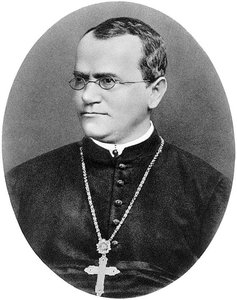
Gregor Mendel: The Scientist and His Work
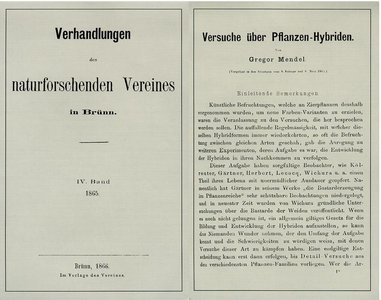
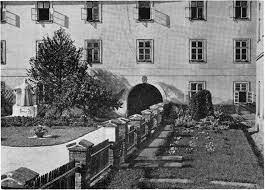
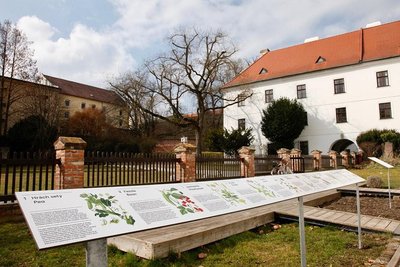
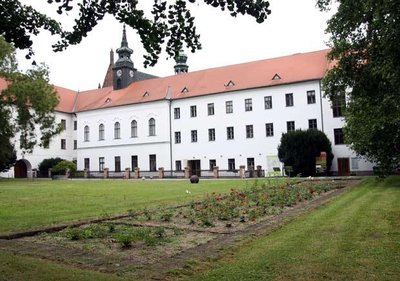
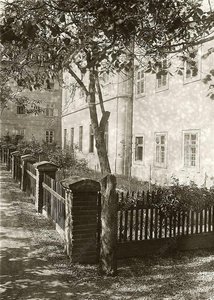
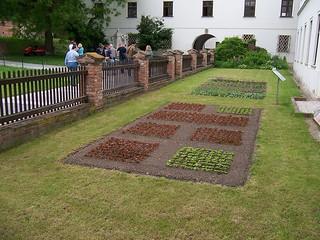
Gregor Mendel, an Augustinian monk, conducted pioneering experiments in the abbey gardens of Brno, leading to the foundation of modern genetics. His work was published in 1866 and later recognized for its significance.
Scientific Approach: Mendel used quantitative methods and controlled breeding experiments with pea plants.
Legacy: Despite his extensive unpublished data, much was lost after his death.
Mendel's Experimental System: The Pea Plant
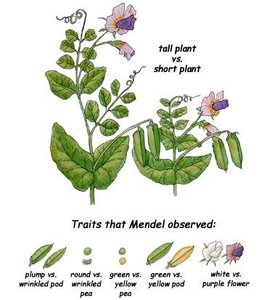
Mendel chose pea plants for their distinct, easily observable traits and ability to self-pollinate or be cross-pollinated. He selected seven characters, each with two or three discrete phenotypes, facilitating clear analysis.
True-Breeding Varieties: Plants that consistently produce offspring identical to themselves when self-pollinated.
Hybridization: Crossing two contrasting true-breeding varieties to produce hybrids.
Generations: P generation (parental), F1 generation (first filial, hybrids), F2 generation (second filial, offspring of F1).
Mendel's Quantitative Approach and Key Definitions
Mendel's use of quantitative data allowed him to deduce principles of inheritance. He distinguished between characters (heritable features) and traits (variants of a character).
Example: Flower color is a character; purple and white are traits.
Mendel's Laws of Inheritance
Mendel identified two fundamental laws: the Law of Segregation and the Law of Independent Assortment.
Law of Segregation
This law states that two alleles for a heritable character segregate during gamete formation, so each gamete receives only one allele. This explains the 3:1 ratio observed in F2 generations.
Alleles: Alternative versions of a gene located at specific loci on chromosomes.
Homozygous: Two identical alleles for a gene.
Heterozygous: Two different alleles for a gene.
Dominant and Recessive: Dominant alleles mask the effect of recessive alleles in heterozygotes.
Punnett Squares and Genotype vs. Phenotype
Punnett squares are used to predict the outcome of genetic crosses. The phenotype is the observable trait, while the genotype is the genetic makeup.
Example: Both PP and Pp genotypes produce purple flowers (phenotype), but their genotypes differ.
The Testcross
A testcross determines the genotype of an individual with a dominant phenotype by crossing it with a homozygous recessive individual. If any offspring display the recessive phenotype, the parent is heterozygous.
Law of Independent Assortment
This law states that alleles of different genes assort independently during gamete formation, provided the genes are on different chromosomes or far apart on the same chromosome.
Dihybrid Cross: Cross between individuals heterozygous for two characters.
Phenotypic Ratio: Dihybrid crosses typically yield a 9:3:3:1 ratio.
Genetic Linkage: Genes close together on the same chromosome tend to be inherited together.
Probability in Genetics
Mendel's laws reflect the rules of probability. The multiplication rule calculates the probability of independent events occurring together, while the addition rule calculates the probability of exclusive events.
Multiplication Rule:
Addition Rule:
Extensions of Mendelian Genetics
Inheritance patterns can be more complex than simple Mendelian genetics. These include incomplete dominance, codominance, multiple alleles, pleiotropy, epistasis, and polygenic inheritance.
Degrees of Dominance
Complete Dominance: Heterozygote and dominant homozygote have identical phenotypes.
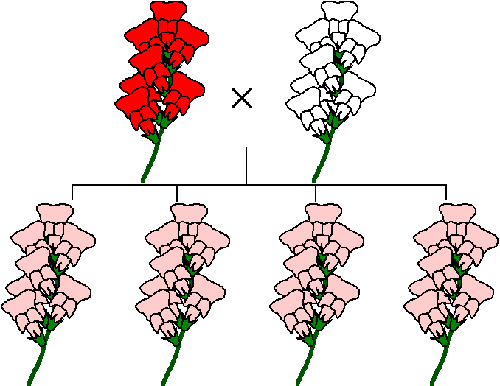
Incomplete Dominance: Heterozygote phenotype is intermediate between parental phenotypes.
Codominance: Both alleles are fully expressed in the phenotype.
Multiple Alleles and Blood Types
ABO Blood Group: Three alleles (IA, IB, i) determine blood type. IA and IB are codominant; i is recessive.
Pleiotropy and Epistasis
Pleiotropy: One gene affects multiple traits (e.g., sickle cell anemia, cystic fibrosis).
Epistasis: One gene affects the expression of another gene (e.g., coat color in Labrador retrievers).
Polygenic Inheritance
Traits controlled by multiple genes show quantitative variation, such as human height and skin color.
Environmental Impact on Phenotype
Phenotype can be influenced by environmental factors as well as genotype. Multifactorial traits depend on both genetic and environmental components.
Example: Blue flowers require specific nutrients to express their color.
Multifactorial Diseases: Heart disease, diabetes, alcoholism, mental illnesses, and cancer.
Lethal Mutations and Human Genetics
Most lethal genes are recessive, and their effects are seen in homozygotes. Human genetics is studied using pedigrees due to ethical and practical limitations in experimentation.
Pedigree Analysis: Family trees trace inheritance patterns of traits.
Recessive Disorders: Tay Sachs, PKU, cystic fibrosis, sickle cell anemia, albinism.
Carrier: Heterozygous individual carrying a recessive allele but phenotypically normal.
Genetic Testing and Counseling
Genetic counselors provide information about inherited diseases and carrier status. Fetal testing methods include amniocentesis, chorionic villus sampling, ultrasound, and fetoscopy.
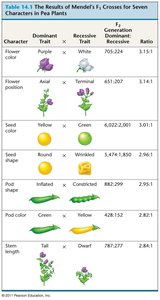
Summary Table: Mendel's Seven Pea Plant Characters
Character | Dominant Trait | Recessive Trait | F2 Generation Ratio |
|---|---|---|---|
Flower color | Purple | White | 3.15:1 |
Seed color | Yellow | Green | 3.01:1 |
Seed shape | Round | Wrinkled | 2.96:1 |
Pod shape | Inflated | Constricted | 2.81:1 |
Pod color | Green | Yellow | 2.82:1 |
Flower position | Axial | Terminal | 3.14:1 |
Stem length | Tall | Dwarf | 2.84:1 |
Additional info: This summary expands on the original notes with academic context, definitions, and examples to ensure completeness and clarity for exam preparation.
