 Indietro
Lecture 17 (Unit 2) -Mendel and the Gene Idea: Principles of Heredity and Patterns of Inheritance
Guida di studio - Note intelligenti
 Appunti personalizzati basati sui tuoi materiali, ampliati con definizioni chiave, esempi e contesto.
Mendel and the Gene Idea
Introduction to Mendelian Genetics
Gregor Mendel's experiments with pea plants established the foundational principles of heredity, which are central to classical genetics. His work revealed how traits are inherited through discrete units called genes, and how these units follow predictable patterns during sexual reproduction.
Key Point 1: Mendel's laws explain how traits are passed from parents to offspring.
Key Point 2: The concepts of dominant and recessive alleles, genotype, and phenotype are essential for understanding inheritance.
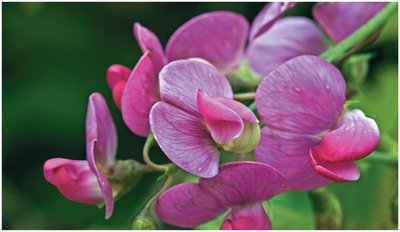
Example: Mendel used pea plants (Pisum sativum) for his experiments due to their variety, short generation time, and ability to control mating.
Hypotheses of Heredity
Blending vs. Particulate Inheritance
Before Mendel, two main hypotheses attempted to explain heredity: the blending hypothesis and the particulate hypothesis. Mendel's results supported the particulate hypothesis, which states that heritable factors (genes) remain discrete and do not blend in offspring.
Blending Hypothesis: Traits of parents mix to produce intermediate offspring.
Particulate Hypothesis: Traits are inherited as discrete units (genes), allowing parental traits to reappear in later generations.
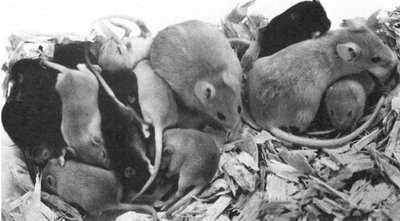
Example: Offspring of gray mice can include black and white individuals, contradicting blending inheritance.
Gregor Mendel and His Experiments
Mendel's Approach and Model Organism
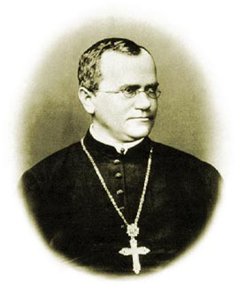
Mendel was a scientist and monk who performed quantitative experiments with pea plants, leading to the discovery of the laws of segregation and independent assortment. Pea plants were ideal due to their true-breeding varieties, controlled mating, and prolific offspring.
True-breeding: Plants that consistently produce offspring with the same trait.
Trait: Variant of a character (e.g., purple vs. white flowers).
Model Organism: Organisms suitable for genetic studies due to their characteristics.

Mendel's Experimental Design
Monohybrid Crosses and Results
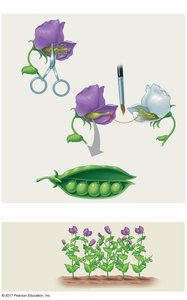
Mendel crossed true-breeding purple and white flowered pea plants. All F1 offspring had purple flowers, supporting the particulate hypothesis. Self-pollination of F1 plants produced F2 generations with a 3:1 ratio of purple to white flowers.
P Generation: True-breeding parents.
F1 Generation: Hybrids, all showing the dominant trait.
F2 Generation: Offspring with both dominant and recessive traits, typically in a 3:1 ratio.
Mendel's Model and Laws
Law of Segregation
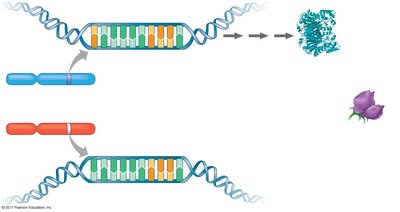
Mendel proposed that each individual has two alleles for each gene, one from each parent. During gamete formation, these alleles segregate so that each gamete receives only one allele. This explains the reappearance of recessive traits in the F2 generation.
Allele: Alternative version of a gene.
Dominant Allele: Determines phenotype when present.
Recessive Allele: Masked by dominant allele in heterozygotes.
Law of Segregation: Two alleles for a gene separate during gamete formation.
Relation to Meiosis
Chromosomal Basis of Segregation
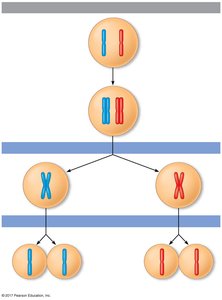
The law of segregation is explained by the behavior of chromosomes during meiosis. Homologous chromosomes separate, ensuring each gamete receives one allele for each gene.
Meiosis I: Homologous chromosomes separate.
Meiosis II: Sister chromatids separate.
Result: Each gamete contains one allele per gene.
Phenotype vs. Genotype
Definitions and Ratios
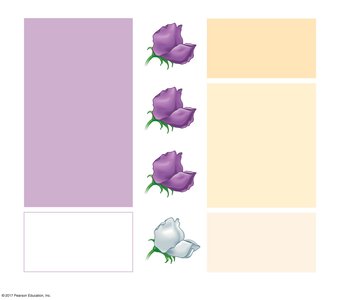
Phenotype refers to the observable traits, while genotype is the genetic makeup. In Mendelian crosses, the phenotypic ratio is often 3:1, while the genotypic ratio is 1:2:1.
Phenotype: Observable trait (e.g., purple flowers).
Genotype: Genetic composition (e.g., PP, Pp, pp).
Homozygous: Two identical alleles (PP or pp).
Heterozygous: Two different alleles (Pp).
Testcrosses
Determining Genotype of Dominant Phenotype
A testcross involves crossing an individual with a dominant phenotype but unknown genotype to a homozygous recessive individual. The offspring's phenotypes reveal the unknown genotype.
Testcross: Cross to homozygous recessive to determine genotype.
Result: All offspring purple if parent is homozygous dominant; mix of purple and white if heterozygous.
Dihybrid Crosses and Law of Independent Assortment
Independent Assortment of Alleles
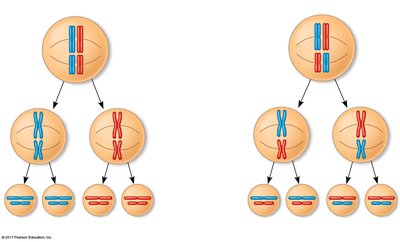
Mendel's second law states that alleles of different genes assort independently during gamete formation, provided the genes are on different chromosomes or far apart on the same chromosome. This results in a 9:3:3:1 phenotypic ratio in dihybrid crosses.
Dihybrid Cross: Cross involving two traits.
Law of Independent Assortment: Each pair of alleles segregates independently.
Example: Seed color and shape in pea plants.
Probability in Mendelian Genetics
Multiplication and Addition Rules
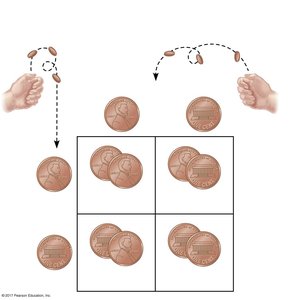
Probability laws help predict the outcomes of genetic crosses. The multiplication rule calculates the probability of independent events occurring together, while the addition rule calculates the probability of mutually exclusive events.
Multiplication Rule: Probability of two independent events = product of their probabilities.
Addition Rule: Probability of either event = sum of their probabilities.
Example: Probability of homozygous recessive offspring in a dihybrid cross:
Mendelian Inheritance in Humans
Human Genetic Disorders
Mendelian principles apply to human genetics, though controlled crosses are not possible. Pedigrees are used to analyze inheritance patterns. Many human disorders follow simple Mendelian inheritance, including both recessive and dominant traits.
Recessive Disorders: Tay-Sachs, cystic fibrosis, sickle-cell disease, beta-thalassemia.
Dominant Disorders: Huntington's disease, Marfan syndrome.
Carrier: Heterozygous individual for a recessive disorder.

Complex Patterns of Inheritance
Beyond Simple Mendelian Genetics
Some traits do not follow simple dominant-recessive patterns. These include incomplete dominance, codominance, multiple alleles, epistasis, and polygenic inheritance.
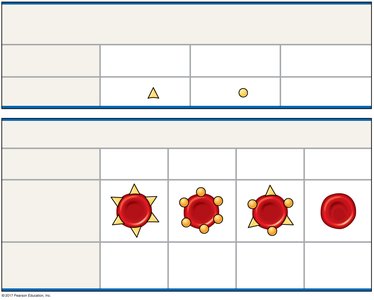
Incomplete Dominance: Heterozygote phenotype is intermediate between parents.
Codominance: Both alleles are fully expressed in the phenotype.
Multiple Alleles: More than two alleles exist for most genes (e.g., ABO blood groups).
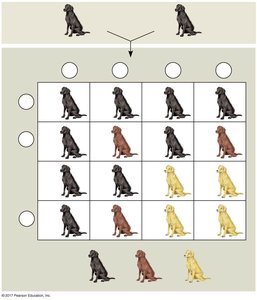
Epistasis: Expression of one gene affects another gene's phenotype.
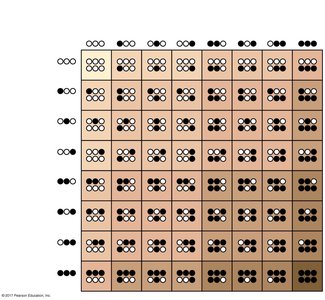
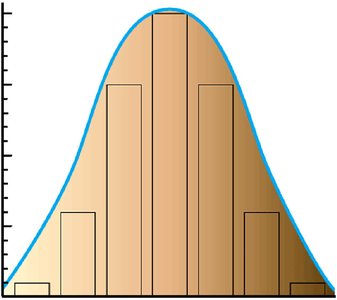
Polygenic Inheritance: Multiple genes contribute to a single trait, resulting in continuous variation.
Summary Table: Mendel's F1 Crosses for Seven Characters
Comparison of Dominant and Recessive Traits
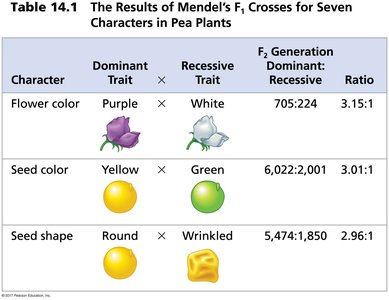
Mendel observed consistent ratios for several traits in pea plants, supporting his laws of inheritance.
Character | Dominant Trait | Recessive Trait | F2 Generation Dominant: Recessive Ratio |
|---|---|---|---|
Flower color | Purple | White | 3.15:1 |
Seed color | Yellow | Green | 3.01:1 |
Seed shape | Round | Wrinkled | 2.96:1 |
Review of Key Concepts
Mendel's laws of segregation and independent assortment explain the inheritance of traits.
Alleles can be dominant or recessive, and individuals can be homozygous or heterozygous.
Punnett squares and probability rules are essential tools for predicting genetic outcomes.
Complex inheritance patterns include incomplete dominance, codominance, epistasis, and polygenic traits.
