 Indietro
Mendelian Genetics and DNA: Principles of Inheritance
Guida di studio - Note intelligenti
 Appunti personalizzati basati sui tuoi materiali, ampliati con definizioni chiave, esempi e contesto.
Mendelian Genetics: Foundations of Inheritance
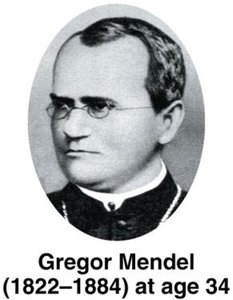
Gregor Mendel and the Birth of Genetics
Mendelian genetics is the study of how traits are passed from one generation to the next, based on the pioneering work of Gregor Mendel. Mendel's experiments with pea plants established the basic principles of heredity, which are still fundamental to genetics today.
Heredity: The transmission of traits from parents to offspring.
Genetics: The scientific study of heredity and variation.
Gregor Mendel: The first scientist to deduce the basic principles of inheritance through controlled experiments.
Characters and Traits
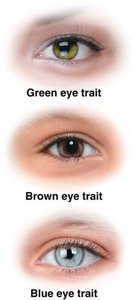
Inherited features that vary among individuals are called characters, and each possible variation of a character is a trait. For example, eye color is a character, and green, brown, or blue eyes are traits.
Character: An inherited feature (e.g., eye color).
Trait: A specific variation of a character (e.g., blue eyes).
Genes, Alleles, Genotype, and Phenotype
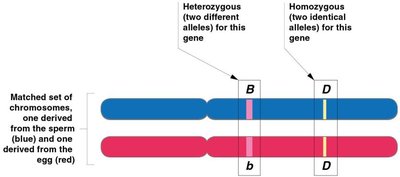
Traits are determined by genes, which exist in alternate forms called alleles. The combination of alleles an organism carries is its genotype, while its observable characteristics are its phenotype.
Allele: An alternative form of a gene.
Genotype: The genetic makeup of an organism (the alleles it carries).
Phenotype: The observable traits of an organism.
Homozygous: Two identical alleles for a gene.
Heterozygous: Two different alleles for a gene.
Dominant and Recessive Alleles
In Mendelian genetics, some alleles are dominant and others are recessive. Dominant alleles mask the effect of recessive alleles in heterozygous individuals.
Dominant allele: Expressed in the phenotype when present.
Recessive allele: Expressed only when both alleles are recessive.
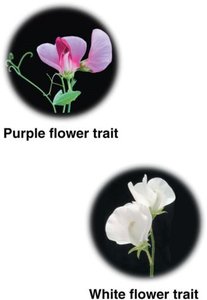
Example: In pea plants, purple flower color (P) is dominant over white (p).
Mendel's Experiments with Pea Plants
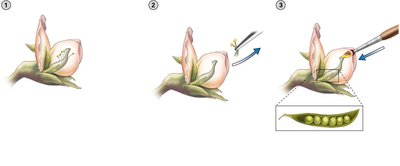
Mendel used pea plants to study inheritance, carefully controlling pollination to observe how traits were passed to offspring.
He removed pollen-containing structures to prevent self-fertilization and manually transferred pollen from one plant to another.
He tracked traits such as flower color, seed shape, and plant height.
Genotype and Phenotype: Key Definitions
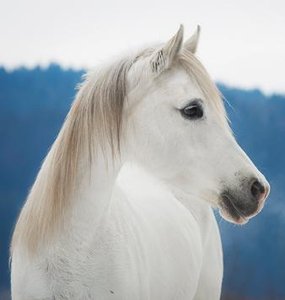
The distinction between genotype and phenotype is central to genetics. Genotype refers to the alleles present, while phenotype refers to the physical expression of those alleles.
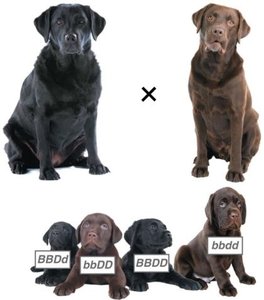
Homozygous: Two identical alleles (e.g., BB or bb).
Heterozygous: Two different alleles (e.g., Bb).
Dominant: Phenotype seen in both homozygous and heterozygous individuals.
Recessive: Phenotype seen only in homozygous individuals.
Predicting Inheritance Patterns
Punnett Squares: Predicting Genetic Crosses
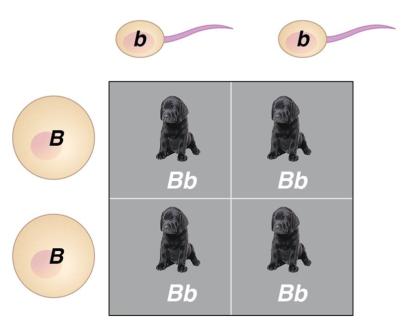
Punnett squares are diagrams used to predict the possible genotypes and phenotypes of offspring from a genetic cross.
P generation: Parental generation.
F1 generation: First filial generation (offspring).
Monohybrid cross: Cross between two individuals heterozygous for one gene.
Law of Segregation
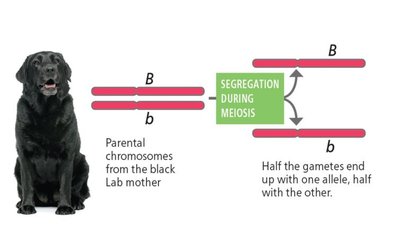
Mendel's law of segregation states that the two alleles for a character separate during gamete formation, so each gamete carries only one allele for each gene.
During meiosis, alleles segregate so offspring inherit one allele from each parent.
Test Crosses
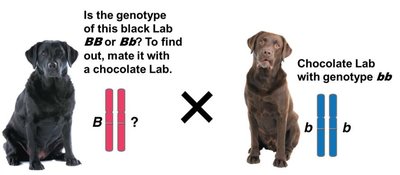
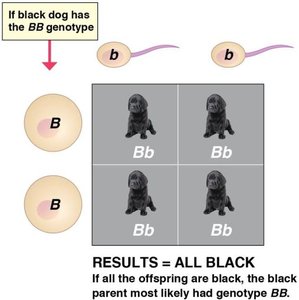
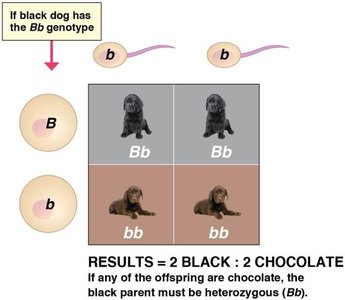
A test cross is used to determine the genotype of an individual with a dominant phenotype by crossing it with an individual with a recessive phenotype.
If all offspring display the dominant trait, the tested individual is likely homozygous dominant.
If some offspring display the recessive trait, the tested individual is heterozygous.
Mendel's Laws: Segregation and Independent Assortment
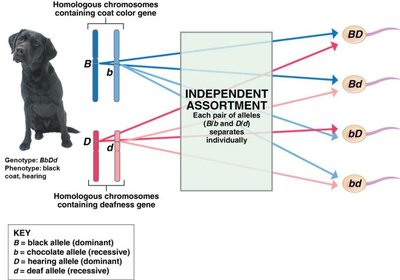
Law of Independent Assortment
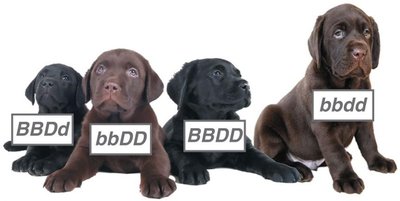
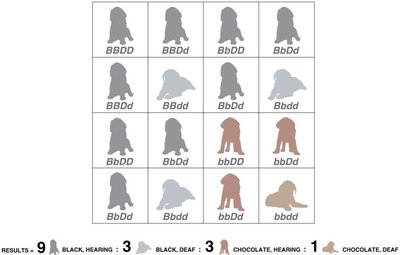
This law states that the inheritance of one character has no effect on the inheritance of another, provided the genes are on different chromosomes.
Each pair of alleles segregates independently during gamete formation.
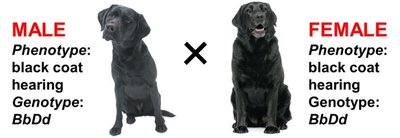
Dihybrid crosses illustrate this principle.
Genetic Diseases and Human Inheritance
Genetic Diseases in Humans
Many rare and serious diseases are caused by mutant alleles, often following Mendelian rules. Most are recessive and screened for in newborns.
Cystic Fibrosis: Autosomal recessive disorder.
Sickle Cell Disease: Autosomal recessive disorder.
Haemophilia A: X-linked recessive disorder.
Tay Sachs: Autosomal recessive disorder.
Krabbe Disease: Autosomal recessive disorder.
Pedigree Analysis
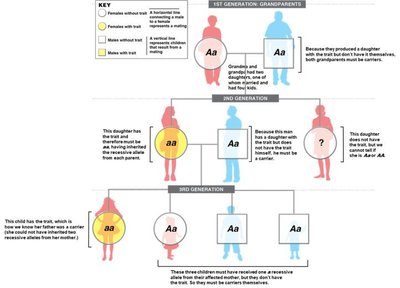
Pedigrees are family trees that track the inheritance of traits across generations. They use standardized symbols to represent individuals, matings, and affected status.
Carrier: Heterozygous individual who can pass on a recessive disease allele.
Pedigrees help identify carriers and predict disease risk.
Complexities Beyond Mendel
Incomplete Dominance
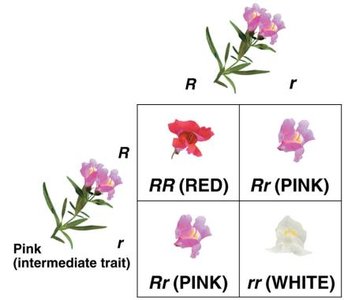
Not all genes follow classic Mendelian patterns. In incomplete dominance, heterozygous individuals have a phenotype intermediate between the two homozygotes.
Example: Crossing red and white snapdragons produces pink flowers.

Multiple Alleles and Codominance
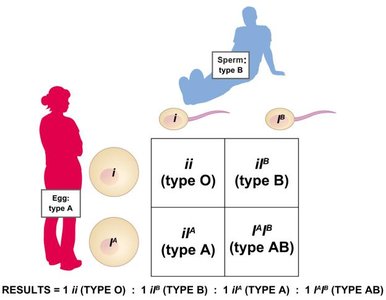
Many genes have more than two alleles. Human blood types are determined by three alleles (IA, IB, i), and some alleles are codominant, meaning both are expressed.
Blood type genotypes: IAIA, IAi, IBIB, IBi, IAIB, ii.
Phenotypes: A, B, AB, O.
Genetic and Environmental Influences
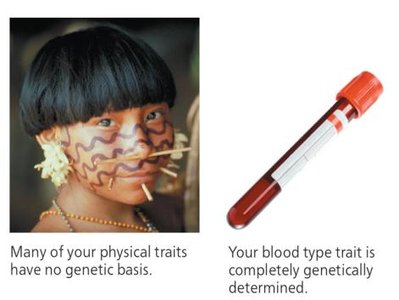
Some traits are entirely genetic, others are influenced by both genes and environment, and some are purely environmental.
Example: Blood type is genetic; physical traits like body weight can be influenced by environment.
Factors Altering Phenotypic Ratios
Linked Genes and Crossing Over
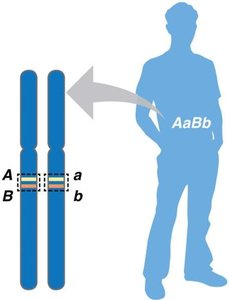
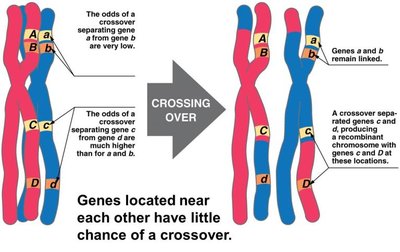
Genes located close together on the same chromosome are called linked genes and tend to be inherited together. Crossing over during meiosis can shuffle linked genes, producing recombinant chromosomes.
Linked genes do not assort independently.
Crossing over increases genetic diversity.
Sex-Linked Inheritance
Sex Chromosomes and Sex-Linked Genes
Humans have two sex chromosomes: X and Y. Genes located on the X chromosome are called sex-linked genes and display unique inheritance patterns.
Males have one X and one Y chromosome; females have two X chromosomes.
The Y chromosome carries few genes other than those determining maleness.
Sex-linked disorders, such as hemophilia, are more common in males.
DNA: The Molecule of Life
Structure of DNA
DNA is composed of two strands forming a double helix. Each strand is made of nucleotides, which consist of a phosphate, a sugar (deoxyribose), and a base (A, T, G, or C).
Base pairs: Adenine (A) pairs with Thymine (T); Guanine (G) pairs with Cytosine (C).
Hydrogen bonds hold the two strands together.
DNA Replication
DNA replication is the process by which DNA makes a copy of itself before cell division. The double helix unwinds, and each strand serves as a template for a new strand.
DNA polymerase is the key enzyme involved in DNA synthesis.
Replication produces two identical DNA molecules.
Polymerase Chain Reaction (PCR)
PCR is a laboratory technique used to amplify DNA. It involves repeated cycles of heating, cooling, and DNA synthesis using heat-stable DNA polymerase.
Primers mark the start and end points for the segment of DNA being amplified.
Each cycle doubles the amount of DNA in the sample.
Summary Table: Mendelian Genetics vs. Complex Inheritance
Inheritance Pattern | Key Features | Example |
|---|---|---|
Mendelian (Simple) | One gene, two alleles, dominant/recessive | Purple/white flower color in peas |
Incomplete Dominance | Heterozygote has intermediate phenotype | Pink snapdragons |
Codominance | Both alleles fully expressed | AB blood type |
Multiple Alleles | More than two alleles for a gene | Blood types (IA, IB, i) |
Sex-linked | Gene located on X chromosome | Hemophilia |
Linked Genes | Genes inherited together due to proximity | Coat color and hearing in dogs |
Key Equations
Punnett Square Probability:
Law of Segregation:
Law of Independent Assortment:
Conclusion
Mendelian genetics provides the foundation for understanding inheritance, but real-world genetics often involves more complex patterns such as incomplete dominance, codominance, multiple alleles, and environmental influences. DNA is the molecular basis of heredity, and modern techniques like PCR allow scientists to study genetic variation in detail.
