 Indietro
Mendelian Genetics and Patterns of Inheritance: Study Notes
Guida di studio - Note intelligenti
 Appunti personalizzati basati sui tuoi materiali, ampliati con definizioni chiave, esempi e contesto.
Mendelian Genetics
Historical Misconceptions about Heredity
Before the discovery of modern genetics, several incorrect theories about heredity were widely accepted. Understanding these misconceptions helps clarify the significance of Mendel's work.
Homunculus: The belief that sperm contained fully formed miniature humans.
Blending inheritance: The idea that offspring were a blend or average of parental traits.
Inheritance of acquired characters: The notion that traits acquired during a parent's lifetime could be passed to offspring.
Pangenesis: The hypothesis that particles called "gemmules" carried inherited traits.
Example: The homunculus theory was illustrated in 17th-century texts, sometimes depicting miniature people inside sperm.
Mendel’s History and Choice of Peas
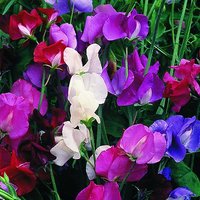
Gregor Johann Mendel, known as the father of genetics, conducted experiments using pea plants (Pisum sativum) to study inheritance. His choice was based on several practical and scientific reasons.
Many simple dichotomous traits: Traits such as flower color, seed shape, and seed color were easy to distinguish.
True breeding lines: Pea plants could be bred to consistently produce offspring with the same traits.
Monoecious flowers: Both male and female organs in one flower allowed easy manipulation of matings.
Short generation times: Enabled rapid experimentation and observation of results.
Availability: Peas were cheap and readily accessible.
Mendel’s Notation System
Mendel developed a systematic notation to describe generations and crosses:
P: Parent generation (true breeding plants)
F1: First filial generation (offspring from a cross between parents)
F2: Second filial generation (offspring from crossing F1 individuals)
Backcross: Mating an offspring back to a parent or ancestor
Self cross: Crossing a plant with itself
True breeding: Parents with the same traits always produce offspring with those traits
Formal Monohybrid Crosses
Mendel crossed parent plants differing in one trait to produce hybrid strains and observe inheritance patterns.
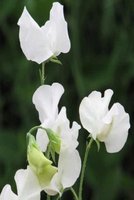
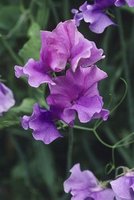
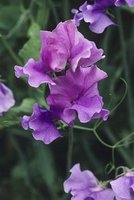
P generation: True breeding for purple and white flower color
F1 generation: All offspring had violet flowers
F2 generation: Approximately three quarters had violet flowers, one quarter had white flowers
Key Ratio: The F2 generation consistently showed a 3:1 ratio of dominant to recessive phenotypes.
Conclusions from Monohybrid Crosses
Mendel’s experiments disproved blending inheritance and established the concept of particulate inheritance.
Dominant traits: Masked other versions of a trait
Recessive traits: Were masked but could reappear in later generations
Hereditary particles: Segregated into gametes and recombined at fertilization
Modern Genetic Terminology
Several terms are used in modern genetics to describe Mendelian concepts:
Trait: A characteristic such as flower color or eye color
Phenotype: The observable version of a trait
Allele: Specific version of a gene
Dominant/Recessive: Dominant alleles mask recessive alleles
Genotype: The combination of alleles carried by an individual
Homozygote: Both alleles are the same (e.g., PP or pp)
Heterozygote: Alleles differ (e.g., Pp)
Zygote: First diploid cell produced by fertilization
Mendel’s First Law: Law of Segregation
This law states that each parent carries two hereditary particles (alleles) for each trait, which segregate during gamete formation. Each gamete receives only one allele, and alleles recombine randomly during fertilization.
Test Cross: Used to determine unknown genotypes by crossing with a recessive homozygote
Predicted Ratio: 1:1 ratio of dominant to recessive offspring in a test cross
Punnett Squares
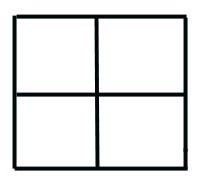
Punnett squares are diagrams used to predict the outcome of genetic crosses. They show all possible combinations of parental alleles.
Probability in Genetics
Probability is used to predict the likelihood of genetic outcomes. Two main laws apply:
Multiplicative Law: The probability of two independent events occurring together is the product of their individual probabilities.
Additive Law: The probability of either of two mutually exclusive events occurring is the sum of their individual probabilities.
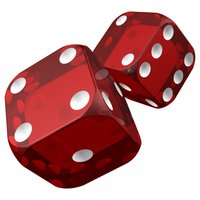
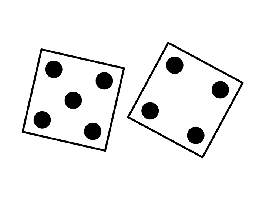
Example: The chance of rolling a five and then a four with two dice is .
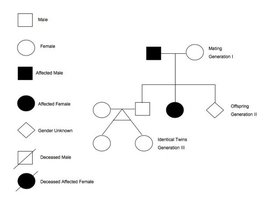
Pedigree Symbols
Pedigrees use standardized symbols to represent family relationships and inheritance patterns. Probability rules can be applied to pedigrees for genetic inference.
Dihybrid and Trihybrid Crosses
Mendel also studied crosses involving two or more traits. The dihybrid cross revealed the 9:3:3:1 ratio in the F2 generation, supporting the Law of Independent Assortment.
Law of Independent Assortment: Alleles for different traits segregate independently during gamete formation.
Trihybrid Cross: The forked-line method calculates probabilities for multiple traits by multiplying individual probabilities.
Non-Mendelian Inheritance Patterns
Some traits do not follow simple Mendelian rules:
Incomplete Dominance: Heterozygotes show intermediate phenotypes (e.g., pink snapdragons from red and white parents).
Multiple Alleles: More than two alleles exist for some genes, with a hierarchy of dominance (e.g., rabbit coat color).
Epistasis: Genes interact to produce phenotypes, modifying expected ratios (e.g., pigment production in mice).
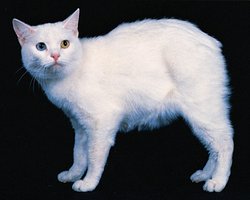
Lethal Alleles: Some alleles are so non-functional they cause death (e.g., Manx cats).
Sex-Linked Traits
Genes located on sex chromosomes exhibit unique inheritance patterns. In Drosophila, eye color is X-linked, and Punnett square analysis can predict offspring ratios.
Carrier females: Sons have a 50% chance of being affected; daughters have a 50% chance of being carriers.
Chromosomal Crossover and Recombination
During meiosis, homologous chromosomes can exchange segments, resulting in recombinant chromosomes. This process increases genetic diversity and can affect inheritance patterns.
Summary Table: Mendelian vs. Non-Mendelian Inheritance
Inheritance Type | Key Features | Example |
|---|---|---|
Mendelian (Monohybrid/Dihybrid) | Simple dominant/recessive, predictable ratios | Purple/white pea flowers |
Incomplete Dominance | Intermediate phenotype in heterozygotes | Pink snapdragons |
Multiple Alleles | More than two alleles, dominance hierarchy | Rabbit coat color |
Epistasis | Gene interaction modifies ratios | Mouse coat color |
Sex-linked | Traits linked to sex chromosomes | Drosophila eye color |
Lethal Alleles | Alleles cause death or shortened lifespan | Manx cats |
