 Indietro
Mendelian Genetics: Patterns of Inheritance and Probability
Guida di studio - Note intelligenti
 Appunti personalizzati basati sui tuoi materiali, ampliati con definizioni chiave, esempi e contesto.
Genetics and Patterns of Inheritance
Genotype vs. Phenotype
In genetics, genotype refers to the genetic makeup of an organism, while phenotype is the observable physical or biochemical characteristics determined by the genotype. Alleles are alternative versions of a gene, and their combinations determine the genotype and phenotype.
Homozygous Dominant: Both alleles are dominant (e.g., AA).
Heterozygous: One dominant and one recessive allele (e.g., Aa).
Homozygous Recessive: Both alleles are recessive (e.g., aa).
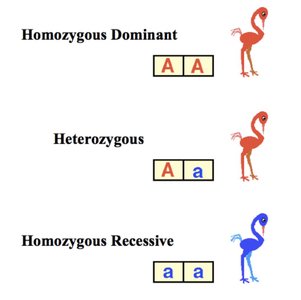
Example: In flamingos, AA results in a red phenotype, Aa also results in red, and aa results in blue.
Alleles and Gene Function
Genes are segments of DNA that code for proteins. Different alleles can produce different proteins or no protein at all, affecting the phenotype. For example, an allele for purple flowers produces an enzyme for pigment, while an allele for white flowers does not.
Locus: The specific location of a gene on a chromosome.
Enzyme Production: Dominant alleles often produce enough enzyme for the trait, even if only one is present.
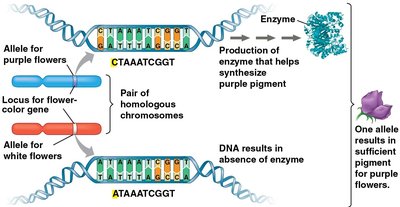
Example: One allele for purple flowers is sufficient to produce the pigment.
Complete Dominance and Mendelian Laws
Complete Dominance
Complete dominance occurs when the phenotype of one allele completely masks the other. Heterozygotes display the dominant phenotype.
Example: Albinism in humans is caused by two defective alleles; heterozygotes are normally pigmented.
Law of Segregation
The Law of Segregation states that during gamete formation, the two alleles for a gene separate so that each gamete carries only one allele.
Each parent passes one allele to offspring.
Explains why offspring can inherit recessive traits.

Monohybrid Crosses
A monohybrid cross involves one gene with two alleles. Crossing a homozygous recessive with a heterozygote yields a 1:1 ratio of dominant to recessive phenotypes.
Genotypic ratio: 1 heterozygous : 1 homozygous recessive
Phenotypic ratio: 1 dominant : 1 recessive
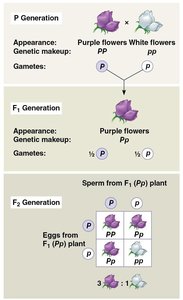
Testcross and Determining Genotypes
Testcross
A testcross is used to determine the genotype of an organism with a dominant phenotype by crossing it with a homozygous recessive individual.
If all offspring show the dominant phenotype, the parent is homozygous dominant.
If offspring show a 1:1 ratio, the parent is heterozygous.
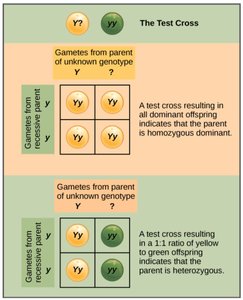
Law of Independent Assortment
Dihybrid Crosses and Gamete Formation
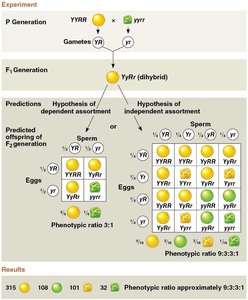
The Law of Independent Assortment states that genes for different traits are inherited independently if they are on different chromosomes. Dihybrid crosses involve two genes, each with two alleles.
Number of unique gametes: , where n is the number of heterozygous gene pairs.
Example: AaBb produces 4 unique gametes (AB, Ab, aB, ab).
Dihybrid Cross Results
Dihybrid crosses typically yield a 9:3:3:1 phenotypic ratio in the F2 generation if genes assort independently.
9 dominant for both traits
3 dominant for first, recessive for second
3 recessive for first, dominant for second
1 recessive for both traits

Probability in Genetics
Addition and Multiplication Rules
Probability rules help solve complex genetics problems:
Addition Rule: Probability of either event A or B occurring is the sum of their probabilities.
Multiplication Rule: Probability of both event A and B occurring is the product of their probabilities.
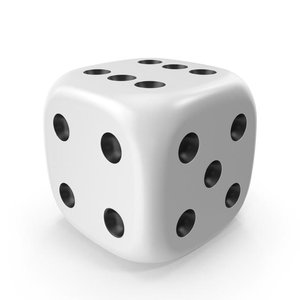
Example: Probability of rolling a 1 or 5 on a die is .
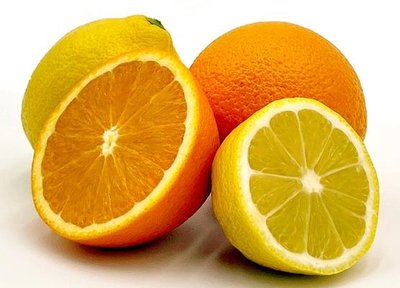
Example: Probability of picking an orange and then a lemon from a bag is .
Solving Genetics Problems with Probability
Probability calculations can determine the likelihood of specific genotypes or phenotypes in offspring.
Use multiplication rule for independent events (e.g., probability of homozygous recessive at two loci).
Use addition rule for mutually exclusive events (e.g., probability of either yellow round or blue elongated offspring).

Example: Probability of genotype YYRR in a dihybrid cross is .
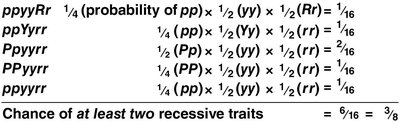
Example: Probability of at least two recessive traits in a triple heterozygous cross is .
Case Study: The Mystery of the Blue Peppers
Genetics of Fruit Color and Shape
In ornamental pepper plants, blue fruit (B) is dominant to yellow fruit (b), and round fruit (R) is dominant to elongated fruit (r). True-breeding plants are homozygous for their traits.
Parental genotypes: BB x bb for color, RR x rr for shape.
F1 generation: All offspring are heterozygous and display dominant phenotypes.

Example: Crossing BB (blue) with bb (yellow) yields all Bb (blue).
Testcross and Dihybrid Crosses in Peppers
Testcrosses and dihybrid crosses help determine unknown genotypes and predict offspring ratios for two traits.
Testcross: Crossing a plant with unknown genotype to a homozygous recessive reveals genotype based on offspring ratios.
Dihybrid cross: BbRr x BbRr produces 4 types of gametes and a 9:3:3:1 phenotypic ratio.

Example: Probability of yellow elongated offspring is in a dihybrid cross.
Summary Table: Genotype and Phenotype Ratios
Cross | Genotype Ratio | Phenotype Ratio |
|---|---|---|
Monohybrid (Aa x aa) | 1 Aa : 1 aa | 1 dominant : 1 recessive |
Dihybrid (AaBb x AaBb) | 1:2:1:2:4:2:1:2:1 | 9:3:3:1 |
Testcross (Aa x aa) | 1 Aa : 1 aa | 1 dominant : 1 recessive |
Additional info: Probability calculations and Punnett squares are essential tools for predicting inheritance patterns and outcomes in genetics.
