 Indietro
Mendelian Genetics: Principles and Patterns of Inheritance
Guida di studio - Note intelligenti
 Appunti personalizzati basati sui tuoi materiali, ampliati con definizioni chiave, esempi e contesto.
Mendel and the Gene Idea
Introduction to Mendelian Genetics
Mendelian genetics explores the principles that govern the transmission of traits from parents to offspring. Gregor Mendel, through his experiments with garden peas, established the foundation for modern genetics by demonstrating that inheritance follows specific laws rather than blending.
Blending Hypothesis: Suggested that parental traits mix in offspring, producing intermediate forms.
Particulate Hypothesis: Mendel's experiments showed that parents pass discrete units, now called genes, to their offspring.
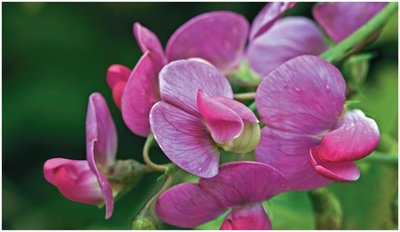
Mendel's Experimental Approach
Mendel used a scientific and quantitative approach to study inheritance, selecting pea plants for their distinct traits and controlled mating.
Character: A heritable feature (e.g., flower color).
Trait: Variant of a character (e.g., purple or white flowers).
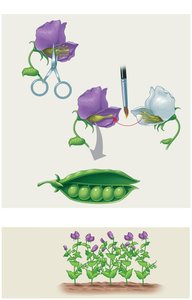
Pea plants were ideal due to short generation time, large offspring numbers, and controlled pollination.
Mendel's Model and Laws of Inheritance
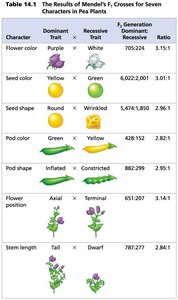
Mendel tracked seven characters in pea plants, each with two distinct traits, and observed consistent ratios in offspring.
True-breeding: Plants that consistently produce offspring with the same trait when self-pollinated.
Hybridization: Mating of two contrasting true-breeding varieties.
P Generation: True-breeding parents.
F1 Generation: Hybrid offspring of P generation.
F2 Generation: Offspring from F1 self- or cross-pollination.
The Law of Segregation
Mendel's experiments revealed that traits do not blend but segregate, resulting in a 3:1 ratio in the F2 generation.
Dominant Trait: Trait that appears in F1 hybrids (e.g., purple flowers).
Recessive Trait: Trait masked in F1 but reappears in F2 (e.g., white flowers).
Gene: Mendel's "heritable factor"; now known as a gene.
Mendel's Four-Part Model
Mendel's model explains the inheritance pattern observed:
Alleles: Alternative versions of genes account for variations in inherited characters.
Inheritance: Each organism inherits two alleles, one from each parent.
Dominance: If alleles differ, the dominant allele determines appearance; the recessive has no effect.
Law of Segregation: Two alleles for a character segregate during gamete formation.
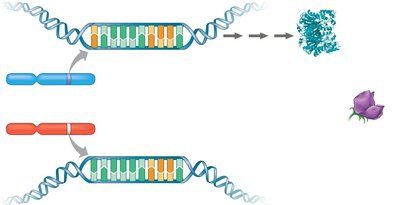
Punnett Squares and Genetic Vocabulary
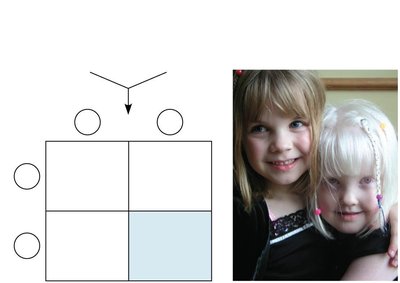
Punnett squares illustrate possible combinations of alleles in offspring.
Homozygote: Two identical alleles for a gene.
Heterozygote: Two different alleles for a gene.
Phenotype: Physical appearance.
Genotype: Genetic makeup.
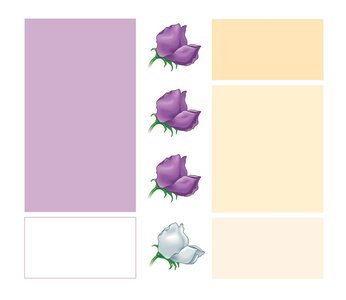
The Testcross
A testcross determines whether an individual with a dominant phenotype is homozygous or heterozygous by crossing it with a homozygous recessive individual.
If any offspring display the recessive phenotype, the parent is heterozygous.
The Law of Independent Assortment
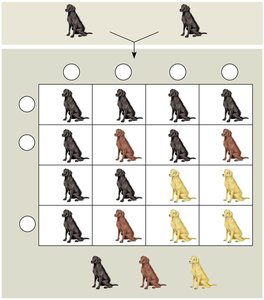
Mendel's second law states that alleles of different genes assort independently during gamete formation.
Applies to genes on different chromosomes or far apart on the same chromosome.
Genes close together tend to be inherited together.
Probability Laws in Genetics
Mendelian inheritance follows probability rules:
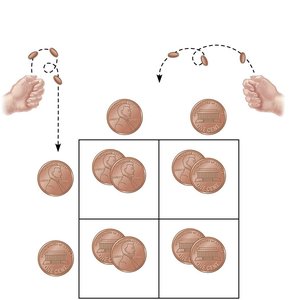
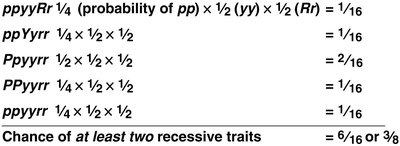
Multiplication Rule: Probability of two independent events occurring together is the product of their probabilities.
Addition Rule: Probability of any one of several mutually exclusive events is the sum of their probabilities.

Complex Patterns of Inheritance
Inheritance is often more complex than simple Mendelian genetics.
Complete Dominance: Heterozygote and dominant homozygote have identical phenotypes.
Incomplete Dominance: F1 hybrids have intermediate phenotypes.
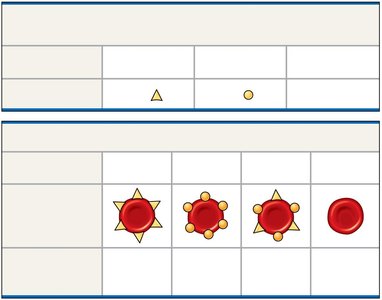
Codominance: Both alleles affect phenotype in distinguishable ways.
Multiple Alleles: Genes may have more than two alleles (e.g., ABO blood groups).
Pleiotropy: One gene affects multiple phenotypes.
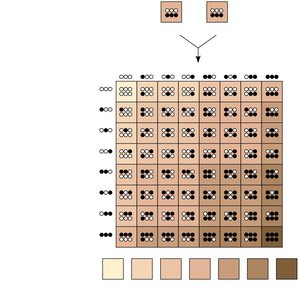
Polygenic Inheritance: Multiple genes independently affect a single trait.
Epistasis: One gene affects the expression of another gene.
Environmental Impact on Phenotype
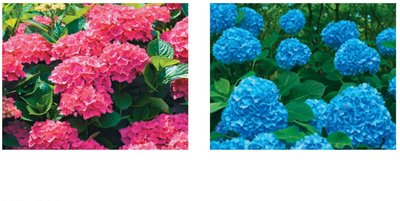
Phenotype can be influenced by environmental factors, especially for polygenic traits.
Multifactorial Traits: Traits influenced by both genes and environment.
Human Genetics and Mendelian Patterns
Many human traits follow Mendelian inheritance, but humans are not ideal subjects for genetic research due to long generation times and ethical constraints.
Pedigree Analysis: Family trees used to trace inheritance patterns.
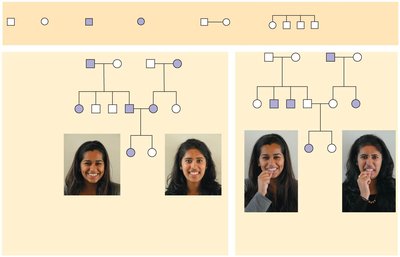
Recessively Inherited Disorders
Carriers: Heterozygous individuals who carry a recessive allele but are phenotypically normal.
Albinism: Recessive disorder causing lack of pigmentation.
Cystic Fibrosis: Most common lethal genetic disease in the U.S.; caused by defective chloride channels.
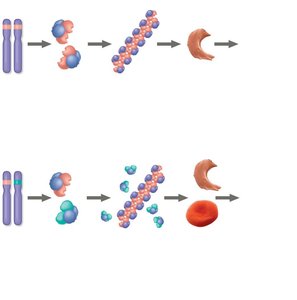
Sickle-Cell Disease: Caused by a single amino acid substitution in hemoglobin; heterozygotes have resistance to malaria.
Dominantly Inherited Disorders
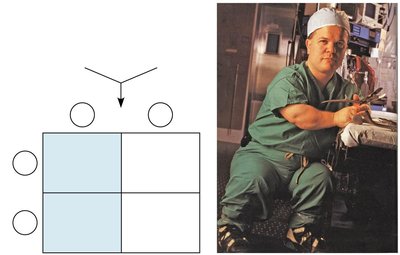
Achondroplasia: Form of dwarfism caused by a dominant allele.
Huntington's Disease: Degenerative nervous system disorder with late onset.
Genetic Testing and Counseling
Genetic counselors use Mendelian genetics and probability to assess risks for inherited diseases.
Carrier Testing: Identifies individuals who carry disease alleles.
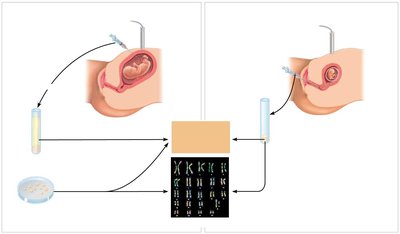
Fetal Testing: Includes amniocentesis and chorionic villus sampling (CVS) for genetic screening.
Newborn Screening: Detects genetic disorders at birth (e.g., PKU).
Summary Table: Mendelian Genetics Key Concepts
Concept | Definition | Example |
|---|---|---|
Law of Segregation | Alleles separate during gamete formation | 3:1 ratio in F2 generation |
Law of Independent Assortment | Alleles of different genes assort independently | Dihybrid cross ratio 9:3:3:1 |
Complete Dominance | Dominant allele masks recessive | Purple flower color in peas |
Incomplete Dominance | Intermediate phenotype in heterozygotes | Pink snapdragon flowers |
Codominance | Both alleles expressed | AB blood group |
Polygenic Inheritance | Multiple genes affect one trait | Human skin color |
Pleiotropy | One gene affects multiple traits | Sickle-cell disease |
Key Equations
Multiplication Rule:
Addition Rule:
Example Calculation
Probability of YYRR in a dihybrid cross:
Probability of at least two recessive traits:
Additional info:
Mendelian genetics forms the basis for understanding inheritance, but real-world genetics often involves more complex interactions, including environmental effects and multifactorial traits. The principles of segregation and independent assortment remain foundational for predicting genetic outcomes and understanding human genetic disorders.
