 Indietro
Mendelian Genetics: Principles, Extensions, and Human Applications
Guida di studio - Note intelligenti
 Appunti personalizzati basati sui tuoi materiali, ampliati con definizioni chiave, esempi e contesto.
Mendel and the Gene Idea
Introduction to Mendelian Genetics
Mendelian genetics forms the foundation of classical genetics, describing how traits are inherited from one generation to the next. Gregor Mendel's experiments with pea plants led to the discovery of fundamental laws governing heredity.
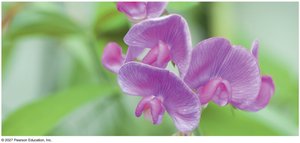
Character: A heritable feature that varies among individuals (e.g., flower color).
Trait: Each variant for a character (e.g., purple or white flowers).
True-breeding: Plants that produce offspring of the same variety when self-pollinated.
Mendel’s Experimental Approach
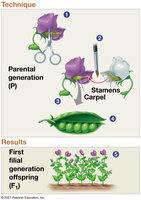
Mendel used garden peas for their distinct traits, short generation time, and controlled mating. He tracked characters with two alternative forms and started with true-breeding varieties.
Hybridization: Mating two contrasting, true-breeding varieties.
P generation: True-breeding parents.
F1 generation: Hybrid offspring of the P generation.
F2 generation: Offspring from self- or cross-pollinated F1 hybrids.
The Law of Segregation
Mendel’s Observations and the Blending Hypothesis
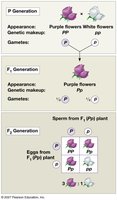
Mendel disproved the blending hypothesis by showing that traits can reappear in later generations. Crossing purple and white flowers produced all purple F1 hybrids, but the F2 generation showed a 3:1 ratio of purple to white flowers. 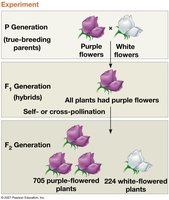
Mendel’s Model of Inheritance
Mendel proposed four concepts to explain the 3:1 ratio:
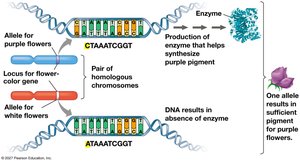
Alleles: Alternative versions of genes account for variations in inherited characters.
Inheritance: Each organism inherits two alleles, one from each parent.
Dominance: If alleles differ, the dominant allele determines appearance; the recessive allele is masked.
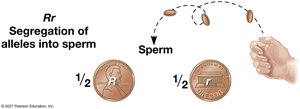
Law of Segregation: The two alleles for a character segregate during gamete formation.
Genetic Vocabulary
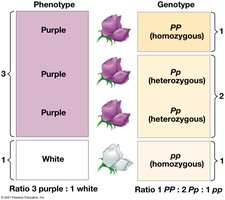
Homozygote: Two identical alleles for a gene (homozygous).
Heterozygote: Two different alleles for a gene (heterozygous).
Phenotype: Physical appearance.
Genotype: Genetic makeup.
The Testcross
A testcross determines the genotype of an individual with a dominant phenotype by crossing it with a homozygous recessive individual. 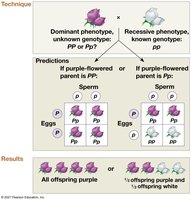
The Law of Independent Assortment
Monohybrid and Dihybrid Crosses
Monohybrid cross: Heterozygotes for one character.
Dihybrid cross: Heterozygotes for two characters.
Mendel’s law of independent assortment states that alleles of different genes segregate independently during gamete formation. 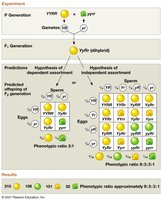
Probability Laws in Mendelian Inheritance
Multiplication and Addition Rules
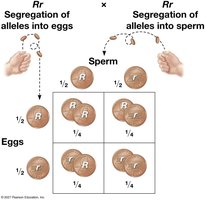
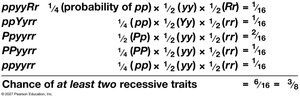
Multiplication rule: Probability of two independent events occurring together is the product of their individual probabilities.
Addition rule: Probability of one of several mutually exclusive events is the sum of their individual probabilities.

Extensions of Mendelian Genetics
Degrees of Dominance
Complete dominance: Heterozygote phenotype is identical to dominant homozygote.
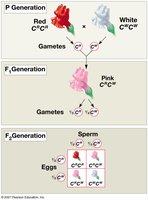
Incomplete dominance: Heterozygote phenotype is intermediate between parental phenotypes.
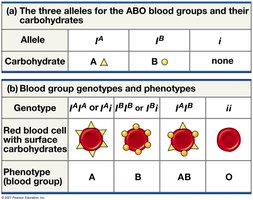
Codominance: Both alleles affect phenotype in distinguishable ways.
Multiple Alleles and Pleiotropy
Multiple alleles: Most genes exist in more than two allelic forms (e.g., ABO blood groups).
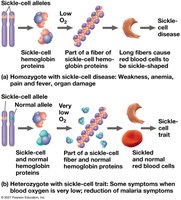
Pleiotropy: One gene affects multiple phenotypic characters (e.g., sickle-cell disease).
Epistasis and Polygenic Inheritance
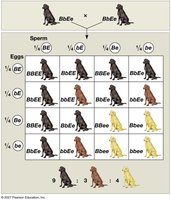
Epistasis: Expression of one gene alters the expression of another gene (e.g., Labrador coat color).
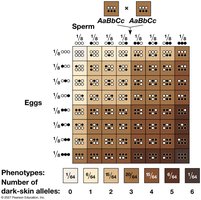
Polygenic inheritance: Multiple genes independently affect a single trait (e.g., skin color, height).
Environmental Impact on Phenotype
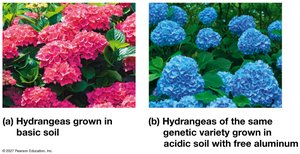
Phenotype can be influenced by environmental factors, especially for polygenic traits.
Phenotypic plasticity: Ability to produce different phenotypes under varying environmental conditions.
Multifactorial traits: Traits influenced by multiple genes and environment.
Mendelian Genetics in Humans
Pedigree Analysis
Pedigrees are used to study inheritance patterns in humans, as controlled breeding is not possible. 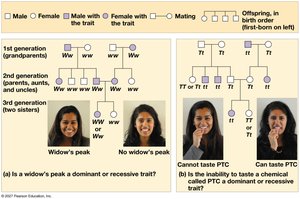
Recessively Inherited Disorders
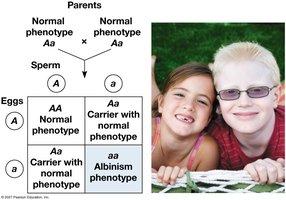
Carriers: Heterozygous individuals who carry a recessive allele but are phenotypically normal.
Albinism: Recessive condition characterized by lack of pigmentation.
Cystic Fibrosis and Sickle-Cell Disease
Cystic fibrosis: Caused by defective chloride transport channels; leads to mucus buildup and nutrient absorption issues.
Sickle-cell disease: Caused by a single amino acid substitution in hemoglobin; heterozygotes have sickle-cell trait and are less susceptible to malaria.
Dominantly Inherited Disorders
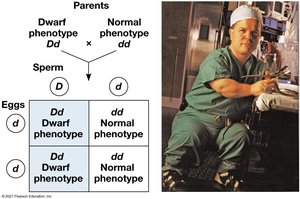
Achondroplasia: Form of dwarfism caused by a dominant allele.
Huntington’s disease: Degenerative nervous system disorder with late onset.
Genetic Testing and Counseling
Genetic counselors help prospective parents assess risks for inherited diseases. Fetal and newborn testing can identify genetic disorders early. 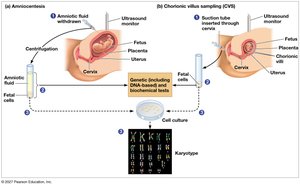
Summary Tables
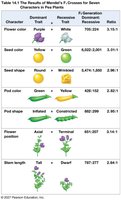
Mendel’s Crosses for Seven Characters in Pea Plants
Character | Dominant Trait | Recessive Trait | Ratio |
|---|---|---|---|
Flower color | Purple | White | 3.15:1 |
Seed shape | Round | Wrinkled | 2.96:1 |
Seed color | Yellow | Green | 2.98:1 |
Pod shape | Inflated | Constricted | 2.82:1 |
Pod color | Green | Yellow | 2.84:1 |
Flower position | Axial | Terminal | 3.14:1 |
Stem length | Tall | Dwarf | 2.84:1 |
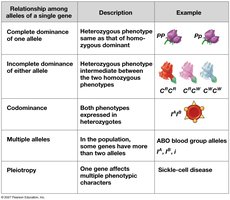
Relationships Among Alleles of a Single Gene
Relationship | Description | Example |
|---|---|---|
Complete dominance | Heterozygous phenotype same as homozygous dominant | Purple flowers (Pp) |
Incomplete dominance | Heterozygous phenotype intermediate | Pink snapdragons (CRCW) |
Codominance | Both phenotypes expressed in heterozygotes | ABO blood group (IAIB) |
Multiple alleles | More than two alleles in population | ABO blood group alleles |
Pleiotropy | One gene affects multiple characters | Sickle-cell disease |
Relationships Among Two or More Genes
Relationship | Description | Example |
|---|---|---|
Epistasis | Phenotypic expression of one gene affects another | Labrador coat color |
Polygenic inheritance | Single character affected by two or more genes | Skin color |
Key Equations
Probability Calculations
Multiplication rule:
Addition rule:
Conclusion
Mendelian genetics provides a framework for understanding inheritance, including complex patterns and human applications. The principles of segregation, independent assortment, and probability are fundamental to predicting genetic outcomes. Additional info: This summary includes expanded academic context and logical grouping of fragmented topics for completeness.
