 Indietro
Mendelian Genetics: Principles, Laws, and Applications
Guida di studio - Note intelligenti
 Appunti personalizzati basati sui tuoi materiali, ampliati con definizioni chiave, esempi e contesto.
Mendelian Genetics
Introduction to Mendelian Genetics
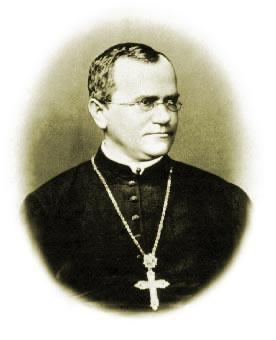
Mendelian genetics is the study of how traits are inherited from one generation to the next, based on the pioneering work of Gregor Mendel. Mendel's experiments with pea plants established the foundational principles of inheritance, including the concepts of alleles, genotype, phenotype, and the laws of segregation and independent assortment.
Alleles: Alternative forms of a gene that lead to different traits.
Genotype: The genetic composition of an individual (e.g., AA, Aa, aa).
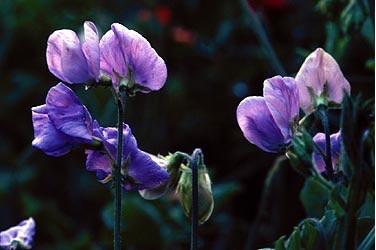
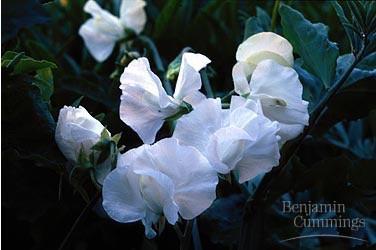
Phenotype: The observable characteristics or traits of an individual (e.g., flower color).
Alleles and Chromosomes
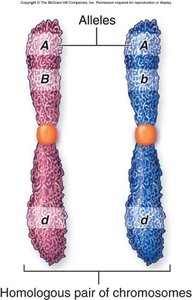
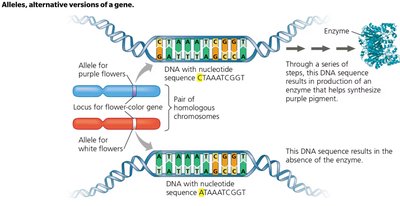
Genes are located on chromosomes, and each gene can have multiple alleles. Homologous chromosomes carry the same genes at the same loci, but may have different alleles.
Homologous chromosomes: Chromosome pairs, one from each parent, carrying the same genes.
Alleles at a gene locus: Each locus can have different alleles, such as G/g or T/t.
Genotype and Phenotype
The genotype determines the phenotype, but dominance relationships between alleles affect which traits are expressed.
Homozygous dominant: Both alleles are dominant (AA).
Heterozygous: One dominant and one recessive allele (Aa).
Homozygous recessive: Both alleles are recessive (aa).
Complete dominance: The dominant allele masks the effect of the recessive allele in heterozygotes.

Mendel’s Laws of Inheritance
Law of Segregation
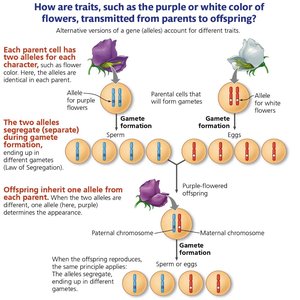
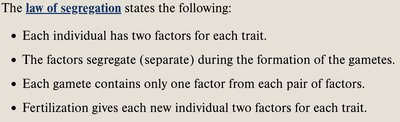
Mendel’s first law states that each individual has two alleles for each trait, which segregate during gamete formation so that each gamete receives only one allele. Fertilization restores the diploid state.
Each individual has two factors (alleles) for each trait.
The factors segregate during gamete formation.
Each gamete contains only one factor from each pair.
Fertilization gives each new individual two factors for each trait.
Law of Independent Assortment
Mendel’s second law states that alleles of different genes assort independently during gamete formation, provided the genes are on different chromosomes. This law explains the genetic variation seen in offspring.
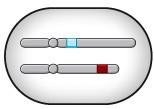
Random orientation of homologous chromosomes during Metaphase I of meiosis.
All possible combinations of alleles are produced in gametes.
Genetic Crosses and Ratios
Monohybrid Cross
A cross between two individuals heterozygous for a single gene (Aa x Aa) produces offspring with a genotypic ratio of 1:2:1 and a phenotypic ratio of 3:1.
Genotype ratio: 1 AA : 2 Aa : 1 aa
Phenotype ratio: 3 dominant : 1 recessive
Dihybrid Cross
A cross involving two genes (AaBb x AaBb) produces a phenotypic ratio of 9:3:3:1 if the genes are independent.
9/16 show both dominant traits
3/16 show dominant for one, recessive for the other
3/16 show the opposite
1/16 show both recessive traits
Punnett Squares
Punnett squares are used to predict the genotypes and phenotypes of offspring from genetic crosses.
Rows and columns represent possible gametes from each parent.
Each cell shows the genotype of a possible offspring.
Test Crosses
A test cross is used to determine the genotype of an individual with a dominant phenotype by crossing it with a homozygous recessive individual.
If all offspring show the dominant phenotype, the parent is homozygous dominant.
If offspring show a 1:1 ratio, the parent is heterozygous.
Pedigrees and Autosomal Recessive Traits
Pedigrees are diagrams that show the inheritance of traits across generations. Autosomal recessive traits require two recessive alleles to be expressed.
Autosomal recessive: Trait appears only in individuals with two recessive alleles (bb).
Carrier: Heterozygous individuals (Bb) do not express the trait but can pass it on.
Genetic Diversity and Sexual Reproduction
Sexual reproduction generates diversity through the random assortment of chromosomes and crossing over during meiosis.
Independent assortment and segregation increase genetic variation.
Crossing over further shuffles alleles between homologous chromosomes.
Alleles and Molecular Basis of Traits
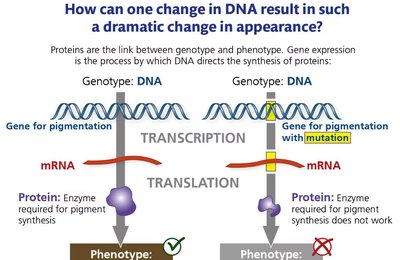
The molecular basis of alleles involves differences in DNA sequence that affect gene expression and protein function, leading to different phenotypes.
Mutations in DNA can alter protein function, resulting in changes in phenotype.
Gene expression links genotype to phenotype via transcription and translation.
Practice and Application
Be able to define: allele, genotype, phenotype, heterozygous, homozygous, recessive, dominant.
Apply Mendel’s laws to solve genetics problems with single and multiple traits.
Use test crosses and pedigrees to determine genotypes and phenotypes across generations.
Summary Table: Phenotype vs Genotype
Phenotype | Genotype | Ratio |
|---|---|---|
Purple | PP (homozygous) | 1 |
Purple | Pp (heterozygous) | 2 |
White | pp (homozygous) | 1 |
Key Equations
Probability of independent events:
Genotype ratio for monohybrid cross:
Phenotype ratio for monohybrid cross:
Phenotype ratio for dihybrid cross:
Examples
If two heterozygous parents (Aa) are crossed, the probability of an offspring being homozygous recessive (aa) is .
If two genes are independent, the probability of an offspring having a specific combination of alleles is the product of the individual probabilities.
Visual Examples
Additional info:
Mendel’s principles are foundational for understanding inheritance, genetic disorders, and the molecular basis of traits. Modern genetics builds on these concepts to explore more complex patterns of inheritance, including incomplete dominance, codominance, and polygenic traits. ----------------------------------------
