 Indietro
Mendelian Genetics: Principles, Laws, and Applications
Guida di studio - Note intelligenti
 Appunti personalizzati basati sui tuoi materiali, ampliati con definizioni chiave, esempi e contesto.
Mendelian Genetics
Introduction to Mendelian Genetics
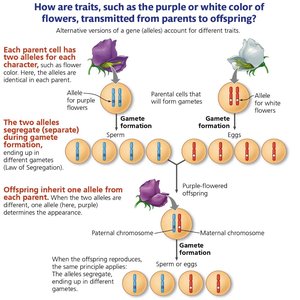
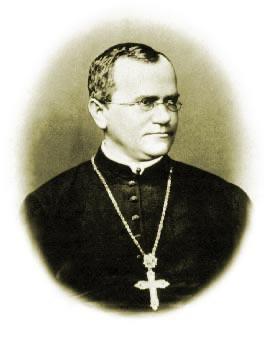
Mendelian genetics is the foundation of classical genetics, describing how traits are inherited from parents to offspring. Gregor Mendel's experiments with pea plants established the basic laws of inheritance, which explain the transmission of genetic information and the resulting variation in populations.
Alleles: Alternative forms of a gene that lead to different traits.
Genotype: The genetic composition of an individual.
Phenotype: The observable characteristics or traits of an individual.
Alleles and Chromosomes
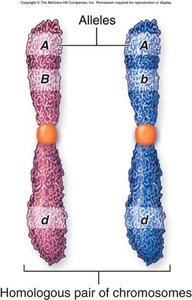
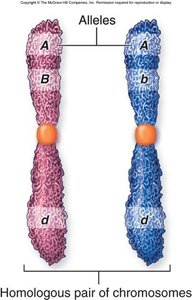
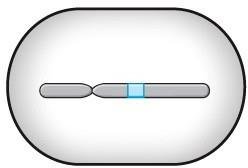
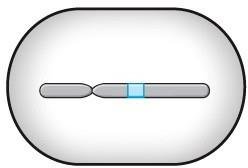
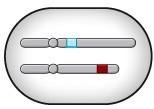
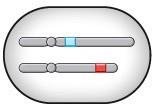
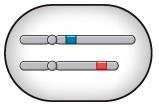
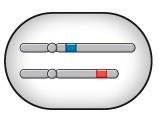
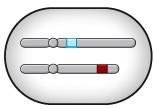
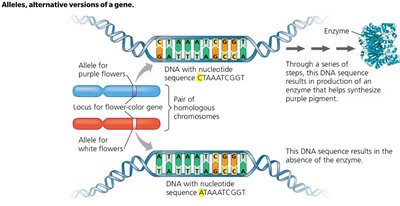
Genes are located on chromosomes, and each gene can have multiple alleles. Homologous chromosomes carry the same genes at the same loci, but may have different alleles.
Homologous chromosomes: Chromosome pairs, one from each parent, carrying the same genes.
Alleles: Variants of a gene found at the same locus on homologous chromosomes.

Genotype and Phenotype
The genotype determines the phenotype, but dominance relationships between alleles affect which traits are expressed.
Homozygous dominant: Both alleles are dominant (e.g., AA).
Heterozygous: One dominant and one recessive allele (e.g., Aa).
Homozygous recessive: Both alleles are recessive (e.g., aa).
Complete dominance: The dominant allele masks the effect of the recessive allele in heterozygotes.
Mendel’s Laws of Inheritance
Mendel’s First Law: Principle of Segregation
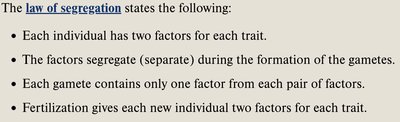
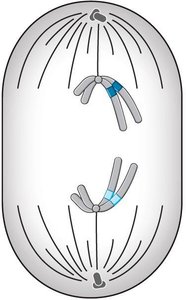
Mendel’s law of segregation states that each individual has two alleles for each trait, which segregate during gamete formation, so each gamete receives only one allele. Fertilization restores the diploid state.
Each individual has two factors (alleles) for each trait.
The factors segregate during gamete formation.
Each gamete contains only one factor from each pair.
Fertilization gives each new individual two factors for each trait.
Mendel’s Second Law: Principle of Independent Assortment
The law of independent assortment states that alleles of different genes are distributed independently of one another during gamete formation, provided the genes are on different chromosomes.
Random orientation of homologous chromosomes during Metaphase I of meiosis.
All possible combinations of alleles are produced in gametes.
Punnett Squares and Ratios
Punnett squares are used to predict the genotypic and phenotypic ratios of offspring from genetic crosses.
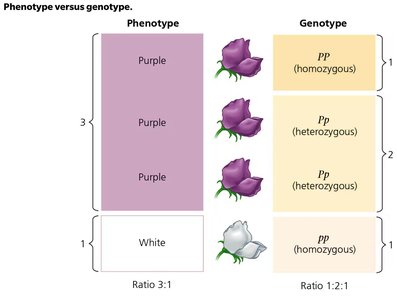
Monohybrid cross (Aa x Aa): Genotype ratio = 1:2:1 (AA:Aa:aa), Phenotype ratio = 3:1 (dominant:recessive).
Dihybrid cross (AaBb x AaBb): Phenotype ratio = 9:3:3:1 for independent genes.
Test Crosses
A test cross is used to determine the genotype of an individual with a dominant phenotype by crossing it with a homozygous recessive individual.
If all offspring show the dominant phenotype, the parent is homozygous dominant.
If offspring show a 1:1 ratio of dominant to recessive phenotypes, the parent is heterozygous.
Pedigrees and Autosomal Recessive Traits
Pedigrees are diagrams that show the inheritance of traits across generations. Autosomal recessive traits require two recessive alleles to be expressed.
Autosome: Any chromosome that is not a sex chromosome.
Autosomal recessive: Trait expressed only when both alleles are recessive (e.g., bb).
Genetic Diversity and Sexual Reproduction
Sexual reproduction generates diversity through the random assortment of chromosomes and crossing over during meiosis.
Independent assortment and segregation increase genetic variation.
Crossing over further shuffles alleles between homologous chromosomes.
Gene Expression and Mutation
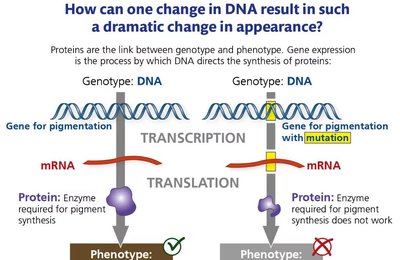
Gene expression links genotype to phenotype. Mutations in DNA can alter protein function, leading to changes in phenotype.
Transcription and translation produce proteins from DNA instructions.
Mutations can disrupt protein synthesis, affecting traits.
Alleles and DNA Sequence
Different alleles correspond to different DNA sequences at a gene locus, which can result in the presence or absence of functional proteins.
Allele for purple flowers: DNA sequence produces enzyme for pigment.
Allele for white flowers: DNA sequence does not produce enzyme.
Summary Table: Genotype and Phenotype Ratios
Phenotype | Genotype | Ratio |
|---|---|---|
Purple | PP (homozygous) | 1 |
Purple | Pp (heterozygous) | 2 |
White | pp (homozygous) | 1 |
Phenotypic ratio: 3:1 Genotypic ratio: 1:2:1 | ||
Practice and Application
Students should be able to:
Explain how sexual reproduction generates diversity.
Draw and interpret Mendel’s laws.
Define allele, genotype, phenotype, heterozygous, homozygous, recessive, and dominant.
Solve Mendelian genetics problems for single and multiple traits.
Use test crosses to determine parental genotypes.
Combine pedigree and Punnett square information to track genotypes and phenotypes across generations.
Key Equations
Monohybrid cross genotype ratio:
Monohybrid cross phenotype ratio:
Dihybrid cross phenotype ratio:
Additional info:
Probability of independent events: Multiply the probabilities of each event.
Genes must be on different chromosomes for independent assortment to apply.
