 Indietro
Mendelian Genetics: Principles, Patterns, and Human Applications
Guida di studio - Note intelligenti
 Appunti personalizzati basati sui tuoi materiali, ampliati con definizioni chiave, esempi e contesto.
Mendel and the Gene Idea
Introduction to Mendelian Genetics
Mendelian genetics explores how traits are transmitted from parents to offspring through discrete units called genes. Gregor Mendel's experiments with garden peas established foundational principles of inheritance, which remain central to modern biology.
Mendel’s Experimental Approach
Studying Pea Plants
Model Organism: Mendel used Pisum sativum (garden peas) due to their easily observable traits and controlled mating.
True-breeding Plants: Plants that consistently produce offspring with the same trait when self-pollinated.
Character vs. Trait: A character is a heritable feature (e.g., flower color), while a trait is a specific variant (e.g., purple or white).
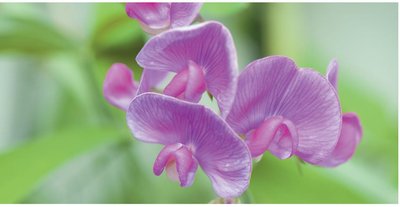
Controlling Crosses
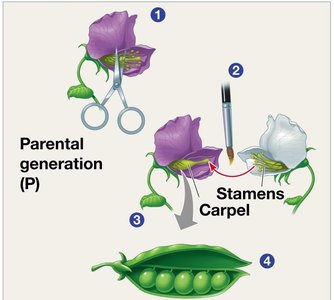
Mendel prevented self-pollination by removing stamens and performed cross-pollination by transferring pollen between plants.
Hybridization: Crossing two contrasting, true-breeding varieties.
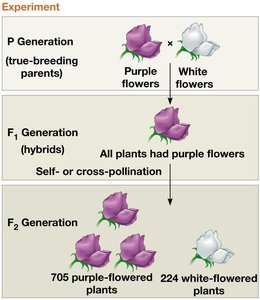
P Generation: Parental generation (true-breeding).
F1 Generation: First filial generation (hybrids).
F2 Generation: Offspring of F1 self- or cross-pollination.
Results of Mendel’s Crosses
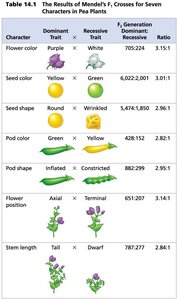
F1 generation: All purple flowers (dominant trait).
F2 generation: Approximately 3:1 ratio of purple to white flowers.
Mendel’s Model of Inheritance
1. Alleles
Gene: A heritable unit that determines a character.
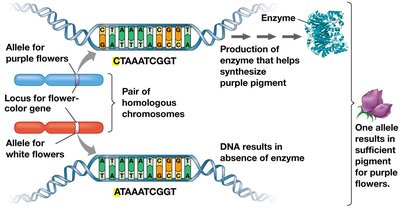
Alleles: Alternative versions of a gene found at the same locus on homologous chromosomes.
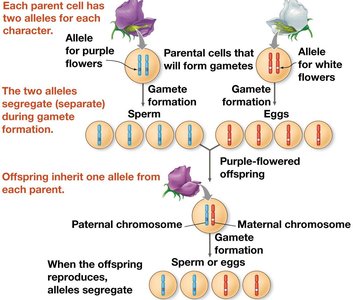
Each organism inherits two alleles for each gene, one from each parent.
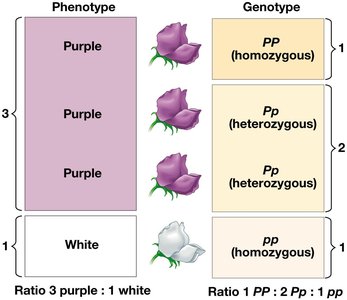
Homozygous: Identical alleles (e.g., AA or aa).
Heterozygous: Different alleles (e.g., Aa).
2. Dominance
Dominant allele: Determines the phenotype in a heterozygote (e.g., P for purple flowers).
Recessive allele: Masked in the presence of a dominant allele (e.g., p for white flowers).
3. Law of Segregation
The two alleles for a gene segregate during gamete formation, so each gamete carries only one allele for each gene.
This corresponds to the separation of homologous chromosomes during meiosis.
Punnett Squares and Ratios
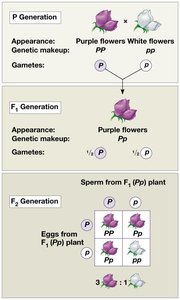
Punnett square: A diagram used to predict allele combinations in offspring.
Genotype ratio (F2): 1 PP : 2 Pp : 1 pp
Phenotype ratio (F2): 3 purple : 1 white
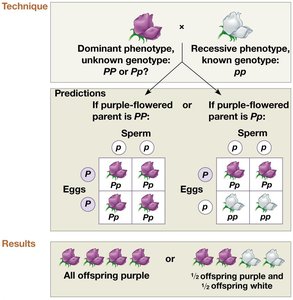
Testcross
Used to determine the genotype of an individual with a dominant phenotype by crossing with a homozygous recessive individual.
If any offspring display the recessive phenotype, the unknown parent is heterozygous.
Law of Independent Assortment
Dihybrid Crosses
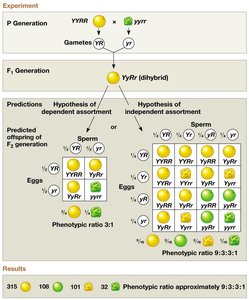
Dihybrids: Individuals heterozygous for two genes (e.g., YyRr).
Law of Independent Assortment: Alleles of different genes assort independently during gamete formation.
Phenotypic ratio in F2 generation: 9:3:3:1 (for two genes with complete dominance).
Probability in Genetics
Rules of Probability
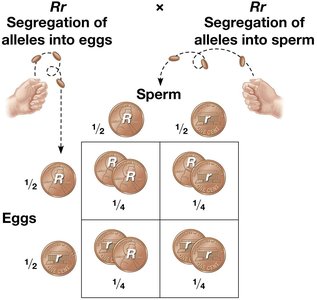
Multiplication Rule: Probability of independent events occurring together is the product of their probabilities (AND = multiply).
Addition Rule: Probability of mutually exclusive events is the sum of their probabilities (OR = add).
Allele segregation and fertilization are chance events.
Beyond Simple Mendelian Genetics
Degrees of Dominance
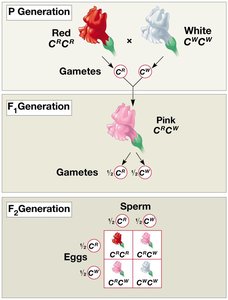
Complete dominance: Heterozygote phenotype is identical to one homozygote.
Incomplete dominance: Heterozygote phenotype is intermediate between the two homozygotes.
Codominance: Both alleles are fully expressed in the heterozygote.
Multiple Alleles
Most genes exist in more than two allelic forms within a population.
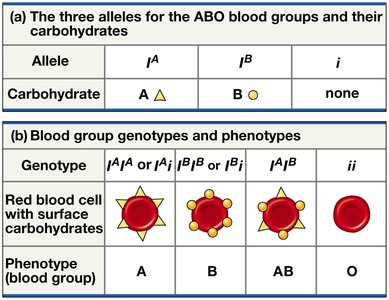
Example: ABO blood group in humans is determined by three alleles (IA, IB, i).
IA and IB are codominant; both are dominant over i.
Pleiotropy
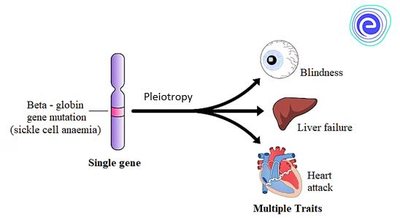
A single gene affects multiple traits.
Example: Sickle cell anemia, where one gene mutation leads to multiple symptoms.
Polygenic Inheritance
Multiple genes contribute to a single trait, often resulting in continuous variation (e.g., height, skin color).
Epistasis
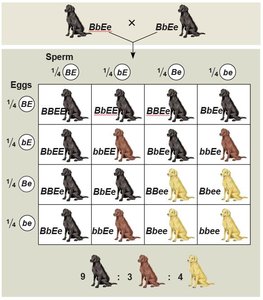
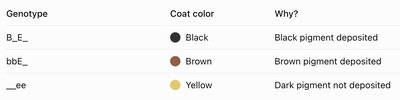
One gene at one locus masks or modifies the phenotypic expression of another gene at a different locus.
Example: Coat color in Labrador retrievers, where the E/e gene controls pigment deposition and can mask the effect of the B/b gene.
Environmental Impact on Phenotype
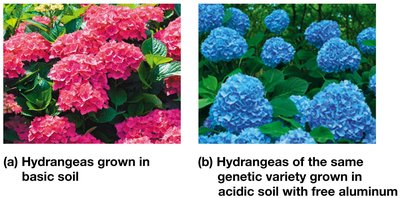
Phenotypic plasticity: The same genotype can produce different phenotypes in different environments.
Example: Hydrangea flower color varies with soil pH.
Human Genetics and Mendelian Patterns
Studying Human Inheritance
Humans are not ideal for controlled genetic experiments due to long generation times and ethical concerns.
Inheritance patterns are studied through family pedigrees and analysis of genetic disorders.
Recessively Inherited Disorders
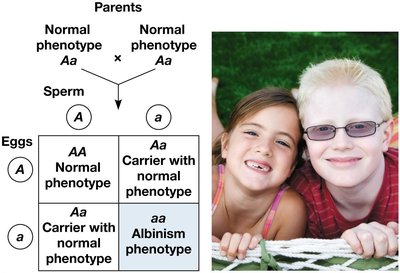
Affected individuals are homozygous recessive (aa).
Carriers (Aa) possess the allele but do not show the phenotype.
Example: Albinism.
Dominantly Inherited Disorders
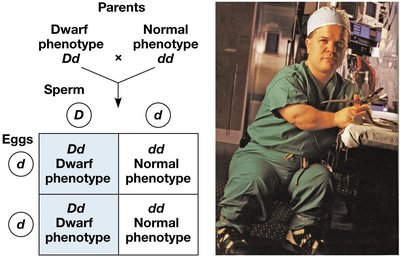
Only one dominant disease allele is needed to express the phenotype.
Examples: Achondroplasia, Huntington’s disease.
Multifactorial Disorders
Many common diseases (e.g., heart disease, cancer) are influenced by both genetic and environmental factors.
Genetic variation can increase risk but does not solely determine phenotype.
Summary Table: Mendel’s Principles and Extensions
Principle | Description |
|---|---|
Law of Segregation | Alleles separate during gamete formation |
Law of Independent Assortment | Alleles of different genes assort independently |
Genotype → Phenotype | Genetic makeup determines observable traits |
Punnett Squares | Predict inheritance patterns |
Probability | AND = multiply, OR = add |
Beyond Mendel | Includes incomplete dominance, codominance, multiple alleles, pleiotropy, polygenic inheritance, epistasis, and environmental effects |
Human Genetics | Recessive (aa), dominant (A-), multifactorial (genes + environment) |
