 Indietro
Metabolic Flexibility and Tissue-Specific Fuel Use in Organismal Growth
Guida di studio - Note intelligenti
 Appunti personalizzati basati sui tuoi materiali, ampliati con definizioni chiave, esempi e contesto.
Metabolic Flexibility and Tissue-Specific Fuel Use
Overview of Metabolic Flexibility
Metabolic flexibility refers to the ability of different tissues to utilize various nutrients and adapt their metabolic pathways according to physiological demands and environmental conditions. This flexibility is crucial for organismal growth, energy allocation, and survival.
Metabolic flexibility: The capacity of tissues to switch between fuel sources (e.g., glucose, fatty acids, ketones) depending on availability and demand.
Tissue-specific fuel use: Different tissues have distinct preferences and requirements for metabolic fuels based on their function.
Fermentation: An alternative pathway for ATP production when oxygen is limited.
Resource allocation: The distribution of nutrients and energy to support growth, maintenance, and specialized functions.
Energetic and Biosynthetic Demands of Tissues
Tissues in a growing animal are not metabolically identical. Each organ has unique functions, developmental timing, and fuel preferences, which influence overall organismal growth and composition.
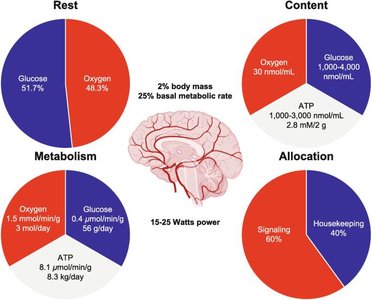
Brain: Maintains ion gradients and signaling, requiring continuous ATP supply.
Heart: Specialized for sustained contraction and high aerobic demand.
Muscle: Variable power output, shifting fuel use with activity level.
Growing tissue: High demand for DNA, protein, lipid synthesis, and cell division.
Metabolism in the Brain
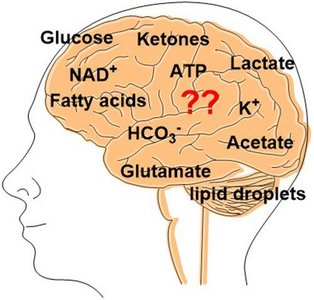
The brain is a highly active organ with continuous ATP demand, primarily for maintaining electrical function and ion gradients. Under normal conditions, glucose is the main fuel, but during prolonged fasting, ketone bodies become significant.
Na+/K+-ATPase: Restores ion gradients after neuronal signaling.
Glucose: Major fuel in fed conditions.
Ketone bodies: Alternative fuel during fasting.
Metabolism in the Heart
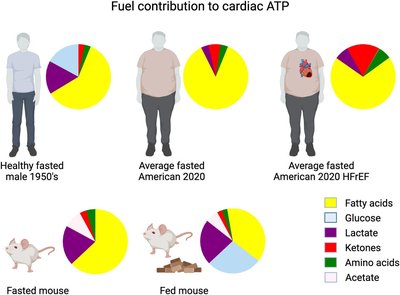
The heart is a metabolic specialist, relying heavily on aerobic metabolism. Cardiac muscle contains abundant mitochondria and can utilize fatty acids, glucose, lactate, and ketones, with fuel selection varying by physiological state.
Fatty acids: Primary fuel under most conditions.
Glucose, lactate, ketones: Used as needed, especially during stress or altered supply.
Metabolic adaptation: Heart adjusts fuel use based on supply and demand.
Metabolism in Skeletal Muscle
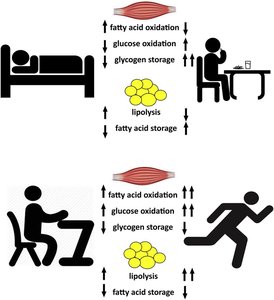
Skeletal muscle exhibits rapid changes in metabolic demand depending on activity. At rest, fat oxidation predominates, while during intense exercise, carbohydrate use increases and ATP demand may exceed oxidative supply.
Fat oxidation: Dominant at rest and low intensity.
Carbohydrate use: Increases with exercise intensity.
ATP demand: Can rise faster than oxygen supply, leading to anaerobic metabolism.
Metabolic Coordination in the Liver
The liver plays a central role in metabolic coordination, storing and releasing glucose, synthesizing glucose and ketone bodies, and processing nutrients for distribution to other tissues.
Glycogen metabolism: Storage and release of glucose.
Gluconeogenesis: Synthesis of glucose from non-carbohydrate sources.
Ketogenesis: Production of ketone bodies during fasting.
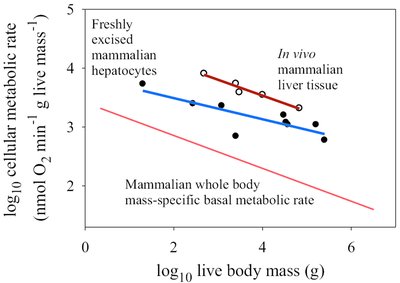
Constraints on Growth: Fuel Supply, Capacity, and Demand
Growth is constrained by the interaction of fuel supply, tissue capacity to transform substrates, and demand/regulation of growth pathways. ATP alone does not explain realized growth.
Fuel supply: Availability of substrates and oxygen.
Capacity: Tissue's ability to produce ATP and biosynthetic precursors.
Demand & regulation: Activation of growth pathways and support for competing functions.
Cellular Flexibility Under Oxygen Limitation
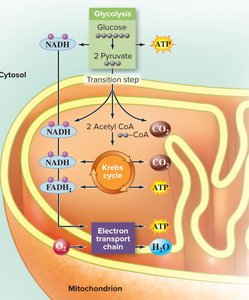
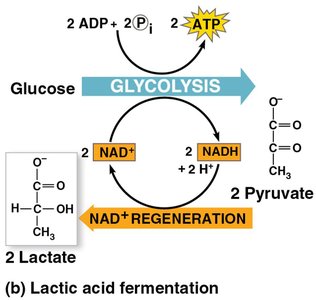
When oxygen is scarce, cells must adapt their metabolism. Oxygen is the final electron acceptor in aerobic electron transport; without it, oxidative phosphorylation is constrained, and glycolysis can continue only if NAD+ is regenerated.
Fermentation: Allows glycolysis to continue by recycling NAD+.
Substrate-level phosphorylation: ATP production in glycolysis independent of oxygen.
Fermentation and NAD+ Recycling
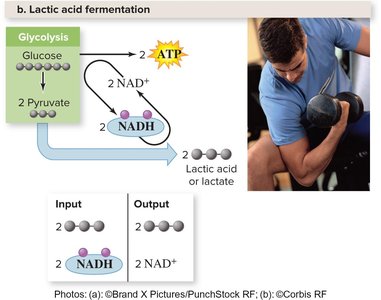
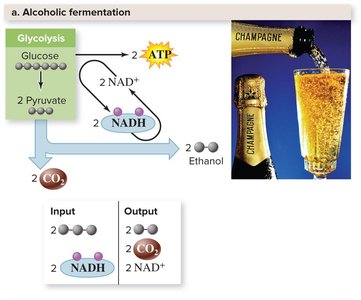
Fermentation solves the problem of NAD+ depletion during glycolysis. In lactic acid fermentation, pyruvate is reduced to lactate, regenerating NAD+. In alcoholic fermentation, pyruvate is converted to ethanol and CO2, also regenerating NAD+.
Lactic acid fermentation: Pyruvate + NADH → lactate + NAD+.
Alcoholic fermentation: Pyruvate → ethanol + CO2 + NAD+.
ATP yield: Fermentation does not produce extra ATP beyond glycolysis.
Fate of Pyruvate: Aerobic vs. Anaerobic Conditions
The fate of pyruvate depends on oxygen availability and cell type. Under aerobic conditions, pyruvate is oxidized to acetyl-CoA and enters the citric acid cycle. Under anaerobic conditions, pyruvate is reduced to lactate or ethanol.
Aerobic oxidation: Pyruvate → acetyl-CoA → citric acid cycle → electron transport chain.
Lactate formation: Pyruvate + NADH → lactate + NAD+.
ATP yield comparison: Aerobic respiration yields much more ATP than fermentation.
Interconnected Metabolic Pathways
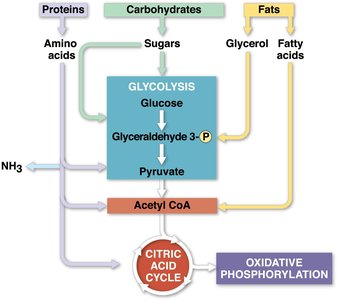
Food is not just glucose; multiple nutrients enter interconnected metabolic pathways. Carbohydrates, fats, and proteins are processed and integrated into central metabolism.
Carbohydrates: Enter glycolysis and related pathways.
Fatty acids: Undergo β-oxidation, producing acetyl-CoA.
Amino acids: Used for biosynthesis or enter catabolic pathways after processing.
Metabolic Flexibility Across Tissues
Different tissues have context-dependent fuel preferences, which are not absolute. The brain, heart, skeletal muscle, and liver each adapt their metabolism based on physiological state and nutrient availability.
Tissue | Main Fuels |
|---|---|
Brain | Glucose; ketones in prolonged fasting |
Heart | Fatty acids, lactate, glucose, ketones |
Skeletal muscle | Fatty acids, carbohydrates; variable lactate exchange |
Liver | Coordinates glucose, lipid, and ketone metabolism |
Historical Evidence: Hammond’s Pig and Cattle Studies
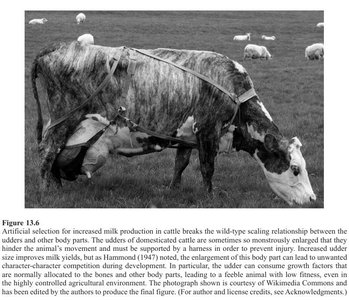
Hammond’s studies demonstrated that nutrition and physiological demand can alter tissue proportions and developmental priorities. High–low versus low–high feeding schedules changed body form, and milk production in cattle depended on hormones and nutrition.
Differential growth: Timing and composition of bone, muscle, and fat development can vary.
Physiological demand: Mammary development and milk output draw on circulating nutrients and body reserves.
Developmental priority: Not always aligned with metabolic capacity; prioritization involves transport, hormones, signaling, and tissue responses.
Case Study: Building a Conceptual Model
To understand metabolic flexibility, students are encouraged to model glycolysis, pyruvate oxidation, electron transport, and fermentation, simulate consequences of pathway blockages, and predict tissue responses to lowered fuel stores.
Simulation: Predict downstream effects if a metabolic step is blocked.
Tissue response: Anticipate differences in skeleton, muscle, and fat mass based on metabolic mechanisms.
Additional info: These notes expand on brief lecture points to provide a comprehensive overview of metabolic flexibility, tissue-specific fuel use, and organismal growth, integrating textbook-level context and relevant images.
