 Indietro
Metabolic Regulation and Enzyme Activity: Study Notes for General Biology
Guida di studio - Note intelligenti
 Appunti personalizzati basati sui tuoi materiali, ampliati con definizioni chiave, esempi e contesto.
Metabolic Regulation in Cells
Overview of Metabolic Regulation
Metabolism in living organisms is a highly regulated process, ensuring that cells efficiently use nutrients and energy to support growth, maintenance, and specialized functions. Regulation occurs at multiple levels, from enzyme activity to whole-organism responses.
Metabolic pathways are sequences of enzyme-catalyzed reactions transforming molecules.
Cells coordinate these pathways, controlling the flux (rate of matter movement) through each pathway.
Regulation ensures that not all pathways operate at maximum rate simultaneously.
Capacity, Demand, and Activity
The regulation of metabolism can be understood through three distinct concepts:
Capacity: The potential reactions a cell can carry out, determined by its enzymes, organelles, and metabolic machinery.
Demand: The work required at a given moment, such as growth, transport, signaling, or maintenance.
Activity: What actually occurs, influenced by substrate availability, regulatory signals, and constraints.
Enzyme Function and Regulation
Role of Enzymes in Metabolic Reactions
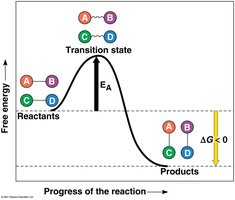
Enzymes are biological catalysts that accelerate chemical reactions without being consumed. They lower the activation energy required for reactions, enabling cellular processes to occur rapidly and efficiently.
Activation energy (EA): The energy barrier that must be overcome for a reaction to proceed.
Enzymes do not alter the overall free energy change (ΔG) of a reaction.
Substrate Specificity and Induced Fit
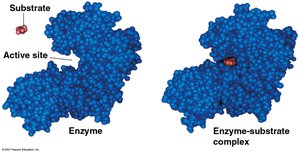
Enzymes exhibit high specificity for their substrates, binding them at the active site. The induced fit model describes how the enzyme changes shape to better accommodate the substrate, positioning catalytic groups for the reaction.
Different enzymes allow distinct metabolic pathways to operate in different cells.
Enzyme Catalytic Cycle
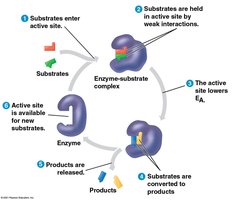
The enzyme is not consumed in the reaction and can catalyze multiple cycles. The process involves substrate binding, reaction, product release, and enzyme recovery.
Substrate enters the active site.
Reaction occurs, product leaves.
Enzyme is available for new substrate.
Factors Affecting Enzyme Activity
Several factors influence the rate of enzyme-catalyzed reactions:
Substrate availability: Sufficient raw material is required.
Enzyme abundance and catalytic state: Amount and activity of enzyme present.
Temperature and pH: Optimal conditions are necessary for function.
Cofactors and inhibitors: Presence of molecules that assist or hinder enzyme activity.
Enzyme Saturation and Substrate Concentration
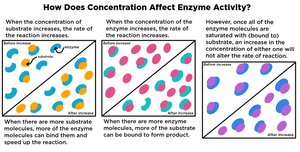
Increasing substrate concentration initially raises the reaction rate, but eventually all enzyme active sites become saturated, and the rate levels off.
Beyond saturation, adding more substrate does not increase the maximum rate.
Temperature Effects on Enzyme Activity
The optimal temperature for enzyme activity depends on the organism's environment. Human enzymes function best at about 37°C, while thermophilic bacteria enzymes are optimal at much higher temperatures. 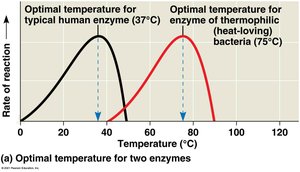
Mechanisms of Enzyme Regulation
Types of Enzyme Regulation
Cells can tune enzyme activity without rebuilding the enzyme itself. The main mechanisms include:
Competitive inhibition: A molecule occupies the active site, blocking substrate binding.
Allosteric regulation: A regulator binds elsewhere, changing enzyme activity.
Covalent modification: Chemical changes (e.g., phosphorylation) alter activity.
Competitive and Noncompetitive Inhibition
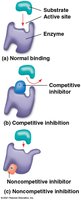
Competitive inhibitors resemble the substrate and block the active site. Increasing substrate concentration can overcome inhibition.
Noncompetitive inhibitors bind a different site, causing a shape change that closes the active site. This inhibition is often irreversible and cannot be overcome by increasing substrate.
Allosteric Regulation
Allosteric regulators bind away from the active site, causing conformational changes that increase or decrease enzyme activity. This allows cells to rapidly adjust metabolic capacity in response to signals. 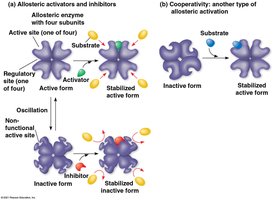
Feedback Inhibition
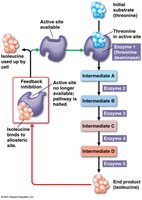
Feedback inhibition is a common regulatory mechanism in metabolic pathways. When the end product accumulates, it inhibits an earlier enzyme, reducing wasteful synthesis.
Ensures that the cell stops producing a product when enough has been made.
Spatial Regulation and Tissue Differences
Compartmentalization of Enzymes
Enzymes are localized in specific cellular compartments (cytosol, membranes, organelles), which concentrates substrates and separates reactions.
Mitochondria are key sites for aerobic ATP production.
Metabolic Differences Between Tissues
Different tissues express unique combinations of enzymes, leading to distinct metabolic profiles.
Fuel use and ATP demand vary with physiological state.
Growing tissues must coordinate ATP supply with synthesis of new biomass.
Summary of Key Concepts
Enzymes accelerate reactions by lowering activation energy, without changing ΔG.
Substrate specificity, allosteric regulation, and feedback inhibition control metabolic flux.
Nutrient availability and ATP alone do not determine tissue growth; regulation is essential.
Additional info:
Metabolic regulation is fundamental to understanding cellular physiology, growth, and adaptation.
These concepts are directly relevant to General Biology topics such as metabolism, enzyme function, and cellular regulation.
