 Indietro
Metabolism and Cellular Energy: Thermodynamics, ATP, and Enzyme Function
Guida di studio - Note intelligenti
 Appunti personalizzati basati sui tuoi materiali, ampliati con definizioni chiave, esempi e contesto.
Metabolism and Cellular Energy
Introduction to Metabolism
Metabolism encompasses all chemical reactions occurring within an organism, enabling the transformation of energy and matter to sustain life. These reactions are organized into metabolic pathways, which are regulated and interconnected.
Metabolic Pathways: Series of chemical reactions catalyzed by enzymes, converting substrates into products.
Catabolic Pathways: Break down molecules and release energy (e.g., cellular respiration).
Anabolic Pathways: Build complex molecules and require energy input (e.g., protein synthesis).
Thermodynamics in Biological Systems
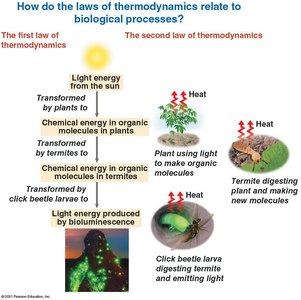
Biological systems obey the laws of thermodynamics, which govern energy transformations and the direction of metabolic processes.
First Law of Thermodynamics: Energy cannot be created or destroyed, only transformed. Organisms convert chemical energy from food into kinetic energy and heat.
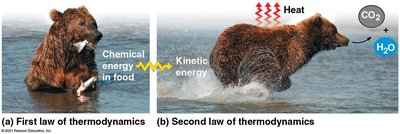
Second Law of Thermodynamics: Every energy transfer increases the entropy (disorder) of the universe. Living systems maintain order by increasing the entropy of their surroundings.
Kinetic and Potential Energy
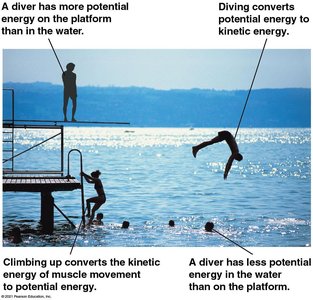
Energy exists in two primary forms: kinetic (energy of motion) and potential (stored energy).
Kinetic Energy: Associated with movement, such as thermal energy.
Potential Energy: Stored in chemical bonds or positional states.
Energy Conversion: Organisms convert potential energy (e.g., food) into kinetic energy (e.g., movement).
Free Energy and Gibbs Equation
The concept of free energy (G) is central to understanding how cells perform work.
Gibbs Free Energy (G): The amount of energy available to do work in a system.
Enthalpy (H): Total energy stored in a substance.
Entropy (S): Measure of disorder.
Temperature (T): Affects the balance between enthalpy and entropy.
Gibbs Free Energy Equation: 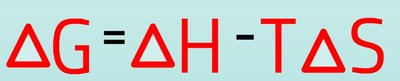
Exergonic and Endergonic Reactions
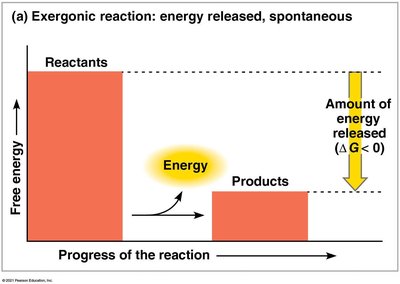
Exergonic Reactions: Release energy, occur spontaneously, and have a negative change in free energy ().
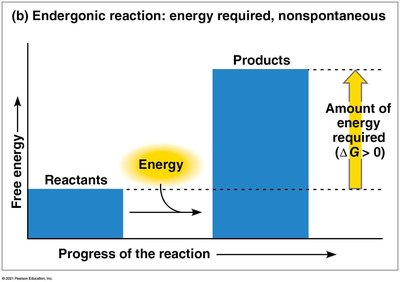
Endergonic Reactions: Require energy input, are non-spontaneous, and have a positive change in free energy ().
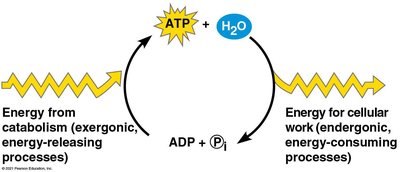
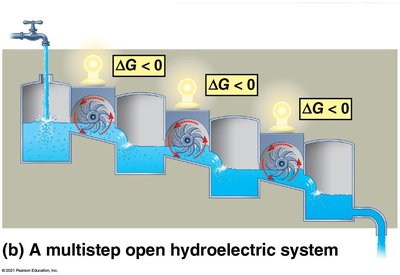
Coupling Reactions: Cells couple exergonic and endergonic reactions to drive essential processes.
ATP: The Energy Currency of the Cell
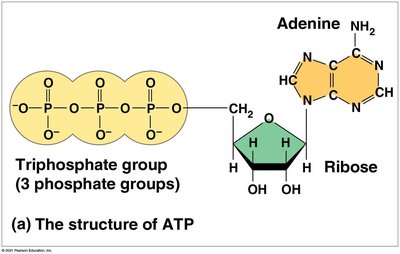
Adenosine Triphosphate (ATP): The primary molecule for short-term energy storage and release in cells.
Structure: Composed of adenine, ribose, and three phosphate groups.
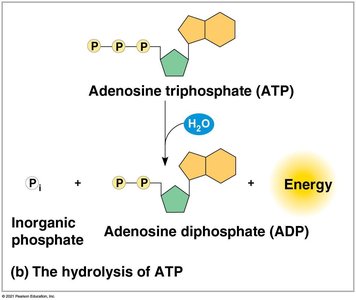
Hydrolysis of ATP: Releases energy by breaking the bond between phosphate groups, forming ADP and inorganic phosphate.
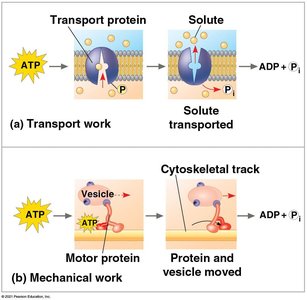
Cellular Work: ATP powers transport, mechanical, and chemical work.
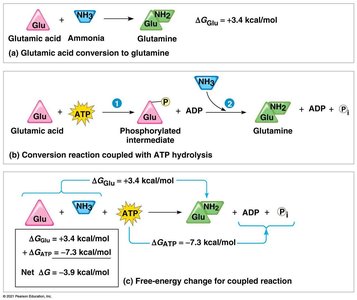
Reaction Coupling and Phosphorylation
Reaction Coupling: Linking an exergonic process (e.g., ATP hydrolysis) to an endergonic process for efficiency.
Phosphorylation: Transfer of a phosphate group from ATP to another molecule, making it more reactive.
Activation Energy and Catalysts
Activation Energy (EA): The energy required to initiate a chemical reaction.
Catalysts: Substances that lower activation energy and increase reaction rate without being consumed.
Enzymes: Biological Catalysts
Enzymes are proteins that catalyze specific biochemical reactions, enabling life-sustaining processes to occur rapidly and efficiently.
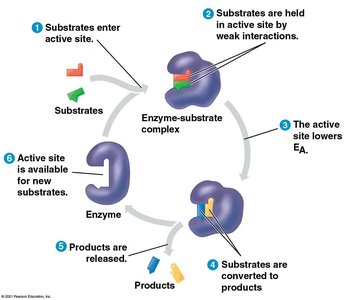
Enzyme Function: Enzymes lower activation energy, facilitating bond breaking and formation.
Active Site: The region of the enzyme where substrate binding and catalysis occur.
Induced Fit Model: Substrate binding induces a conformational change in the enzyme, optimizing catalysis.
Enzyme Cofactors and Regulation
Cofactors: Non-protein helpers required for enzyme activity. Can be inorganic (minerals) or organic (vitamins/coenzymes).
Regulation: Enzyme activity is regulated by competitive, non-competitive, and allosteric interactions. Feedback inhibition prevents overproduction of metabolites.
Environmental Influence and Compartmentalization
Environmental Factors: Temperature, pH, and concentration affect enzyme structure and function.
Compartmentalization: Cellular organization brings order to metabolic pathways, with enzymes localized to specific organelles or complexes.
Summary Table: Exergonic vs. Endergonic Reactions
Type of Reaction | Energy Change | Spontaneity | Example |
|---|---|---|---|
Exergonic | Negative () | Spontaneous | Cellular respiration |
Endergonic | Positive () | Non-spontaneous | Photosynthesis |
Key Equations
Gibbs Free Energy:
ATP Hydrolysis:
Example: Enzyme-Catalyzed Reaction
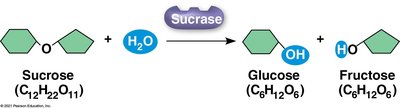
Sucrase: Catalyzes the hydrolysis of sucrose into glucose and fructose.
Reaction:
Conclusion
Understanding metabolism, energy transformations, and enzyme function is fundamental to biology. These concepts explain how cells harness energy, regulate biochemical pathways, and maintain life. Additional info: Some details were expanded for clarity and completeness, including definitions and examples of metabolic pathways, enzyme regulation, and environmental influences.
