 Indietro
Metabolism and Cellular Respiration: Energy Transformation in Cells
Guida di studio - Note intelligenti
 Appunti personalizzati basati sui tuoi materiali, ampliati con definizioni chiave, esempi e contesto.
Metabolism: The Energy of Life
Introduction to Metabolism
Metabolism encompasses all chemical reactions occurring within a living organism, enabling it to maintain life, grow, and respond to environmental changes. These reactions are organized into metabolic pathways, each catalyzed by specific enzymes.
Metabolism: The sum of all chemical reactions in an organism.
Emergent property: Arises from the interaction of molecules within the cell.
Energy transformations in metabolism are governed by physical laws.
Bioluminescence: An example of energy transformation where organisms convert chemical energy into light.

Metabolic Pathways
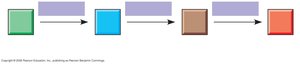
Metabolic pathways are sequences of chemical reactions, each step catalyzed by a specific enzyme, transforming a starting molecule into a final product.
Catabolic pathways: Break down complex molecules, releasing energy (e.g., cellular respiration).
Anabolic pathways: Build complex molecules from simpler ones, consuming energy (e.g., protein synthesis).
Bioenergetics: The study of how organisms manage their energy resources.
Energy and Thermodynamics in Biology
Forms of Energy
Energy is the capacity to cause change and exists in various forms relevant to biological systems:
Kinetic energy: Energy of motion.
Heat (thermal energy): Kinetic energy associated with the random movement of atoms or molecules.
Potential energy: Stored energy due to position or structure.
Chemical energy: Potential energy available for release in a chemical reaction.
The Laws of Thermodynamics
Thermodynamics is the study of energy transformations. Biological systems are open systems, exchanging energy and matter with their surroundings.
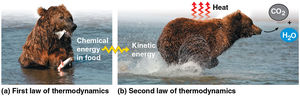
First Law of Thermodynamics: Energy can be transferred and transformed, but cannot be created or destroyed (principle of conservation of energy).
Second Law of Thermodynamics: Every energy transfer increases the entropy (disorder) of the universe; some energy is lost as heat.
Biological Order and Disorder
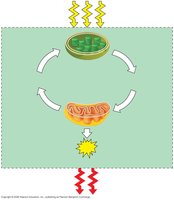
Cells create ordered structures from less ordered materials, but overall, the entropy of the universe increases. Energy flows through ecosystems, entering as light and leaving as heat.
Free Energy and Metabolic Reactions
Free-Energy Change (ΔG)
The change in free energy (ΔG) determines whether a reaction is spontaneous. Only processes with a negative ΔG are spontaneous.
Equation:
ΔH: Change in enthalpy (total energy)
ΔS: Change in entropy
T: Temperature in Kelvin
Exergonic and Endergonic Reactions
Metabolic reactions can be classified based on their energy changes:
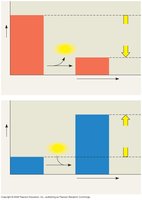
Exergonic reactions: Release free energy (ΔG < 0); spontaneous.
Endergonic reactions: Absorb free energy (ΔG > 0); non-spontaneous.
Equilibrium and Metabolism
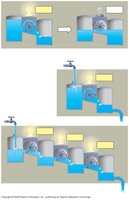
Cells maintain a state far from equilibrium, allowing continuous work. In closed systems, reactions reach equilibrium and stop doing work, but living cells are open systems with constant material flow.
ATP: The Energy Currency of the Cell
Structure and Function of ATP
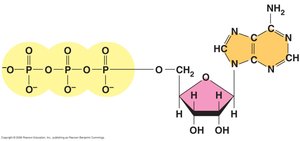
ATP (adenosine triphosphate) is the primary energy carrier in cells, composed of ribose, adenine, and three phosphate groups.
ATP Hydrolysis and Energy Coupling
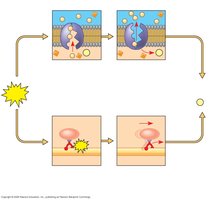
The hydrolysis of ATP releases energy by breaking the terminal phosphate bond, which is used to drive endergonic reactions in the cell. This process is called energy coupling.
ATP hydrolysis:
Phosphorylation: Transfer of a phosphate group to another molecule, making it more reactive.
Regeneration of ATP
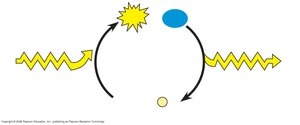
ATP is regenerated from ADP and inorganic phosphate using energy derived from catabolic reactions.
Enzymes and Metabolic Regulation
Enzyme Structure and Function
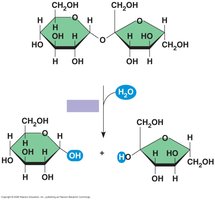
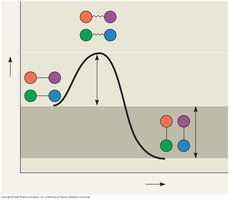
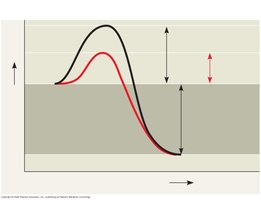
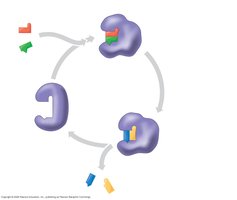
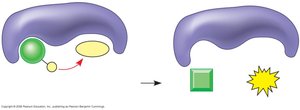
Enzymes are biological catalysts that speed up metabolic reactions by lowering activation energy barriers without being consumed.
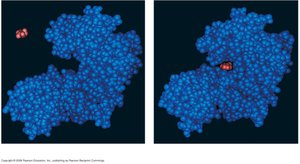
Substrate: The reactant an enzyme acts on.
Active site: The region on the enzyme where the substrate binds.
Induced fit: The enzyme changes shape to better fit the substrate upon binding.
Factors Affecting Enzyme Activity
Enzyme activity is influenced by temperature, pH, and the presence of specific chemicals. Each enzyme has optimal conditions for activity; extreme conditions can denature the enzyme.
Cofactors and Enzyme Inhibitors
Cofactors: Nonprotein helpers required for enzyme function; can be inorganic (e.g., metal ions) or organic (coenzymes, such as vitamins).
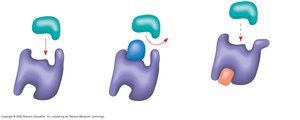
Competitive inhibitors: Bind to the active site, competing with the substrate.
Noncompetitive inhibitors: Bind elsewhere, altering enzyme shape and function.
Allosteric Regulation and Feedback Inhibition
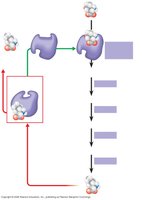
Cells regulate metabolism by controlling enzyme activity through allosteric regulation and feedback inhibition.
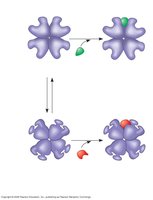
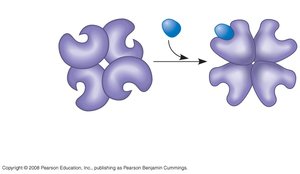
Allosteric regulation: Regulatory molecules bind to sites other than the active site, stabilizing active or inactive enzyme forms.
Feedback inhibition: The end product of a pathway inhibits an enzyme involved earlier in the pathway, preventing overproduction.
Cellular Respiration: Harvesting Chemical Energy
Overview of Cellular Respiration
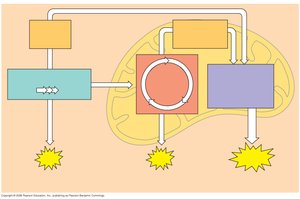
Cellular respiration is the process by which cells extract energy from organic molecules, primarily glucose, to produce ATP. It involves a series of redox reactions and occurs in three main stages:
Glycolysis: Breakdown of glucose into pyruvate in the cytosol.
Citric Acid Cycle (Krebs Cycle): Completes the breakdown of glucose in the mitochondrial matrix.
Oxidative Phosphorylation: Produces most ATP via the electron transport chain and chemiosmosis in the mitochondrial inner membrane.
Redox Reactions in Cellular Respiration
Redox (oxidation-reduction) reactions transfer electrons from one molecule to another, releasing energy used to synthesize ATP.
Oxidation: Loss of electrons.
Reduction: Gain of electrons.
Reducing agent: Electron donor.
Oxidizing agent: Electron acceptor.

Electron Carriers: NAD+ and the Electron Transport Chain
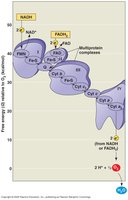
Electrons from organic molecules are transferred to NAD+, forming NADH, which carries electrons to the electron transport chain. The chain passes electrons in a series of steps, ultimately reducing O2 to H2O and generating ATP.

Stages of Cellular Respiration
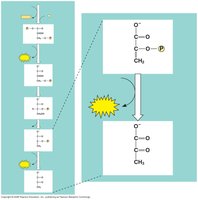
Glycolysis: Occurs in the cytosol; splits glucose into two pyruvate molecules, producing a net gain of 2 ATP and 2 NADH.
Citric Acid Cycle: Occurs in the mitochondrial matrix; each turn generates 1 ATP, 3 NADH, and 1 FADH2 per acetyl CoA.
Oxidative Phosphorylation: Occurs in the inner mitochondrial membrane; uses NADH and FADH2 to drive ATP synthesis via the electron transport chain and chemiosmosis.
Glycolysis: Steps and Products
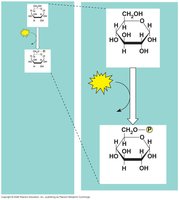
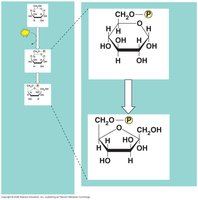
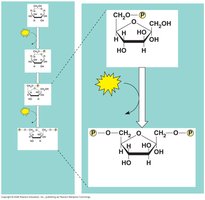
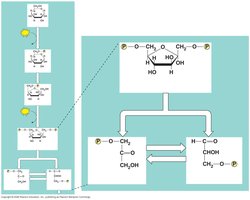
Glycolysis consists of an energy investment phase and an energy payoff phase. The net products are 2 ATP, 2 NADH, and 2 pyruvate per glucose molecule.
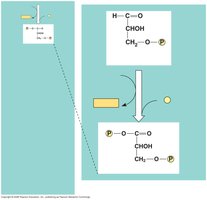
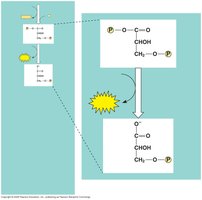
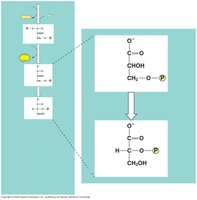
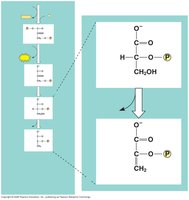
Citric Acid Cycle (Krebs Cycle)
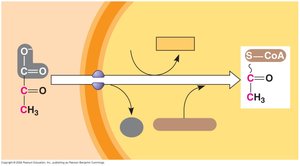
Before entering the cycle, pyruvate is converted to acetyl CoA. Each turn of the cycle produces 1 ATP, 3 NADH, 1 FADH2, and 2 CO2.
Electron Transport Chain and Chemiosmosis
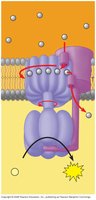
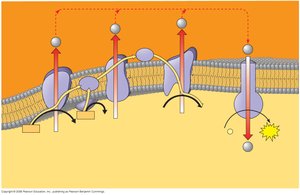
The electron transport chain is a series of protein complexes in the inner mitochondrial membrane. Electrons from NADH and FADH2 are transferred through the chain, pumping protons to create a gradient. ATP synthase uses this gradient to produce ATP in a process called chemiosmosis.
ATP Yield from Cellular Respiration
Cellular respiration produces about 36–38 ATP per glucose molecule. Most ATP is generated by oxidative phosphorylation.
Fermentation and Anaerobic Respiration
Fermentation
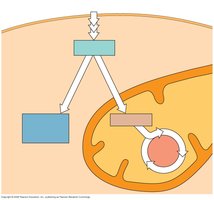
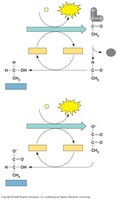
Fermentation allows ATP production without oxygen by regenerating NAD+ for glycolysis. Two common types are alcohol fermentation and lactic acid fermentation.
Comparison of Fermentation and Cellular Respiration
Both use glycolysis to oxidize glucose.
Fermentation yields 2 ATP per glucose; cellular respiration yields up to 38 ATP.
Final electron acceptor: organic molecule in fermentation, O2 in respiration.
Regulation of Cellular Respiration
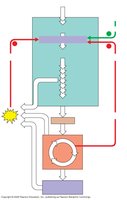
Cellular respiration is regulated by feedback mechanisms, primarily at the level of enzyme activity (e.g., phosphofructokinase in glycolysis). High ATP inhibits, while AMP stimulates glycolysis.
Summary Table: Catabolic and Anabolic Pathways
Pathway Type | Description | Example | Energy Change |
|---|---|---|---|
Catabolic | Breaks down complex molecules into simpler ones | Cellular respiration | Releases energy (exergonic) |
Anabolic | Builds complex molecules from simpler ones | Protein synthesis | Consumes energy (endergonic) |
Key Equations
Free energy change:
Cellular respiration:
Additional info: This guide integrates foundational concepts of metabolism, thermodynamics, enzyme function, and cellular respiration, providing a comprehensive overview for General Biology students.
