 Indietro
Metabolism and Energy: Principles, Pathways, and Enzyme Regulation
Guida di studio - Note intelligenti
 Appunti personalizzati basati sui tuoi materiali, ampliati con definizioni chiave, esempi e contesto.
Metabolism: An Overview
Metabolic Pathways
Metabolism encompasses all chemical reactions that transform matter and energy within a cell. These reactions are organized into metabolic pathways, which are series of enzyme-catalyzed steps converting molecules to products.
Catabolic pathways: Break down molecules, releasing energy (e.g., cellular respiration).
Anabolic pathways: Build molecules, requiring energy input (e.g., protein synthesis).
Enzymes: Biological catalysts that speed up reactions by lowering activation energy barriers.
Example: Cellular respiration is a catabolic pathway, while photosynthesis is anabolic. 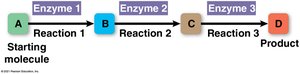
Energy and Chemical Reactions
Types of Energy
Energy is the capacity to do work or cause change.
Kinetic energy: Energy of motion.
Chemical energy: Potential energy stored in chemical bonds.
Potential energy: Stored energy due to position or structure.
Example: Cells and engines both convert fuel’s chemical energy into usable work through controlled reactions. 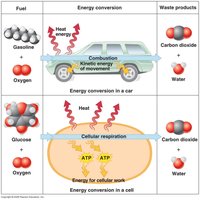
Chemical Potential Energy
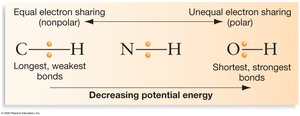
Chemical potential energy is stored in electrons based on their position relative to positive and negative charges.
Longer, weaker bonds (electrons shared equally) have higher potential energy.
Shorter, stronger bonds (electrons shared unequally) have lower potential energy.
Nonpolar bonds (C–H) store more energy than polar bonds (O–H).
Thermodynamics in Biology
The First Law of Thermodynamics
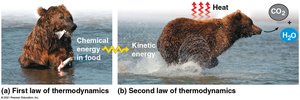
The first law states that energy cannot be created or destroyed, only transformed. The total energy in the universe remains constant.
Cells transform chemical potential energy from food into kinetic and thermal energy.
Engines convert fuel into motion and heat.
The Second Law of Thermodynamics and Entropy
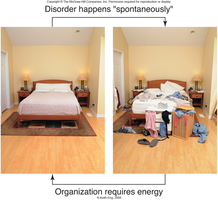
Entropy (S): A measure of disorder. Living systems maintain internal order by increasing the disorder of their surroundings through metabolism.
Spontaneous processes increase entropy and occur without energy input.
Nonspontaneous processes decrease entropy and require energy input.
Example: Breaking down food releases heat and CO2, increasing entropy. 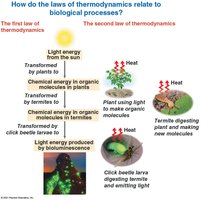
Gibbs Free Energy and Reaction Spontaneity
Gibbs Free Energy (ΔG)
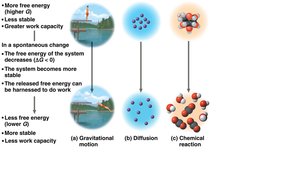
Gibbs free energy determines whether a reaction is spontaneous or requires energy input.
ΔG = ΔH − TΔS
ΔG < 0: Spontaneous (energy released)
ΔG > 0: Nonspontaneous (energy required)
Exergonic vs. Endergonic Reactions
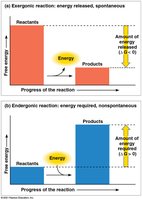
Exergonic reactions (ΔG < 0): Release free energy, are spontaneous (e.g., cellular respiration).
Endergonic reactions (ΔG > 0): Absorb free energy, are non-spontaneous (e.g., photosynthesis).
Energy Coupling and ATP
ATP: The Energy Currency of the Cell
ATP (adenosine triphosphate) is the molecule that powers cellular work by linking exergonic and endergonic reactions.
Photosynthesis is endergonic (ΔG > 0): Sunlight energy builds sugars.
Cellular respiration is exergonic (ΔG < 0): Breaks down sugars to release energy, generating ATP.
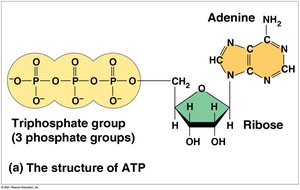
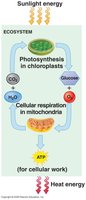
ATP Hydrolysis and Energy Transfer
ATP hydrolysis releases energy by breaking the bond between the outer phosphate group, forming ADP and inorganic phosphate (Pi).
High potential energy due to repulsion between phosphate groups.
Hydrolysis increases entropy; products are more disordered.
Phosphorylation: Transfer of phosphate to a protein, changing its shape and driving cellular work.
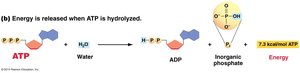
Energetic Coupling: How ATP Drives Endergonic Reactions
Energetic coupling links exergonic ATP hydrolysis to endergonic reactions.
ATP transfers a phosphate group to a reactant, raising its free energy.
The combined reactions become overall exergonic, allowing the cell to perform work.
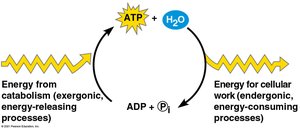
ATP Powers Cellular Work
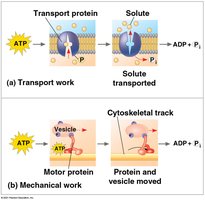
ATP hydrolysis drives most transport and mechanical work in cells.
Breaking a phosphate bond changes protein shape and binding ability.
Enables movement or transport across membranes.
Enzymes: Catalysts of Metabolic Pathways
Enzyme Function and Activation Energy
Metabolic pathways rely on enzymes to proceed efficiently.
Spontaneous reactions can be slow due to high activation energy (Ea).
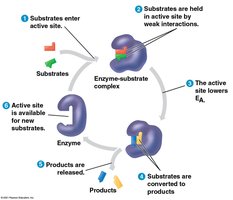
Enzymes lower activation energy, stabilizing the transition state.
Enzymes do not change ΔG; they only speed up reactions.
Enzyme Specificity and Catalysis
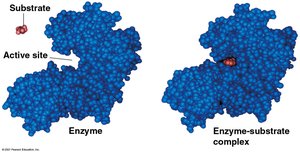
Each enzyme recognizes a unique substrate, forming an enzyme–substrate complex.
Substrate: Reactant an enzyme acts on.
Active site: Binds substrate and changes shape (induced fit) for efficient catalysis.
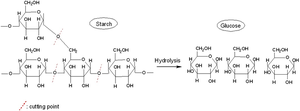
Example: Amylase hydrolyzes starch to glucose.
Chemical Control of Enzyme Function
Enzyme activity is regulated by various molecules.
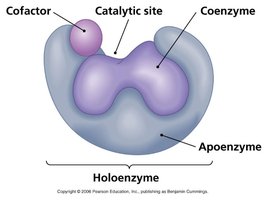
Inorganic cofactors: Metal ions (Zn2+, Mg2+, Fe2+).
Organic coenzymes: Molecules like NADH or FADH2; most vitamins act as or form these.
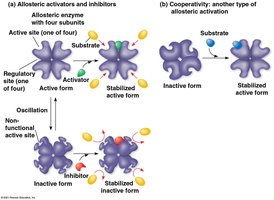
Allosteric regulation: Molecule binds at a site other than the active site, activating or inhibiting the enzyme.
Cooperative binding: Binding of one substrate molecule enhances enzyme activity.
Enzyme Inhibition
Enzyme inhibitors block enzyme activity.
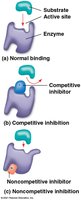
Competitive inhibitors: Resemble the substrate and compete for the active site.
Noncompetitive inhibitors: Bind elsewhere, changing the enzyme’s shape and function.
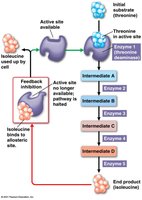
Feedback inhibition: Stops production when enough product is made, saving resources.
Factors Affecting Enzyme Activity
Environmental Factors
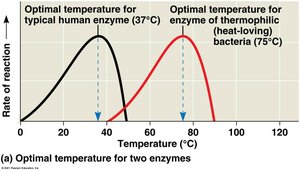
The rate of an enzyme-catalyzed reaction can be sped up by increasing substrate concentration. Enzyme activity is also affected by environmental factors such as temperature and pH.
Temperature: Human enzymes optimal at 30–40°C; thermophilic bacteria at about 75°C.
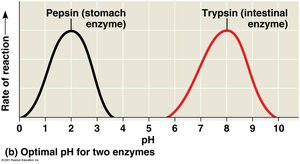
pH: Each enzyme has an optimal pH depending on its environment.
Denaturation: High temperatures or extreme pH can unfold enzymes, reducing activity.
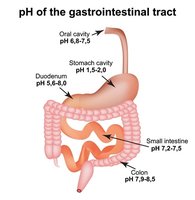
Optimal pH in the Gastrointestinal Tract
Pepsin (stomach enzyme): Optimal pH = 2
Trypsin (intestinal enzyme): Optimal pH = 8
Summary Table: Types of Enzyme Regulation
Type | Mechanism | Effect |
|---|---|---|
Competitive Inhibition | Inhibitor binds active site | Blocks substrate binding |
Noncompetitive Inhibition | Inhibitor binds elsewhere | Changes enzyme shape |
Allosteric Regulation | Regulator binds non-active site | Activates or inhibits enzyme |
Feedback Inhibition | Product binds enzyme | Halts pathway when product accumulates |
Cofactors/Coenzymes | Assist enzyme function | Enable catalysis |
Additional info: These mechanisms ensure precise control of metabolic pathways, allowing cells to respond to changing conditions and maintain homeostasis.
