 Indietro
Metabolism and Enzyme Function in Biological Systems
Guida di studio - Note intelligenti
 Appunti personalizzati basati sui tuoi materiali, ampliati con definizioni chiave, esempi e contesto.
Metabolism: The Chemical Basis of Life
Overview of Metabolism
Metabolism encompasses all chemical reactions that occur within living organisms, enabling them to transform matter and energy. These reactions are essential for energy storage, growth, repair, and replacement. Metabolism is divided into two main types: catabolism (breakdown of molecules to release energy) and anabolism (synthesis of complex molecules from simpler ones).
Catabolic pathways: Release energy by breaking down complex molecules into simpler compounds.
Anabolic pathways: Consume energy to build complex molecules from simpler ones (e.g., protein synthesis from amino acids).
Metabolic pathways: Most reactions occur in sequences, which can be linear, cyclic, or spiral.
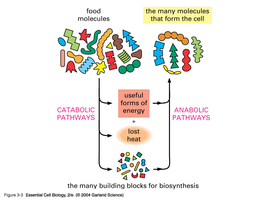
Food as Fuel
Organisms obtain energy from lipids, proteins, and carbohydrates, which are primarily composed of carbon, hydrogen, and oxygen. The oxidation of these molecules with oxygen produces carbon dioxide, water, and energy.
Energy is required for: Moving molecules/ions across membranes, cellular work, and maintaining body temperature.
Energy and Thermodynamics in Biology
Forms of Energy
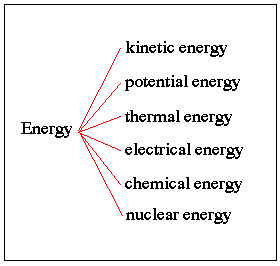
Energy is the capacity to cause change and exists in various forms, including kinetic, potential, thermal, electrical, chemical, and nuclear energy. In biological systems, chemical energy is especially important for driving cellular processes.
Laws of Thermodynamics
First Law (Conservation of Energy): Energy can be transferred and transformed, but it cannot be created or destroyed.
Second Law: Every energy transfer increases the entropy (disorder) of the universe; some energy is always lost as heat.
Biological Order and Disorder
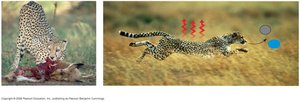
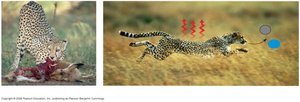
Cells create ordered structures from less ordered materials, but overall, organisms replace ordered forms of matter and energy with less ordered forms. Energy flows into ecosystems as light and exits as heat.
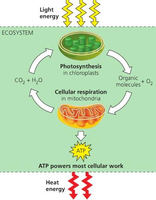
Free Energy and Spontaneity of Reactions
Spontaneous Reactions and Free-Energy Change
Whether a process is spontaneous depends on changes in enthalpy (ΔH) and entropy (ΔS). The Gibbs free energy change (ΔG) combines these factors:
ΔG = ΔH – TΔS (T = temperature in Kelvins)
Exergonic reactions: Spontaneous, release free energy (ΔG < 0).
Endergonic reactions: Nonspontaneous, absorb free energy (ΔG > 0).
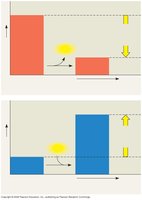
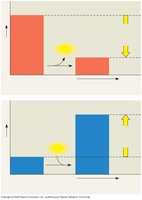
Energy Coupling and ATP
Cells couple exergonic and endergonic reactions using ATP (adenosine triphosphate). ATP hydrolysis is exergonic and provides energy for cellular work, including chemical, transport, and mechanical processes.
Metabolic Pathways and Energy Production
Stages of Energy Production
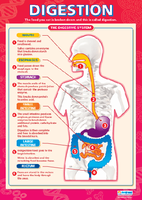
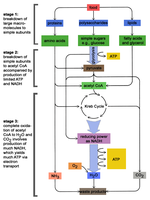
Digestion: Large molecules are broken down into smaller ones (e.g., carbohydrates to glucose, proteins to amino acids, fats to glycerol and fatty acids).
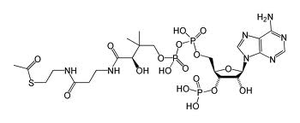
Acetyl-CoA Production: Small molecules are converted to acetyl groups attached to coenzyme A, a key intermediate in metabolism.
Citric Acid Cycle: Acetyl groups are oxidized to CO2, and energy is transferred to NADH and FADH2.
ATP Production: Electrons from reduced coenzymes are passed down the electron-transport chain, producing ATP and water.
ATP: The Energy Currency of the Cell
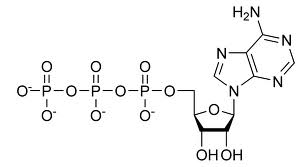
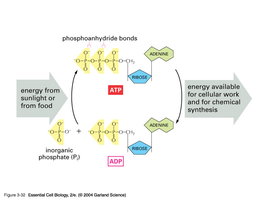
ATP consists of adenosine (adenine + ribose) and three phosphate groups. Hydrolysis of ATP to ADP releases energy:
ATP + H2O → ADP + HOPO32– + H+
ATP hydrolysis is exergonic; ATP synthesis is endergonic.
Enzymes: Catalysts of Life
Enzyme Structure and Function
Enzymes are protein catalysts that speed up reactions by lowering activation energy. They are highly specific, binding substrates at their active sites and facilitating bond-breaking and bond-forming processes. Some enzymes are non-protein (e.g., ribozymes).
Active site: The region where substrate binding and catalysis occur.
Induced fit: The enzyme changes shape slightly to optimize substrate binding and catalysis.
Enzyme Specificity and Regulation
Enzyme specificity is determined by the 3D shape of the active site and substrate.
Enzyme activity is affected by temperature, pH, and the presence of cofactors or coenzymes.
Enzymes can be regulated by inhibitors (competitive or noncompetitive) and allosteric modulators.
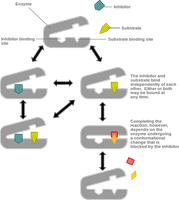
Enzyme Inhibition and Regulation
Competitive inhibitors: Compete with substrate for the active site, slowing reaction rates but not affecting maximal rate.
Noncompetitive inhibitors: Bind elsewhere on the enzyme, reducing maximal reaction rate.
Allosteric regulation: Allosteric inhibitors decrease substrate binding; allosteric activators increase substrate affinity.
Feedback inhibition: The end product of a metabolic pathway inhibits an upstream enzyme, regulating pathway activity (e.g., ATP as an allosteric inhibitor in cellular respiration).
Enzyme Cofactors and Coenzymes
Cofactors: Inorganic ions (e.g., Fe2+, Mg2+, Zn2+).
Coenzymes: Organic molecules (e.g., ATP, NADH, vitamins) required for enzyme function.
Summary Table: Catabolic vs. Anabolic Pathways
Pathway Type | Function | Energy Change | Example |
|---|---|---|---|
Catabolic | Breakdown of molecules | Releases energy (exergonic) | Cellular respiration |
Anabolic | Synthesis of molecules | Consumes energy (endergonic) | Protein synthesis |
Key Equations
Gibbs Free Energy:
ATP Hydrolysis:
Additional info:
Metabolic pathways are tightly regulated to ensure cellular efficiency and adaptability.
Enzyme inhibitors are important in drug discovery and therapeutic interventions.
