 Indietro
Metabolism and Enzyme Function: Study Notes for General Biology
Guida di studio - Note intelligenti
 Appunti personalizzati basati sui tuoi materiali, ampliati con definizioni chiave, esempi e contesto.
An Introduction to Metabolism
Overview of Metabolism
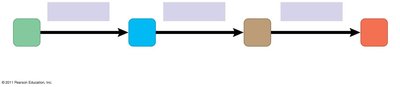
Metabolism encompasses all chemical reactions occurring within an organism, managing both material and energy resources. These reactions are organized into metabolic pathways, where each step is catalyzed by a specific enzyme.
Metabolic Pathway: Begins with a specific molecule and ends with a product, passing through a series of enzyme-catalyzed steps.
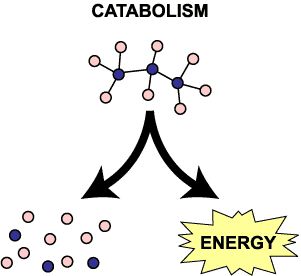
Catabolic Pathways: Break down complex molecules into simpler compounds, releasing energy.
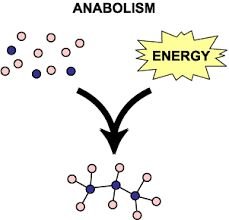
Anabolic Pathways: Build complex molecules from simpler ones, consuming energy.
Bioenergetics
Bioenergetics is the study of how organisms manage their energy resources.
Energy: The capacity to do work; exists as potential, kinetic, heat, and chemical energy.
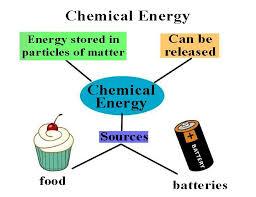
Chemical Energy: Energy stored in the bonds of molecules, such as food or batteries.
The Laws of Thermodynamics
First and Second Laws
Thermodynamics describes energy transformations in biological systems.
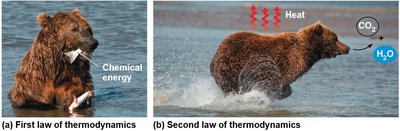
First Law: Energy can be transferred and transformed, but cannot be created or destroyed.
Second Law: Every energy transfer increases the entropy (disorder) of the universe; some energy is lost as heat.
Organisms: Open systems exchanging energy and matter with their surroundings.
Free Energy and Spontaneity
Free Energy (ΔG)
Free energy is the portion of a system's energy that can perform work at constant temperature and pressure.
Equation:
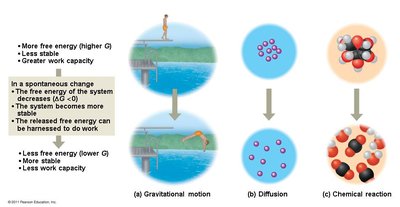
Spontaneous Processes: Only occur when is negative.
Stability: Systems move toward lower free energy and greater stability.
Exergonic and Endergonic Reactions
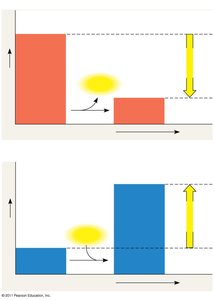
Exergonic Reaction: Releases free energy; ; spontaneous.
Endergonic Reaction: Absorbs free energy; ; nonspontaneous.
ATP and Energy Coupling
Structure and Function of ATP
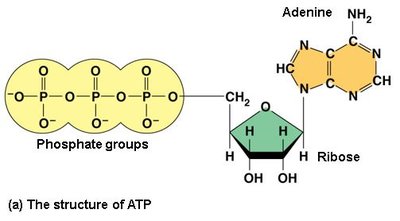
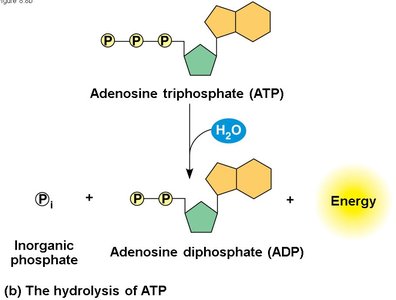
ATP (adenosine triphosphate) is the primary energy carrier in cells, composed of ribose, adenine, and three phosphate groups.
Hydrolysis of ATP: Releases energy by breaking the terminal phosphate bond.
Energy Coupling: ATP hydrolysis drives endergonic reactions by transferring a phosphate group to a reactant (phosphorylation).
ATP in Cellular Work
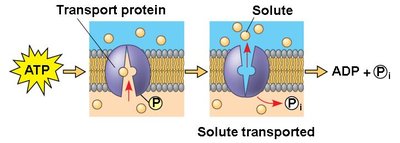
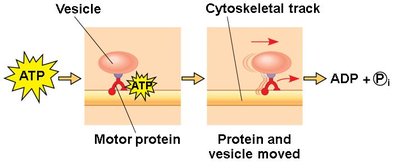
Cells use ATP for chemical, transport, and mechanical work.
Transport Work: ATP phosphorylates transport proteins to move solutes across membranes.
Mechanical Work: ATP binds to motor proteins, enabling movement along cytoskeletal tracks.
ATP Cycle
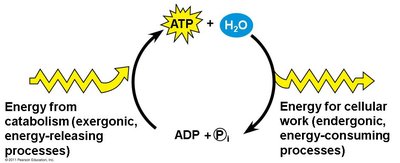
ATP is regenerated from ADP and inorganic phosphate using energy from catabolic reactions.
Cycle: Energy from exergonic reactions is used to phosphorylate ADP, forming ATP, which is then hydrolyzed to drive endergonic processes.
Enzymes and Metabolic Reactions
Enzyme Function
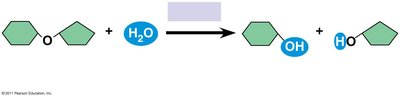
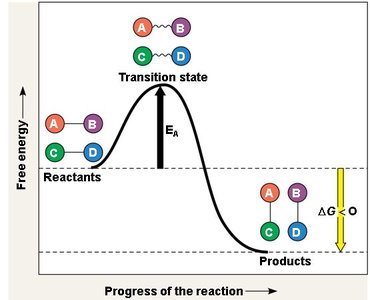
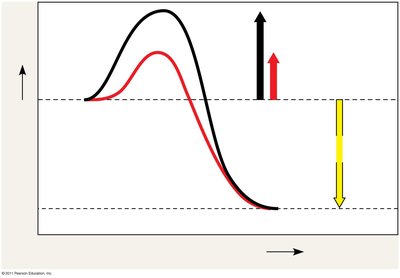
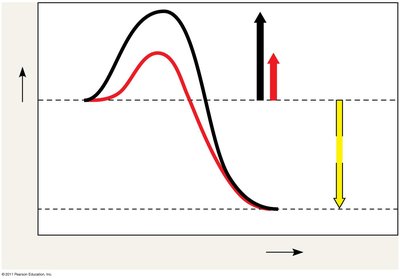
Enzymes are catalytic proteins that speed up metabolic reactions by lowering activation energy barriers.
Catalyst: A substance that increases the rate of a reaction without being consumed.
Activation Energy (EA): The initial energy required to start a reaction.
Substrate Specificity and Catalytic Cycle
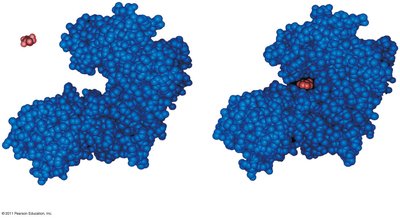
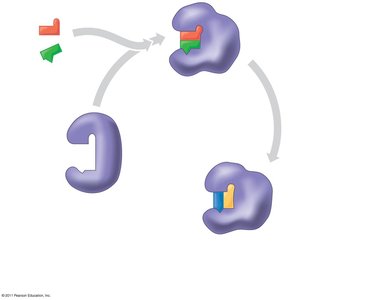
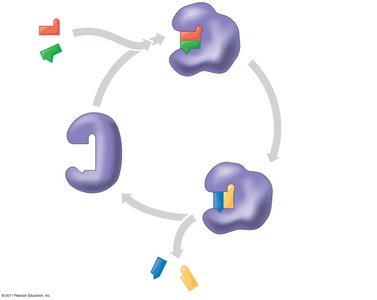
Enzymes bind specific substrates at their active sites, forming an enzyme-substrate complex.
Induced Fit: The enzyme changes shape to better fit the substrate.
Catalytic Cycle: Substrate binds, reaction occurs, products are released, and enzyme is ready for new substrate.
Factors Affecting Enzyme Activity
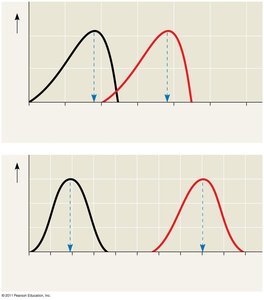
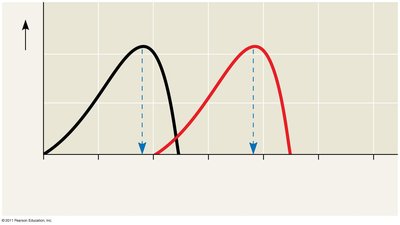
Temperature: Each enzyme has an optimal temperature for activity.
pH: Each enzyme has an optimal pH for activity.
Chemicals: Certain chemicals can enhance or inhibit enzyme function.
Cofactors and Coenzymes
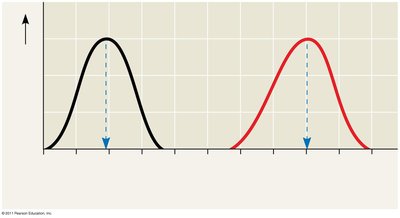
Cofactors: Nonprotein helpers required by some enzymes; can be inorganic (metal ions) or organic (coenzymes).
Coenzymes: Organic cofactors, often derived from vitamins (e.g., NADH).
Enzyme Inhibition
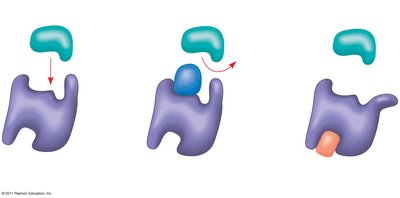
Competitive Inhibitors: Bind to the active site, competing with the substrate.
Noncompetitive Inhibitors: Bind elsewhere, changing enzyme shape and reducing activity.
Examples: Toxins, poisons, pesticides, antibiotics.
Feedback Inhibition
Feedback inhibition occurs when the end product of a metabolic pathway inhibits an earlier enzyme, preventing overproduction and conserving resources.
Allosteric Inhibition: End product binds to an allosteric site, changing enzyme activity.
Importance: Maintains cellular homeostasis and prevents waste.
Summary Table: Key Concepts in Metabolism and Enzyme Function
Concept | Definition | Example |
|---|---|---|
Catabolism | Breakdown of molecules, releases energy | Cellular respiration |
Anabolism | Building molecules, consumes energy | Protein synthesis |
ATP | Cellular energy carrier | Drives muscle contraction |
Enzyme | Catalytic protein | Sucrase hydrolyzing sucrose |
Activation Energy | Energy needed to start a reaction | Enzyme lowers EA |
Competitive Inhibitor | Binds active site, blocks substrate | Antibiotics |
Feedback Inhibition | End product inhibits pathway | Isoleucine synthesis |
Additional info: These notes expand on brief lecture points to provide a comprehensive overview of metabolism and enzyme function, suitable for exam preparation in General Biology.
