 Indietro
Metabolism and Enzymes: Energy Transformation in Cells
Guida di studio - Note intelligenti
 Appunti personalizzati basati sui tuoi materiali, ampliati con definizioni chiave, esempi e contesto.
Metabolism and Enzymes
Overview of Metabolism
Metabolism is the sum of all chemical reactions occurring within an organism, enabling it to grow, reproduce, maintain its structures, and respond to environmental changes. These reactions are organized into metabolic pathways, each catalyzed by specific enzymes.
Catabolic reactions: Break down large molecules into smaller ones, releasing energy (e.g., protein to amino acids).
Anabolic reactions: Build large molecules from smaller ones, requiring energy input (e.g., amino acids to protein).
Metabolic pathways: Series of enzyme-catalyzed reactions transforming a starting molecule into a product.


Forms of Energy
Energy is the capacity to do work or cause change. In biological systems, energy exists in various forms:
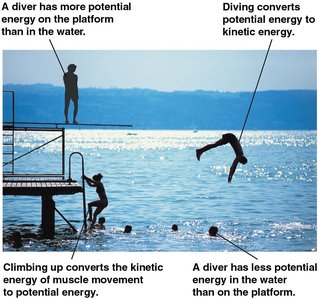
Potential energy: Stored energy due to position or structure (e.g., chemical bonds).
Kinetic energy: Energy of motion (e.g., movement, heat, light).


Energy Transformation and Thermodynamics
Biological systems obey the laws of thermodynamics:
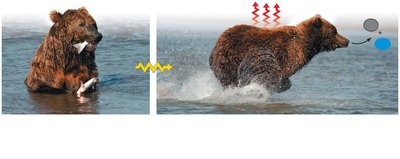
First Law: Energy can be transferred or transformed but cannot be created or destroyed.
Second Law: Every energy transfer increases the disorder (entropy) of the universe; some energy is lost as heat.
Free Energy and Chemical Reactions
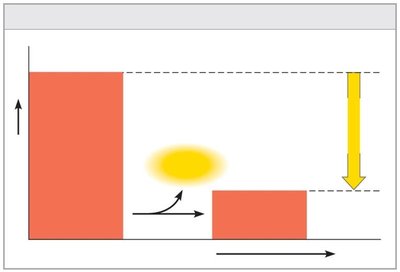
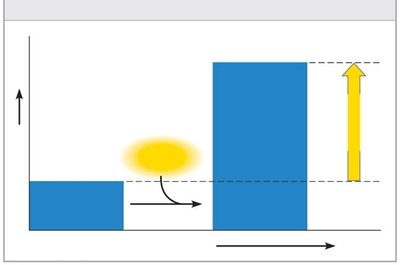
Free energy (Gibbs free energy, G) is the portion of a system's energy available to do work. The change in free energy (ΔG) determines whether a reaction is spontaneous:
Exergonic reactions: Release free energy (ΔG < 0), are spontaneous (e.g., cellular respiration).
Endergonic reactions: Absorb free energy (ΔG > 0), are non-spontaneous (e.g., photosynthesis).
Equation for free energy change:
ATP: The Energy Currency of the Cell
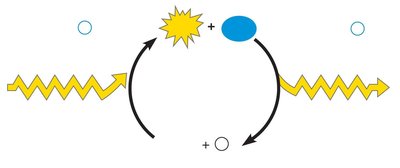
Adenosine Triphosphate (ATP) is the primary energy carrier in cells. It consists of ribose, adenine, and three phosphate groups. Energy is released when ATP is hydrolyzed to ADP and inorganic phosphate (Pi).
ATP hydrolysis: Powers cellular work by releasing energy.
ATP cycle: ATP is regenerated from ADP and Pi using energy from catabolic reactions.
Cellular Work
Cells use free energy to perform three main types of work:
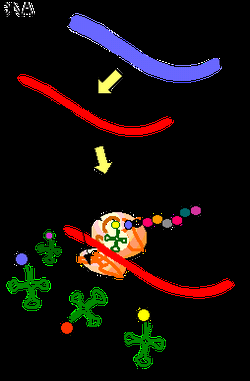
Chemical work: Synthesis of macromolecules (e.g., proteins).
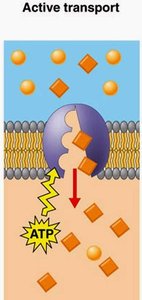
Transport work: Movement of molecules across membranes.
Mechanical work: Muscle contraction and movement.
Enzymes: Biological Catalysts
Properties and Function of Enzymes
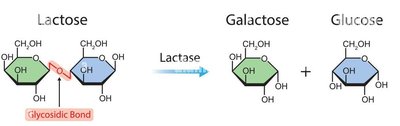
Enzymes are macromolecules (mostly proteins) that act as catalysts, speeding up chemical reactions without being consumed. They are highly specific for their substrates and sensitive to environmental conditions (temperature, pH).
Substrate: The reactant acted upon by the enzyme.
Active site: Region of the enzyme where the substrate binds and the reaction occurs.
Enzyme-substrate complex: Temporary association during catalysis.
Enzyme Mechanism: Lowering Activation Energy
Enzymes lower the activation energy (EA) required for a reaction, allowing it to proceed faster. The transition state is the highest energy point, and enzymes stabilize this state, facilitating bond breaking/forming.
Activation energy: The energy needed to initiate a reaction.
Transition state: Unstable intermediate with highest free energy.
Factors Affecting Enzyme Activity
Several factors influence enzyme activity:
Substrate concentration: Increasing substrate can increase reaction rate until the enzyme is saturated.
Competitive inhibitors: Molecules that compete with the substrate for the active site, reducing enzyme activity.
Non-competitive inhibitors: Bind to a different site (allosteric site), changing enzyme shape and function.
Cofactors: Non-protein molecules (inorganic or organic) required for enzyme function.
Regulation of Enzyme Activity
Enzyme activity is regulated to control metabolism:
Allosteric regulation: Regulatory molecules bind to sites other than the active site, affecting enzyme activity.
Feedback inhibition: End product of a pathway inhibits an earlier step, preventing overproduction.
Summary Table: Catabolic vs. Anabolic Reactions
Type of Reaction | Description | Energy Change | Example |
|---|---|---|---|
Catabolic | Breaks down molecules | Releases energy (exergonic, ΔG < 0) | Cellular respiration |
Anabolic | Builds molecules | Requires energy (endergonic, ΔG > 0) | Photosynthesis |
Key Concepts Map
Summary
An organism’s metabolism transforms energy.
The free energy of a reaction determines spontaneity.
ATP powers cellular work.
Enzymes speed up reactions by lowering activation energy.
Regulation of enzymes helps control metabolism.
