 Indietro
Metabolism and Enzymes: Structure, Function, and Regulation
Guida di studio - Note intelligenti
 Appunti personalizzati basati sui tuoi materiali, ampliati con definizioni chiave, esempi e contesto.
Metabolism Overview
Chemical Reactions of Life
Metabolism encompasses all chemical reactions occurring within living organisms, enabling them to build and break down molecules for energy and structural purposes.
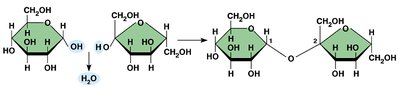
Anabolic reactions: Form bonds between molecules, building complex molecules from simpler ones (e.g., dehydration synthesis).
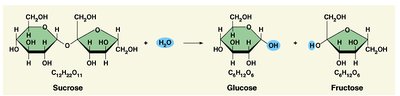
Catabolic reactions: Break bonds between molecules, releasing energy by breaking down complex molecules (e.g., hydrolysis).
Examples: Dehydration synthesis (anabolism) and hydrolysis (catabolism).
Energy Transformations
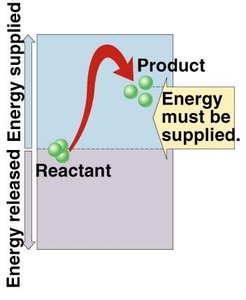
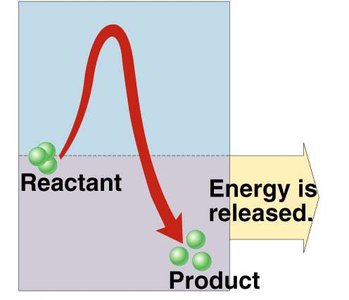
Energy is required for life and is transformed through metabolic reactions. These reactions are classified as exergonic (energy-releasing) or endergonic (energy-consuming).
Exergonic reactions: Release energy, such as digestion and hydrolysis.
Endergonic reactions: Require energy input, such as synthesis and dehydration synthesis.
Free energy change (ΔG): Determines whether a reaction is spontaneous.
Activation Energy and Catalysis
Activation Energy
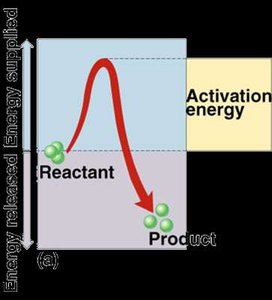
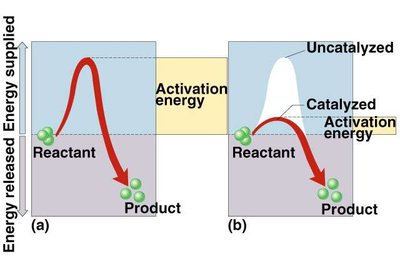
Activation energy is the minimum energy required to initiate a chemical reaction by destabilizing molecular bonds.
Stable biomolecules require activation energy to break bonds.
High activation energy prevents spontaneous breakdown of molecules.

Catalysts and Enzymes
Catalysts reduce the activation energy required for reactions, allowing them to proceed at biologically relevant rates. In cells, enzymes serve as biological catalysts.
Enzymes: Proteins (and some RNA) that facilitate chemical reactions without being consumed.
Enzymes increase reaction rates, reduce activation energy, and do not alter ΔG.
Highly specific for their substrates.
Enzyme Structure and Function
Enzyme Vocabulary
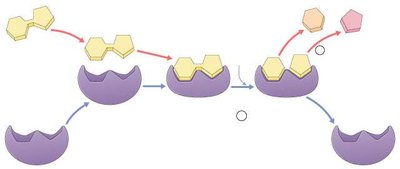
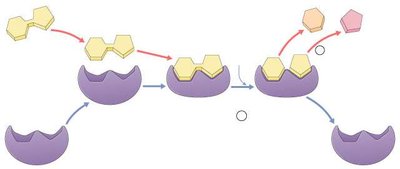
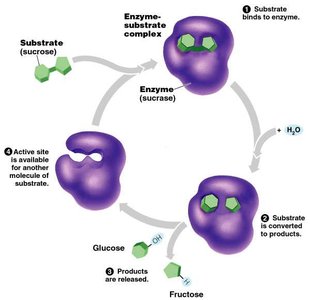
Enzymes interact with substrates at their active sites, forming enzyme-substrate complexes and converting substrates into products.
Substrate: The reactant that binds to the enzyme.
Active site: The region of the enzyme where catalysis occurs.
Product: The end result of the enzymatic reaction.
Properties of Enzymes
Reaction specificity: Each enzyme works with a specific substrate.
Not consumed: Enzymes can catalyze many reactions without being altered.
Affected by cellular conditions: Temperature, pH, salinity, and concentration.
Naming Conventions
Enzymes are named for the reactions they catalyze (e.g., sucrase, protease, lipase, DNA polymerase).
Models of Enzyme Action
Two main models describe how enzymes interact with substrates:
Lock and Key Model: Substrate fits precisely into the enzyme's active site.
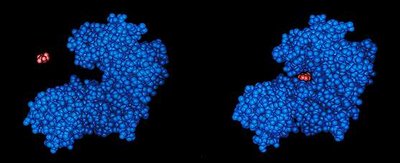
Induced Fit Model: Substrate binding induces a conformational change in the enzyme, resulting in a tighter fit and optimal catalysis.
Mechanisms of Catalysis
Enzymes orient substrates for synthesis or apply stress to bonds for digestion, lowering activation energy and speeding up reactions.
Factors Affecting Enzyme Activity
Enzyme and Substrate Concentration
Increasing enzyme concentration increases reaction rate until substrate becomes limiting.
Increasing substrate concentration increases reaction rate until enzymes are saturated.
Temperature
Optimal temperature maximizes molecular collisions and reaction rate.
High temperatures denature enzymes, while low temperatures slow reactions.
pH
Optimal pH varies by enzyme and environment (e.g., pepsin in stomach, trypsin in intestines).
Extreme pH disrupts enzyme structure and function.
Salinity
Changes in salt concentration disrupt ionic bonds and enzyme structure.
Enzymes are intolerant of extreme salinity.
Activators and Inhibitors
Activators: Cofactors (inorganic ions) and coenzymes (organic molecules) enhance enzyme activity.
Inhibitors: Molecules that reduce enzyme activity, including competitive, noncompetitive, irreversible, and feedback inhibitors.
Enzyme Regulation
Competitive and Noncompetitive Inhibition
Competitive inhibitors: Compete with substrate for active site; can be overcome by increasing substrate concentration.
Noncompetitive inhibitors: Bind to allosteric sites, causing conformational changes that inactivate the enzyme.
Irreversible Inhibition
Inhibitors permanently bind to the enzyme, either at the active site or allosteric site, rendering it inactive.
Allosteric Regulation
Regulatory molecules cause conformational changes, keeping the enzyme in active or inactive forms.
Metabolic Pathways and Feedback Inhibition
Metabolic pathways organize chemical reactions into sequential steps, increasing efficiency and regulation. Feedback inhibition prevents unnecessary accumulation of products by inhibiting earlier steps in the pathway.
Cooperativity
Substrate binding induces conformational changes that enhance further substrate binding, increasing enzyme activity (e.g., hemoglobin).
Summary Table: Types of Enzyme Regulation
Type | Mechanism | Effect | Example |
|---|---|---|---|
Competitive Inhibition | Inhibitor binds active site | Blocks substrate | Penicillin |
Noncompetitive Inhibition | Inhibitor binds allosteric site | Conformational change | Cyanide |
Irreversible Inhibition | Permanent binding | Enzyme inactivation | Nerve gas |
Feedback Inhibition | Product inhibits pathway | Regulates production | Isoleucine synthesis |
Cooperativity | Substrate enhances binding | Increased activity | Hemoglobin |
Key Equations
Free energy change:
Activation energy:
Conclusion
Metabolism and enzyme function are central to life, enabling organisms to efficiently manage energy and regulate biochemical pathways. Understanding enzyme structure, function, and regulation is essential for studying cellular processes and metabolic control.
