Indietro
Metabolism, ATP, and Enzymes: Study Guide for General Biology
Guida di studio - Note intelligenti
 Appunti personalizzati basati sui tuoi materiali, ampliati con definizioni chiave, esempi e contesto.
Metabolism, ATP, & Enzymes
Overview: The Energy of Life
The living cell is a miniature chemical factory where thousands of chemical reactions occur. Cells extract energy from molecules and apply energy to perform work, including converting energy to light (bioluminescence). Energy exists in various forms and can be converted from one form to another.
Energy: The capacity to do work or cause change.
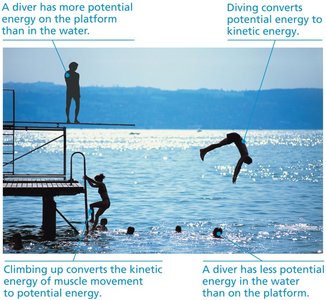
Kinetic energy: Energy associated with motion, light, and heat.
Potential energy: Stored energy due to location or structure; chemical energy is potential energy stored in chemical bonds.
Thermodynamics in Biology
Thermodynamics is the study of energy transformations. Two laws govern energy transformations in organisms:
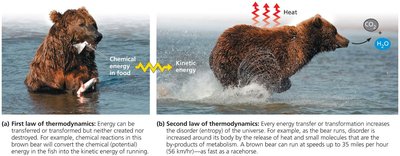
First Law of Thermodynamics: Energy can neither be created nor destroyed, only transformed. Also known as the principle of conservation of energy.
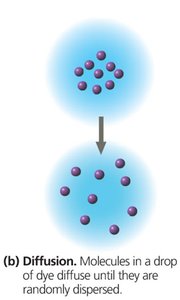
Second Law of Thermodynamics: Energy conversions increase the disorder (entropy) of the universe.
Entropy: A measure of disorder or randomness.
Free Energy and Spontaneous Reactions
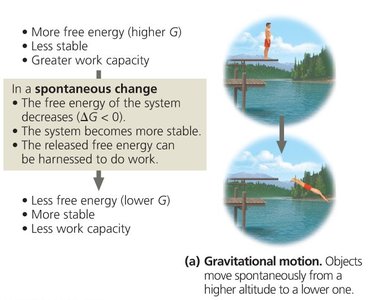
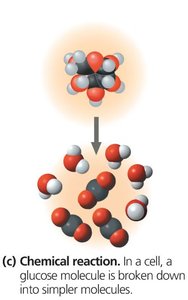
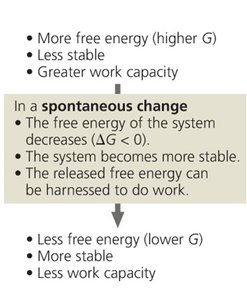
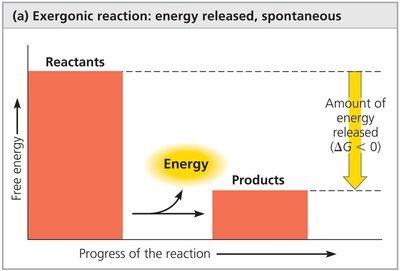
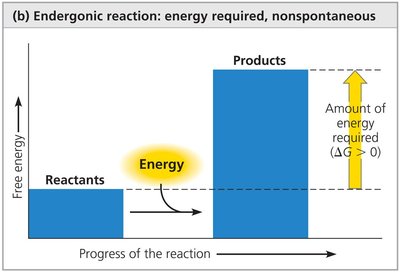
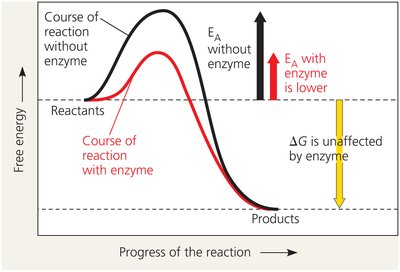
Biologists measure changes in free energy to understand chemical reactions. Free energy (G) is the portion of a system’s energy that can do work under uniform temperature and pressure. Only reactions with a negative ΔG are spontaneous.
ΔG = Gfinal - Ginitial
Spontaneous reactions can be harnessed to perform cellular work.
Exergonic and Endergonic Reactions
Chemical reactions either release or store energy:
Exergonic reactions: Release energy; ΔG is negative. Example: Cellular respiration.
Endergonic reactions: Require an input of energy and store energy; ΔG is positive. Example: Photosynthesis.
Metabolism: Catabolism and Anabolism
Metabolism is the sum of all chemical reactions in a cell. It consists of two main types:
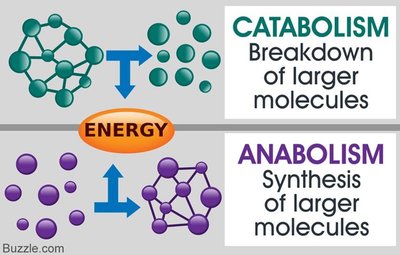
Catabolism: Chemical reactions that release energy by breaking down complex molecules.
Anabolism: Chemical reactions that use energy to build complex molecules from simpler ones.
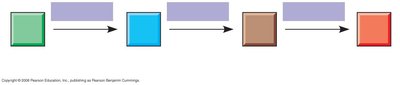
Metabolic pathways organize the chemistry of life, beginning with a specific molecule and ending with a product. Each step is catalyzed by a specific enzyme.
ATP: The Energy Shuttle
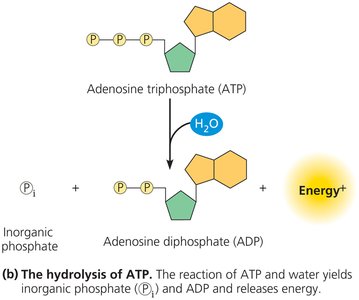
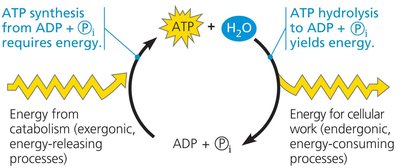
ATP (adenosine triphosphate) is the cell’s energy shuttle, composed of ribose (a sugar), adenine (a nitrogenous base), and three phosphate groups. ATP is a renewable resource regenerated by addition of a phosphate group to ADP.
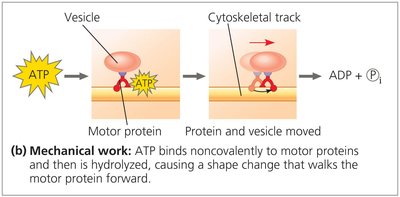
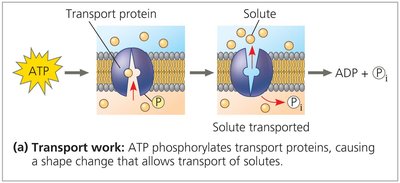
ATP powers cellular work by coupling exergonic reactions to endergonic reactions.
Three main types of cellular work: chemical, transport, and mechanical.
Enzymes: Biological Catalysts
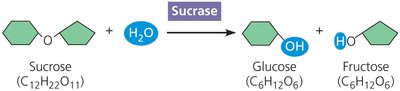
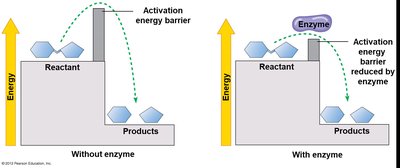
Enzymes are macromolecules (mostly proteins) that act as catalysts, speeding up chemical reactions by lowering energy barriers. They are not consumed in the reaction.
Catalyst: A chemical agent that speeds up a reaction without being consumed.
Activation energy (EA): The initial energy needed to start a chemical reaction.
Enzymes lower the activation energy, making reactions proceed faster.
Enzyme Function and Regulation
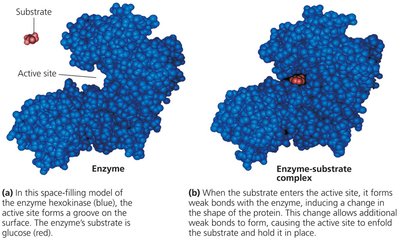
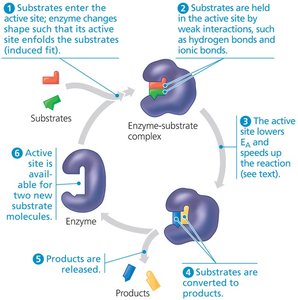
The reactant that an enzyme acts on is called the substrate. The substrate binds to the enzyme’s active site, forming an enzyme-substrate complex. The active site lowers the activation energy by orienting substrates, straining bonds, and providing a favorable microenvironment.
Enzymes have optimal temperature and pH for function.
Cofactors (inorganic or organic) help enzymes; coenzymes include vitamins.
Enzyme Inhibition and Regulation
Enzyme activity is regulated by inhibitors:
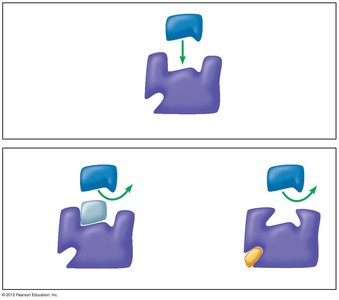
Competitive inhibitors: Bind to the active site, preventing substrate binding.
Noncompetitive inhibitors: Bind to an alternate site, changing the enzyme’s shape and reducing effectiveness.
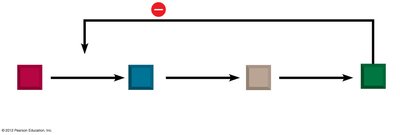
Feedback inhibition: The product of a pathway inhibits an enzyme earlier in the pathway, preventing overproduction.
Applications: Enzyme Inhibitors in Medicine and Environment
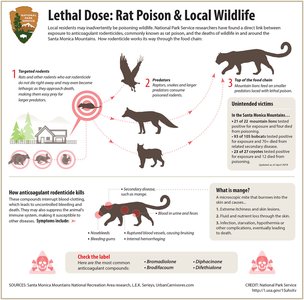
Many drugs, pesticides, and poisons act as enzyme inhibitors. Examples include ibuprofen, blood pressure medicines, antidepressants, antibiotics, and protease inhibitors for HIV. Enzyme inhibitors are also used in pesticides and chemical warfare.
Summary Table: Types of Metabolic Reactions
Type | Description | ΔG | Example |
|---|---|---|---|
Exergonic | Energy released, spontaneous | Negative | Cellular respiration |
Endergonic | Energy required, nonspontaneous | Positive | Photosynthesis |
Catabolic | Breakdown of molecules, releases energy | Negative | Cellular respiration |
Anabolic | Synthesis of molecules, uses energy | Positive | Protein synthesis |
Key Terms and Concepts
Metabolism: All chemical reactions in a cell.
ATP: Main energy currency of the cell.
Enzyme: Protein catalyst for biochemical reactions.
Activation energy: Energy required to start a reaction.
Feedback inhibition: Regulation of metabolic pathways by end products.
Important Equations
Free energy change:
ATP hydrolysis:
Example: Enzyme Regulation and Denaturation
Enzymes function best at optimal pH and temperature. Deviations can cause denaturation, rendering the enzyme inactive.