 Indietro
Metabolism, Cellular Respiration, and Photosynthesis: Study Notes for General Biology
Guida di studio - Note intelligenti
 Appunti personalizzati basati sui tuoi materiali, ampliati con definizioni chiave, esempi e contesto.
Metabolism: An Introduction
Overview of Metabolic Processes
Metabolism encompasses all chemical reactions that occur within living organisms to sustain life. These reactions are organized into metabolic pathways, which either build up (anabolic) or break down (catabolic) molecules.
Catabolic pathways: Break down complex molecules into simpler ones, releasing energy.
Anabolic pathways: Build complex molecules from simpler ones, requiring energy input.
Energy transformation: Energy is neither created nor destroyed, but changes form during metabolic processes.
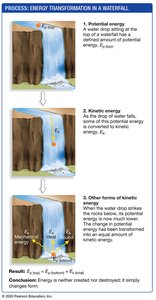
Additional info: The principle of conservation of energy applies to biological systems, where potential energy is converted to kinetic and other forms during metabolic reactions.
Energy and Enzymes: An Introduction to Metabolism
Chemical Bonds and Potential Energy
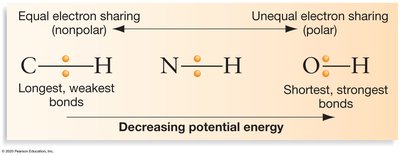
Chemical bonds store potential energy, which is released or absorbed during metabolic reactions. The nature of electron sharing in bonds affects their strength and energy content.
Nonpolar bonds: Equal electron sharing, longer and weaker bonds, higher potential energy.
Polar bonds: Unequal electron sharing, shorter and stronger bonds, lower potential energy.
Redox Reactions and Energy Release
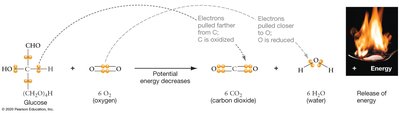
Redox reactions involve the transfer of electrons between molecules, playing a central role in cellular energy transformations. Oxidation is the loss of electrons, while reduction is the gain of electrons.
Glucose oxidation: Electrons are transferred from glucose to oxygen, releasing energy.
Potential energy decreases: As electrons move to more electronegative atoms, energy is released.
Exergonic and Endergonic Reactions
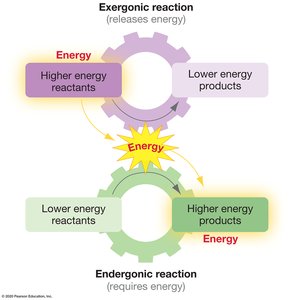
Metabolic reactions are classified based on their energy requirements:
Exergonic reactions: Release energy; products have lower energy than reactants.
Endergonic reactions: Require energy input; products have higher energy than reactants.
ATP: The Energy Currency of the Cell
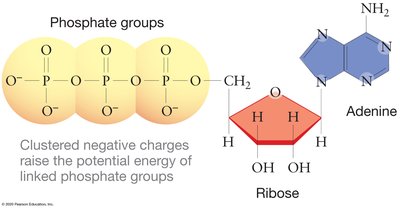
ATP (adenosine triphosphate) is the primary energy carrier in cells. Its high-energy phosphate bonds store potential energy, which is released during hydrolysis.
Structure: ATP consists of adenine, ribose, and three phosphate groups.
Phosphate groups: Clustered negative charges raise the potential energy.
Hydrolysis: ATP + H2O → ADP + Pi + energy
Enzyme Action and Regulation
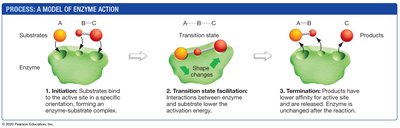
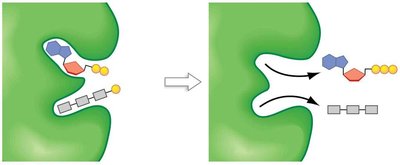
Enzymes are biological catalysts that speed up metabolic reactions by lowering activation energy. They are highly specific for their substrates and can be regulated by various mechanisms.
Initiation: Substrates bind to the enzyme's active site.
Transition state facilitation: Enzyme stabilizes the transition state, lowering activation energy.
Termination: Products are released, and the enzyme is unchanged.
Enzyme Regulation
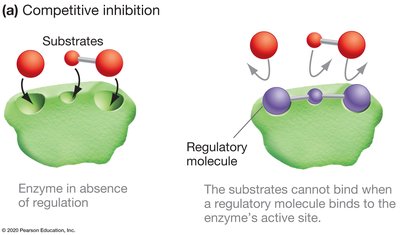
Competitive inhibition: Regulatory molecules compete with substrates for the active site.
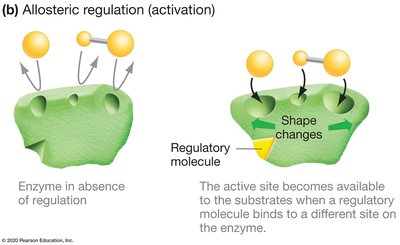
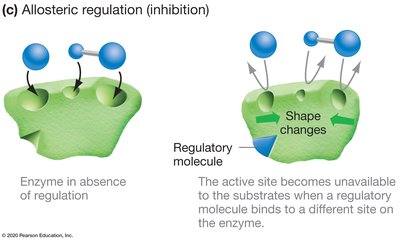
Allosteric regulation: Regulatory molecules bind to sites other than the active site, causing shape changes that activate or inhibit the enzyme.
Feedback Inhibition
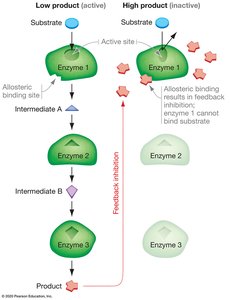
Feedback inhibition is a regulatory mechanism where the end product of a metabolic pathway inhibits an earlier enzyme, preventing overproduction.
Cellular Respiration
Overview of Cellular Respiration
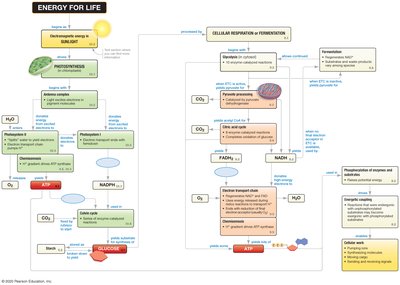
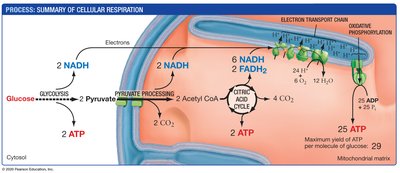
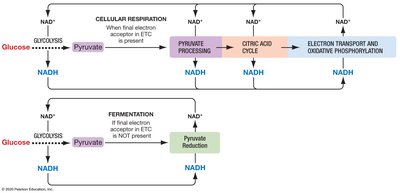
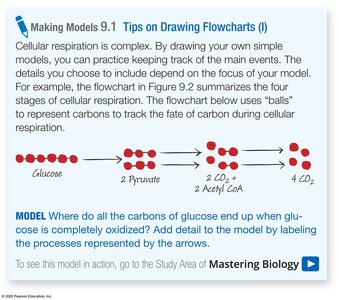
Cellular respiration is the process by which cells extract energy from glucose and other organic molecules. It consists of several stages: glycolysis, pyruvate processing, citric acid cycle, and electron transport chain/oxidative phosphorylation.
Location: Eukaryotes perform respiration in mitochondria; prokaryotes in the cytosol.
Purpose: To produce ATP, the cell's energy currency.
Mitochondrial Structure
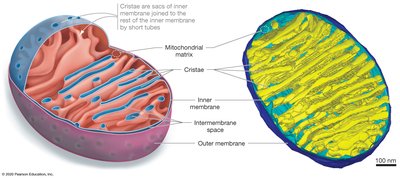
The mitochondrion is the site of most cellular respiration in eukaryotes. Its structure includes the outer membrane, inner membrane, intermembrane space, cristae, and matrix.
Matrix: Contains enzymes for the citric acid cycle.
Cristae: Increase surface area for electron transport chain.
Glycolysis
Glycolysis is the first stage of cellular respiration, occurring in the cytosol. It breaks down glucose into two molecules of pyruvate, producing ATP and NADH.
Energy investment phase: Uses 2 ATP to activate glucose.
Energy payoff phase: Produces 4 ATP (net gain 2 ATP) and 2 NADH.
Net yield: 2 ATP, 2 NADH, 2 pyruvate per glucose.
Pyruvate Processing
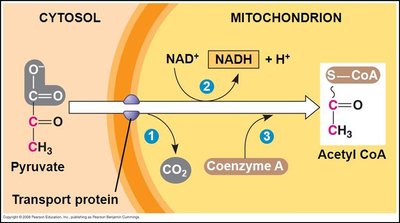
Pyruvate is transported into the mitochondrial matrix and converted to acetyl CoA. This process produces NADH and releases CO2.
Enzyme complex: Pyruvate dehydrogenase.
Products: 1 NADH, 1 CO2, 1 acetyl CoA per pyruvate.
Citric Acid Cycle (Krebs Cycle)
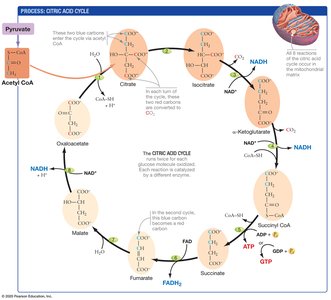
The citric acid cycle completes the breakdown of glucose by oxidizing acetyl CoA to CO2. It generates NADH, FADH2, and ATP (or GTP).
Location: Mitochondrial matrix.
Products per glucose: 6 NADH, 2 FADH2, 2 ATP, 4 CO2.
Electron Transport Chain and Oxidative Phosphorylation
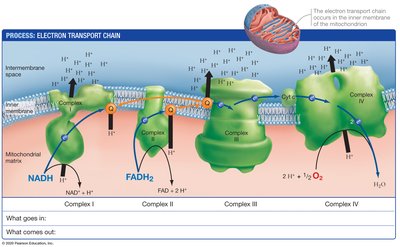
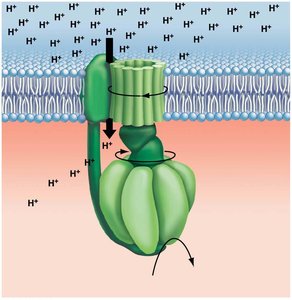
The electron transport chain (ETC) is a series of protein complexes in the inner mitochondrial membrane. Electrons from NADH and FADH2 are transferred through the ETC, creating a proton gradient that drives ATP synthesis.
Proton-motive force: Protons are pumped into the intermembrane space, creating an electrochemical gradient.
ATP synthase: Enzyme that uses the proton gradient to synthesize ATP from ADP and Pi.
Oxidative phosphorylation: ATP production dependent on oxygen as the final electron acceptor.
Fermentation
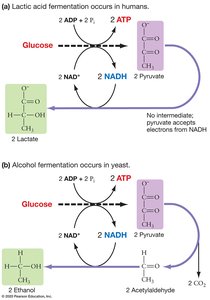
Fermentation is an anaerobic process that allows cells to produce ATP without oxygen. It regenerates NAD+ by transferring electrons to organic molecules.
Lactic acid fermentation: Occurs in humans; pyruvate is reduced to lactate.
Alcohol fermentation: Occurs in yeast; pyruvate is converted to ethanol and CO2.
Photosynthesis
Structure of Chloroplasts
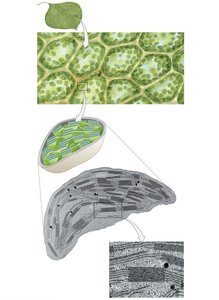
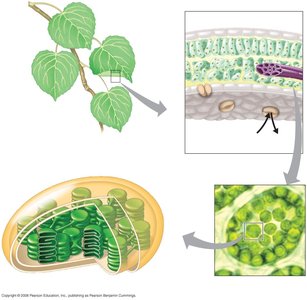
Photosynthesis occurs in chloroplasts, which have an outer and inner membrane, thylakoid stacks (grana), and stroma.
Thylakoids: Flattened sacs where light reactions occur.
Stroma: Fluid matrix where the Calvin cycle takes place.
Photosynthetic Cells
Plant cells that perform photosynthesis contain numerous chloroplasts, which capture light energy and convert it to chemical energy.
Light Absorption and Energy
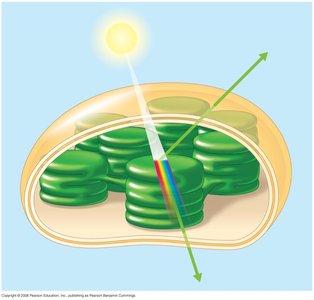
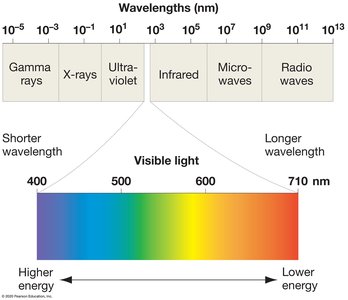
Chloroplasts absorb light energy, which is used to drive photosynthetic reactions. The visible spectrum ranges from 400 to 710 nm, with shorter wavelengths having higher energy.
Light reactions: Occur in thylakoid membranes; convert light energy to ATP and NADPH.
Photosystem Function
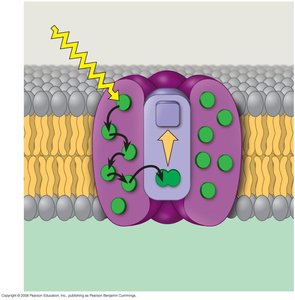
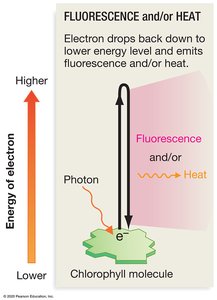
Photosystems are protein complexes that capture light energy and transfer electrons. Excited electrons can return to lower energy levels, emitting fluorescence or heat.
Light Reactions: Electron Transport and ATP/NADPH Production
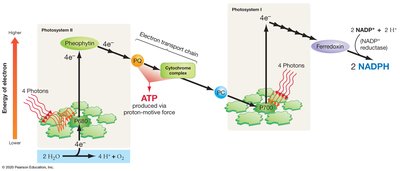
Light reactions involve two photosystems (I and II) that transfer electrons through an electron transport chain, producing ATP and NADPH.
Photosystem II: Splits water, releases O2, and generates ATP.
Photosystem I: Produces NADPH.
The Calvin Cycle
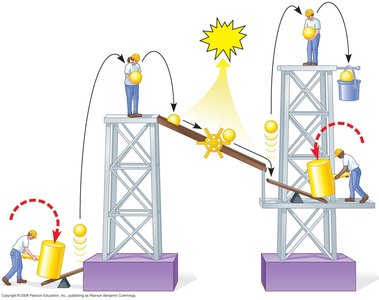
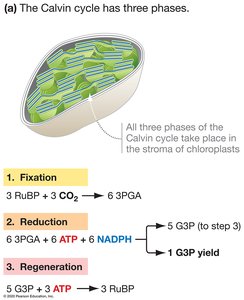
The Calvin cycle is the set of reactions that fix carbon dioxide and produce sugars. It occurs in the stroma and has three phases: fixation, reduction, and regeneration.
Fixation: CO2 is attached to RuBP, forming 3-PGA.
Reduction: 3-PGA is converted to G3P using ATP and NADPH.
Regeneration: RuBP is regenerated from G3P.
Summary Table: Cellular Respiration and Photosynthesis
Process | Main Location | Key Inputs | Key Outputs | ATP Yield |
|---|---|---|---|---|
Glycolysis | Cytosol | Glucose, 2 ATP | 2 Pyruvate, 2 NADH, 4 ATP (net 2 ATP) | 2 ATP |
Pyruvate Processing | Mitochondrial Matrix | 2 Pyruvate | 2 Acetyl CoA, 2 NADH, 2 CO2 | 0 ATP |
Citric Acid Cycle | Mitochondrial Matrix | 2 Acetyl CoA | 4 CO2, 6 NADH, 2 FADH2, 2 ATP | 2 ATP |
Electron Transport Chain | Inner Mitochondrial Membrane | NADH, FADH2, O2 | H2O, ATP | ~25 ATP |
Photosynthesis (Light Reactions) | Thylakoid Membrane | Light, H2O | O2, ATP, NADPH | ATP (used in Calvin cycle) |
Calvin Cycle | Stroma | CO2, ATP, NADPH | G3P (sugar) | None (consumes ATP) |
Additional info: This table summarizes the main stages of cellular respiration and photosynthesis, their locations, inputs, outputs, and ATP yield.
