 Indietro
Metabolism, Enzymes, and Cellular Energy: Study Guide
Guida di studio - Note intelligenti
 Appunti personalizzati basati sui tuoi materiali, ampliati con definizioni chiave, esempi e contesto.
Metabolism and Metabolic Pathways
Overview of Metabolism
Metabolism encompasses all the chemical reactions occurring within an organism, enabling it to maintain life, grow, and respond to environmental changes. These reactions are organized into metabolic pathways, which are sequences of reactions facilitated by enzymes.
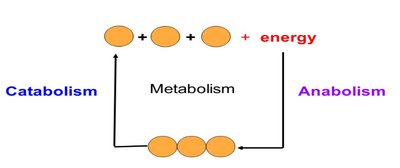
Metabolic Pathways: Series of chemical reactions that either build complex molecules (anabolic) or break them down (catabolic).
Substrate: The molecule upon which an enzyme acts.
Product: The molecule produced by the enzyme-catalyzed reaction.
Intermediate: Molecules formed between the initial substrate and the final product in a pathway.
Types of Metabolic Pathways
Metabolic pathways are classified as either catabolic or anabolic, depending on their function.
Catabolic Pathways: Release energy by breaking down complex molecules into simpler compounds (e.g., cellular respiration).
Anabolic Pathways: Consume energy to build complicated molecules from simpler ones (e.g., photosynthesis, protein synthesis).
Enzymes: Biological Catalysts
Definition and Properties
Enzymes are specialized proteins that act as biological catalysts, increasing the rate of chemical reactions without being consumed in the process.
Enzyme: Protein that accelerates chemical reactions in living organisms.
Catalyst: Substance that speeds up a reaction without being permanently altered.
Enzyme names often end in -ase (e.g., lactase, protease, DNA polymerase).
Enzymes are reusable and highly specific to their substrates.
Enzyme Structure and Function
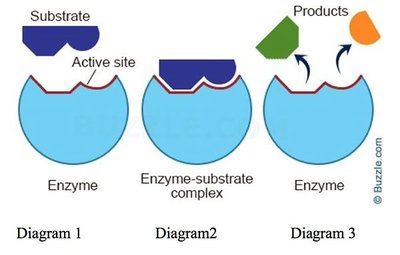
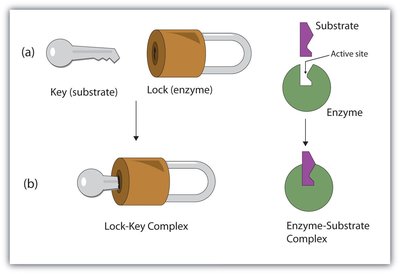
Enzymes are composed of amino acids, and their three-dimensional structure determines their specificity. The substrate binds to the enzyme at a region called the active site.
Active Site: The region of the enzyme where the substrate binds and the reaction occurs.
Specificity is determined by the shape and charge of the active site and substrate.
Some enzymes exhibit enzyme promiscuity, allowing them to act on multiple substrates.
Lock and Key vs. Induced Fit Models
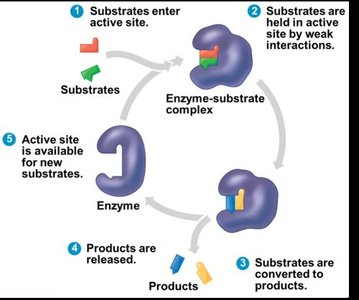
Lock and Key Model: The substrate fits perfectly into the enzyme's active site.
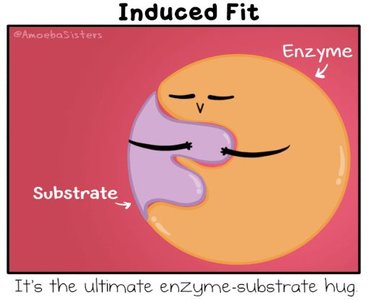
Induced Fit Model: The enzyme changes shape slightly to accommodate the substrate, enhancing binding and catalysis.
Energy and Thermodynamics in Biology
Energy in Living Organisms
Energy is the capacity to do work and is essential for all biological processes. Organisms require a constant flow of energy to survive; a loss of energy flow results in death.
Energy: The ability to do work.
Energy is required for movement, growth, and cellular functions.
Laws of Thermodynamics
The laws of thermodynamics govern energy transformations in biological systems.
First Law: Energy cannot be created or destroyed; it can only be transferred or transformed.
Second Law: Energy transformations increase the entropy (disorder) of the universe; some energy is lost as heat.


Free Energy and Reaction Types
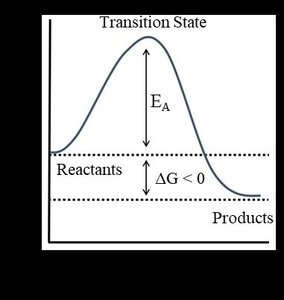
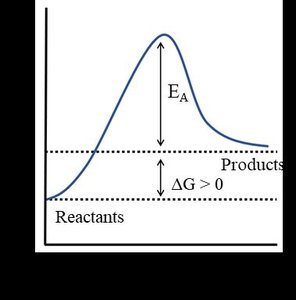
Free energy (Gibbs free energy) is the energy available to do work in a system. It determines whether a reaction is energetically favorable.
Exergonic Reactions: Release energy; spontaneous (e.g., cellular respiration).
Endergonic Reactions: Absorb energy; not spontaneous (e.g., photosynthesis).
ATP: The Energy Currency of the Cell
Structure and Function of ATP
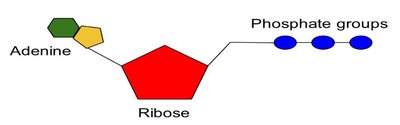
ATP (adenosine triphosphate) is the primary energy molecule used by cells. Its structure consists of adenine, ribose, and three phosphate groups.
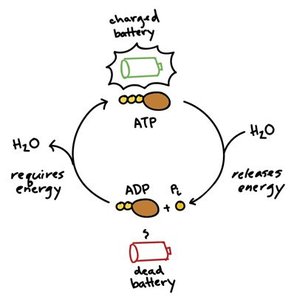
Energy is released when the bond between the second and third phosphate is broken (hydrolysis).
ATP is regenerated from ADP (adenosine diphosphate) and inorganic phosphate.
ATP Coupling
ATP couples exergonic and endergonic reactions, allowing energy released from one process to drive another.
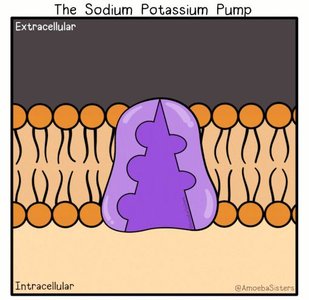
Phosphorylation: The transfer of a phosphate group to another molecule, providing energy for cellular work.
Example: Sodium-potassium pump in cell transport.
Enzyme Catalysis and Activation Energy
Lowering Activation Energy
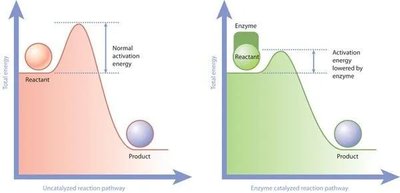
Enzymes lower the activation energy required to start a reaction, making it more likely to occur. They stabilize the transition state, facilitating the conversion of substrates to products.
Activation Energy (EA): The energy required to initiate a chemical reaction.
Enzymes do not change the free energy of the reaction; they only lower the activation energy.
Enzyme Specificity and Evolution
Enzyme Promiscuity and Evolution
While most enzymes are highly specific, some can act on multiple substrates, a property known as enzyme promiscuity. This flexibility is important for evolutionary adaptation.
Promiscuity allows enzymes to evolve new functions and adapt to environmental changes.
Generalist enzymes can help organisms survive in changing conditions.
Induced Fit Model
The induced fit model describes how enzymes adjust their active site to better fit the substrate, increasing the efficiency of catalysis.
Enzyme and substrate interaction is dynamic, not static.
This model explains how enzymes can accommodate substrates with similar structures.
Summary Table: Metabolic Pathways
Pathway Type | Function | Example |
|---|---|---|
Catabolic | Breaks down molecules, releases energy | Cellular respiration |
Anabolic | Builds molecules, consumes energy | Photosynthesis |
Summary Table: Enzyme Properties
Property | Description |
|---|---|
Specificity | Acts on specific substrates |
Reusable | Not consumed in reaction |
Promiscuity | Can act on multiple substrates |
Induced Fit | Active site changes shape for substrate |
Key Equations
ATP Hydrolysis:
Free Energy Change:
Example Application
Cellular respiration is a catabolic, exergonic pathway that releases energy for cellular work.
Photosynthesis is an anabolic, endergonic pathway that stores energy in glucose molecules.
Additional info: Enzyme structure and function are foundational to understanding cellular metabolism and energy flow. The specificity and adaptability of enzymes are key to evolutionary processes and cellular efficiency.
