 Indietro
Metabolism, Enzymes, and Thermodynamics: Study Notes for General Biology
Guida di studio - Note intelligenti
 Appunti personalizzati basati sui tuoi materiali, ampliati con definizioni chiave, esempi e contesto.
Metabolism and Energy Transformations
Forms of Energy in Biological Systems
All living cells require energy to survive, and they utilize various sources and forms of energy. Metabolism refers to the sum of all chemical reactions in a cell, including the conversion of one form of energy to another.
Energy Sources: Light, chemical, and kinetic energy are common sources for living organisms.
Energy Transformations: Cells can convert light to chemical energy (photosynthesis), chemical to kinetic energy (muscle contraction), chemical to light (bioluminescence), and kinetic to chemical energy.
Covalent Bonds: These represent potential energy, which can be stored or released by making or breaking bonds.
Example: Bioluminescent organisms convert chemical energy to light energy. 
ATP: The Energy Currency of the Cell
ATP (adenosine triphosphate) is the primary molecule used by cells to store and transfer energy for cellular processes.
Structure: ATP consists of a ribose sugar, adenine base, and three phosphate groups.
Functions: ATP is used for building cell parts, moving substances within the cell, muscle contraction, and breaking down cellular materials.
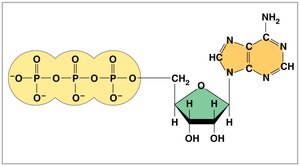
ATP Hydrolysis
The hydrolysis of ATP releases energy by breaking the bond between the second and third phosphate groups, forming ADP (adenosine diphosphate) and inorganic phosphate.
Equation:
Application: This energy is used for cellular work, such as biosynthesis and movement.
Thermodynamics in Biological Systems
Laws of Thermodynamics
The laws of thermodynamics govern energy transformations in living organisms.
First Law (Conservation of Energy): Energy cannot be created or destroyed, only transformed.
Second Law (Entropy): Entropy (disorder) increases in a system, and some energy is lost as heat during transformations.

Metabolic Pathways
Catabolic and Anabolic Pathways
Metabolism is divided into two main types of pathways:
Catabolic Pathways: Break down large molecules into smaller ones, releasing energy.
Anabolic Pathways: Build large, complex molecules from smaller building blocks, consuming energy.
Exergonic and Endergonic Reactions
Metabolic reactions are classified based on their energy changes:
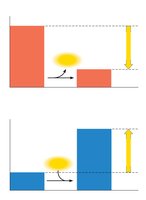
Exergonic Reactions: Release free energy and are spontaneous ().
Endergonic Reactions: Absorb free energy and are nonspontaneous ().
Gibbs Free Energy (G): The portion of a system’s energy available to do work at constant temperature and pressure.
Enzymes and Their Role in Metabolism
Enzyme Function and Specificity
Enzymes are catalytic proteins (and some RNAs) that speed up chemical reactions by lowering the activation energy required. They are highly specific for their substrates and are not consumed in the reaction.
Activation Energy (EA): The energy required to initiate a reaction.
Enzyme-Substrate Complex: The temporary association between an enzyme and its substrate.

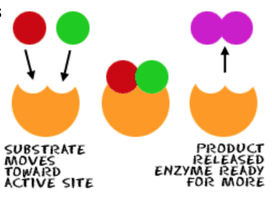
Enzyme Mechanism
Enzymes facilitate reactions by bringing substrates together and orienting them correctly, reducing the activation energy.
Example: Catabolic reactions break down molecules, while anabolic reactions build molecules.
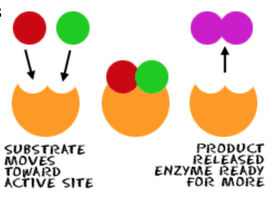
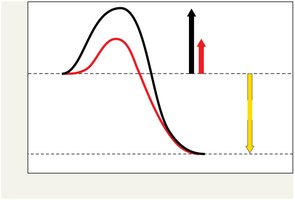
Effect of Enzymes on Activation Energy
Enzymes lower the activation energy barrier, allowing reactions to proceed more rapidly.
Key Point: Enzymes do not affect the overall change in free energy () of the reaction.
Coupling Reactions with ATP Hydrolysis
Cells often couple endergonic reactions with ATP hydrolysis to make the overall process exergonic and energetically favorable.
Example: The conversion of glutamic acid to glutamine is coupled with ATP hydrolysis.
Equation: ; ; Net
Regulation of Metabolic Pathways
Metabolic Pathway Organization
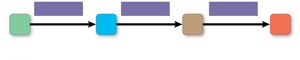
Cellular metabolism is organized into pathways, where the product of one reaction becomes the substrate for the next. Enzymes make slight changes to substrates to produce products.
Cofactors: Some enzymes require cofactors (e.g., NAD+) for activity.
Enzyme Regulation: Inhibition
Enzyme activity can be regulated by inhibitors:
Competitive Inhibition: A molecule similar to the substrate binds to the active site, blocking substrate access.
Noncompetitive Inhibition: A molecule binds elsewhere on the enzyme, changing its shape and reducing activity. Allosteric inhibition is a type of noncompetitive inhibition.
Allosteric Regulation
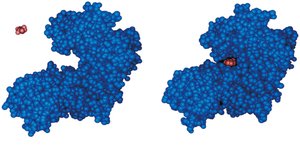
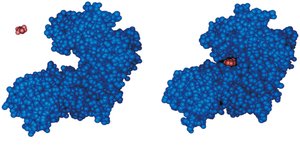
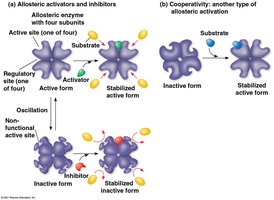
Allosteric regulation is a common mechanism for controlling metabolic pathways. The final product of a pathway can bind to the first enzyme, changing its shape and stopping the pathway.
Allosteric Activators and Inhibitors: These molecules bind to regulatory sites on enzymes, stabilizing either the active or inactive form.
Summary Table: Types of Metabolic Reactions
Type | Energy Change | Spontaneity | Example |
|---|---|---|---|
Exergonic | Releases energy () | Spontaneous | Cellular respiration |
Endergonic | Absorbs energy () | Nonspontaneous | Photosynthesis |
Catabolic | Breaks down molecules | Usually exergonic | Glycolysis |
Anabolic | Builds molecules | Usually endergonic | Protein synthesis |
Additional info: Some diagrams and cartoons were inferred to represent enzyme-substrate interactions and metabolic pathway organization for clarity and completeness.
